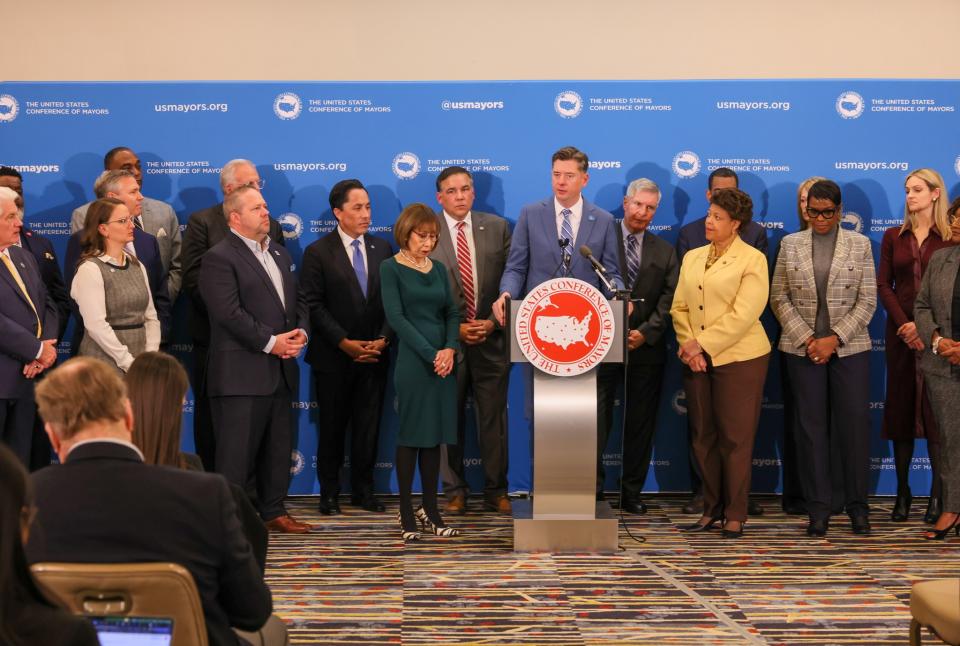
Congressmembers Rob Menendez, Doris Matsui (CA-07), Nanette Barragán (CA-44), and Troy Carter, Sr. (LA-02) have introduced new legislation that would compel the Federal Communications Commission (FCC) to re-establish the Communications Equity and Diversity Council.
Local government organizations are voicing their strong opposition to the American Broadband Deployment Act, an industry friendly proposal being cooked up in the House that would take public rights of way management and property decisions away from state, local, and tribal governments through federal preemption and industry-friendly defaults.
The remote islands of San Juan County, Washington are increasingly being served with next-generation fiber and wireless thanks to Rock Island Communications, a locally-owned Internet subsidiary of the Orcas Power & Light Cooperative.
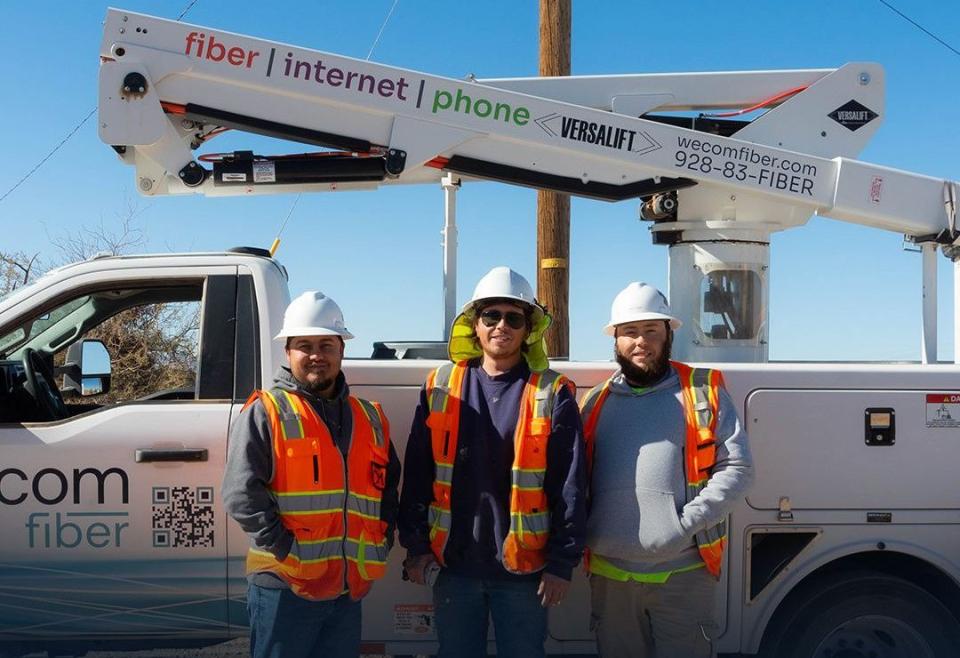
The public-private partnership the city struck Arizona-based Wecom Fiber is expected to inject at least $100 million into local economy over five years while saving the city an estimated $18 million in capital expenses.
Roanoke Cooperative’s Fybe has been awarded $2.4 million in state funds to expand affordable access to high speed Internet to 826 locations across eight predominantly rural North Carolina counties.
Join us for our very first episode of Unbuffered Live! at our new time, on Tuesday, April 28th at 2pm ET. Host Christopher Mitchell will be joined by guests Doug Dawson (CCG Consulting), Heather Mills (ITG) and Drew Garner (Benton Institute for Broadband and Society) to talk about the intersections of tech, Internet access, and policy.
With tax day as a backdrop, the ILSR Community Broadband Networks Initiative and the National Digital Inclusion Alliance convened its quarterly Building for Digital Equity livestream yesterday that shined a light on how public dollars and tax policy intersect with digital equity.
Superior, Wisconsin’s community-owned open access fiber network has gone live in its first two deployment neighborhoods, as the city works toward providing affordable next-generation fiber access to the city’s long under-served community of 26,000. The city’s open access network means that multiple broadband providers can compete over the same shared infrastructure and so far two independent ISPs are offering retail service to residents.
Conexon Connect, the ISP arm of fiber broadband builder Conexon, says it has completed its new fiber build in Cairo, Georgia in close collaboration with Grady Electrical Membership Corporation (EMC). It’s Connexon Connect’s seventh completed broadband fiber to the home project in Georgia and twelfth completed broadband network overall since the ISP was created in 2021.
A recently published study by the Federal Reserve Bank of New York details how to more accurately measure the elusive nature of affordable broadband costs at the community level. It also pinpoints multiple contributing factors such as the state of local infrastructure and how lower performing broadband access technologies can force low-income households to choose between cellular service or home Internet service.
The Trump administration's illegal “termination” of the 2021 Digital Equity Act continues to have devastating real world impacts on everything from affordable broadband access to protecting Americans from skyrocketing online scams. Earlier this month the National Digital Inclusion Alliance (NDIA) also filed a lawsuit against the government, stating that “the administration’s unilateral decision to end the statutory program and terminate grant funding is unconstitutional and violates the separation of powers between the executive and legislative branches as outlined in the Constitution.”
Critics say Fidium’s goal isn’t honest competition, but a bid to try to put the popular local municipal broadband network on shaky financial ground. Last fall Fidium, which had again completely ignored calls from the town for better service for years, began sending mailers out to locals, promising them broadband at speeds below what the town was offering.
Innovative digital equity nonprofit DigitalC is enjoying new momentum for its plans to expand fixed wireless broadband access in the city thanks to a $500,000 cash infusion from tech giant Google. According to an announcement by the nonprofit, the donation includes next-generation Fixed Wireless Access (ngFWA) equipment from Tarana, which will allow DigitalC to expand its Canopy home broadband service – which provides symmetrical 100 megabit per second (Mbps) at $18 a month – to even more neighborhoods in Ohio.
California lawmakers approved new legislation letting renters opt out of bulk-billing arrangements that force them to pay for Internet service from a specific provider. Lawmakers say they didn’t ban the practice for fear of undermining some of the more beneficial aspects of bulk billing, which can make deployments more financially tenable for smaller providers.
The third Building for Digital Equity livestream of the year brought together policy experts and frontline workers to explore how community-driven connectivity solutions are inextricably tied to building local trust. If you missed it, the entirety of the event can be viewed here. The event provided attendees a jolt of hope and optimism, even as the world of digital equity has been upended by the demise of the federal Affordable Connectivity Program, the sudden termination of the Digital Equity Act, and numerous other Trump administration policy shifts that will make it harder to bridge the digital divide.
The Trump FCC has voted to kill two different programs that helped bring free Wi-Fi to school kids in underserved poor and rural U.S. communities. It’s the latest casualty of an administration that has been taking a brutal hatchet to FCC consumer protection and affordability initiatives, many of which were developed over decades – with popular bipartisan support.
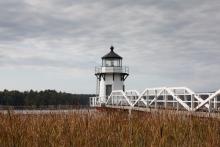
The Maine Connectivity Authority has chosen Sertex Broadband Solutions to help build and manage a massive portion of the state’s 536-mile middle mile fiber network known as MOOSE Net. Sertex will engineer and construct a 450-mile segment of MOOSE NET on the back of a $30 million grant. The effort is expected to dramatically improve affordable broadband connectivity for 11,000 homes and businesses as well as 200 community anchor institutions, including rural Maine schools, libraries, and healthcare facilities.
ILSR's Christopher Mitchell offers insights on Superior, Wisconsin's new city-owned network and how federal policy, municipal broadband barriers and Tribal networks fit into the picture.
The telephone cooperative-owned Paul Bunyan Communications in Northern Minnesota recently announced it was giving a $3.6 million profit windfall back to local community members. It’s the fourth such payout to local subscribers in the last seven years. For distributions of $150 or less, a credit was applied to subscriber’s bills. For sums greater than $150, the cooperative mailed checks out to locals.