
ACP

Content tagged with "ACP"

Displaying 1 - 10 of 86

On State Scoop podcast: New Mexico's Timely Broadband Subsidy Program

New Mexico Gov. Michelle Lujan Grisham signed into law new legislation that aims to provide tens of thousands of low-income households in “The Land of Enchantment” an Internet lifeline similar to the now-expired federal Affordable Connectivity Program (ACP).

It makes the state the first to step up in the absence of federal action to support households that just can’t afford to pay for monthly service. Senate Bill 152 will update the state’s Rural Telecommunications Act and empower the New Mexico Public Regulation Commission (PRC) to offer up to $30/month for qualified households to pay for Internet service.

ILSR's Community Broadband Networks program director Christopher Mitchell talks to State Scoop’s Priorities podcast about the significance of the New Mexico law and how can states can take a leadership role in the absence of federal action.

Watch and listen to the podcast below. And you can read our story about the New Mexico law here.

Remote video URL

With ACP Gone, New Mexico Creates First State-Level Internet Affordability Program

New Mexico Gov. Michelle Lujan Grisham signed into law today new legislation that aims to provide tens of thousands of low-income households in “The Land of Enchantment” an Internet lifeline similar to the now-expired federal Affordable Connectivity Program (ACP).

It makes the state the first to step up in the absence of federal action to support households that just can’t afford to pay for monthly service, and will directly support 173,000 households.

Image
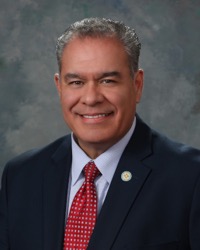
Headshot of NM State Sen Michael Padilla

Senate Bill 152 – first filed on January 26 of this year by State Sen. Michael Padilla, (D) Majority Whip – will update the state’s Rural Telecommunications Act and empower the New Mexico Public Regulation Commission (PRC) to offer up to $30/month for qualified households to pay for Internet service.

The broadband bill, known as the Low-Income Telecommunications Assistance Program (LITAP), passed through the formal legislative session in high-speed fashion. It was first introduced at the end of January, passed by the House, and then the Senate by a 38-0 margin last Thursday (Feb. 12), making its way to the governor’s desk to be signed into law today. That’s a 25-day marathon from legislative start-to-finish.

Maryland Lawmakers Advance Broadband Affordability Bill Despite Federal Pushback

Despite a memo issued by the NTIA last summer that sought to discourage states from passing affordable broadband legislation similar to New York State’s Affordable Broadband Act, two dozen state lawmakers in Maryland have signed on to the Broadband Opportunity and Fairness Act, state legislation that seeks to address the single biggest barrier to Internet access anywhere: affordability.

HB-382, if passed, would require Internet Service Providers (ISPs) operating in Maryland to offer low-cost Internet service plans to eligible low-income households.

Introduced by Delegate Kris Fair (D-3A, Frederick Co.), the bill now has 25 co-sponsors and is slated for a Feb. 12 legislative hearing before the House Economic Matters Committee. Companion legislation has yet to be filed in the Senate, though Delegate Fair’s office says they are in discussions with state Senators about advancing a bill through that chamber as well.

Stepping Up and 'Doing Something'

Serving the Overlooked: Building Broadband for Manufactured Housing Communities - Episode 674 of the Community Broadband Bits Podcast

In this episode of the podcast, Chris and Sean Gonsalves are joined by Brendan Kelly, founder of REVinternet, a new Internet Service Provider focused on bringing better connectivity to manufactured housing communities. 

Brendan shares how years working inside large telecom companies—and later with smaller ISPs—revealed just how consistently these communities are overlooked, locked into aging coaxial networks, and offered little incentive for upgrades.

The conversation explores why manufactured housing parks present unique challenges for broadband deployment, from private land ownership and outdated infrastructure to stigma and lack of competition. 

Brendan explains REVinternet’s service-agnostic approach, combining fiber, fixed wireless, and other technologies to deliver affordable, reliable Internet while working directly with park owners and residents.

Chris, Sean, and Brendan also dig into the role of digital equity, customer support, and trust-building—discussing everything from payment flexibility and digital navigation to partnerships with municipal networks. 

The episode offers a thoughtful look at how targeted, community-centered broadband strategies can succeed where one-size-fits-all policies have failed, and why manufactured housing residents deserve the same quality connectivity as any other neighborhood.

This show is 28 minutes long and can be played on this page or via Apple Podcasts or the tool of your choice using this feed.

You can also check out the video version via YouTube.

Transcript below.

We want your feedback and suggestions for the show-please e-mail us or leave a comment below.

Listen to other episodes or view all episodes in our index. See other podcasts from the Institute for Local Self-Reliance.

Thanks to Arne Huseby for the music. The song is Warm Duck Shuffle and is licensed under a Creative Commons Attribution (3.0) license

Affordable Broadband Subsidy Boosts Jobs, Especially for Women, New Study Shows

A new study shows that the now expired Affordable Connectivity Program (ACP), which offered a $30/month discount for 23 million eligible households to pay for home Internet service, helped low-income Americans get better access to jobs, with particularly strong effects for women.

The ACP program ended in May 2024 – thanks to GOP Congressional leaders blocking efforts to allocate additional money when the fund was depleted. Still, the study remains relevant as affordability advocates continue to look for ways to fund a similar program in the future.

Led by Hernan Galperin, Professor and Director of Doctoral Studies at the USC Annenberg School for Communication, the research combines ACP administrative records with data from the American Community Survey (ACS) and the Current Population Survey (CPS). In doing so, the study’s authors found that access to affordable, high-speed Internet improves employment outcomes by enabling remote work and greater labor market participation.

Image
A mom works at home on computer with her child seated on couch in background

With millions of Americans who rely on remote work to balance jobs with caregiving responsibilities, the study indicates that the ACP appeared to be a key enabler.

The Big Beautiful Bill’s Ugly Choice: Internet or Food?

Today, The American Prospect published some of our original reporting on the One Big Beautiful Bill Act that was signed into law on Independence Day. In it, our Associate Director for Communications Sean Gonsalves writes:

"Sold to voters as a way to cut 'waste, fraud, and abuse,' a more honest assessment of the One Big Beautiful Bill Act (OBBBA) is that it’s just a Big Brazen Bid to shred the social safety net.

Naturally, the looming cuts to Medicaid and what they will mean for rural hospitals in particular has received the most press.

But there are numerous other ways those in need of government assistance will be further pressed into poverty, including through a particularly narrow-minded Sophie’s Choice: internet access or food?

Image
Screenshot of article in the American Prospect

Last year, GOP leaders blocked bipartisan efforts to fund an extension of the Affordable Connectivity Program (ACP), which offered 23 million eligible households a $30-per-month voucher to help pay for internet service. As if letting the ACP die wasn’t a big enough blow, OBBBA not only increases the paperwork burden required to qualify for Supplemental Nutrition Assistance Program (SNAP) benefits, it completely removes internet service costs as an eligible deduction.

The USF Survives Supreme Court, But Massive Challenges Remain

The FCC’s Universal Service Fund (USF) has survived a Supreme Court challenge by a right wing activist nonprofit, but the program – which for decades has helped extend broadband to underserved rural homes and schools – still faces a precarious immediate future.

It is a peculiar political story, given that the rural regions that overwhelmingly vote for Republicans are now seeing Republicans try to dismantle a program that has been crucial for rural investment and development.

The FCC established the fund in 1997 in compliance with the Telecommunications Act of 1996. Historically a program with broad, bipartisan support, the USF leverages around $8 billion annually to expand broadband access to rural communities, libraries, and schools. The program is primarily paid for by consumers via a small levy on traditional phone lines.

In 2023, a right wing activist nonprofit named “Consumer’s Research” sued the government over the USF, claiming that the FCC lacked the constitutional authority to levy a fee on consumers’ bills. The lawsuit claimed that the USF depended on what amounted to an “unconstitutional tax” on consumers to fund operations.

Baltimore Issues RFP For Plan To Expand Affordable Broadband

Baltimore city leaders have issued a request for proposals (RFP) for a partner willing to help the city’s ongoing efforts to expand affordable broadband access to marginalized city residents.

According to the RFP, the city’s latest efforts would help bring affordable, high-speed Internet to over 4,100 new housing units spread across eight different public housing communities.

“The RFP is part of Baltimore's Broadband Access Initiative, a citywide effort aligned with our broader Digital Inclusion Strategy to close the digital divide – starting with communities that have been historically underserved,” Baltimore Communications Manager Rafael McFadden says of the effort.

Data indicates that Baltimore, population 565,000, sees some of the highest rates of digital disconnectivity in the nation. Over 96,000 Baltimore households lack wireline Internet service, and 75,000 city residents lack access to a desktop or laptop computer.

Image
Coversheet of Baltimore Digital Equity plan cover sheet.png

Baltimore has used American Rescue Plan Act (ARPA) funds to create a $5 million Digital Equity Fund grant program, which is driving partnerships with local nonprofits to expand access and improve local digital literacy. The city’s digital equity report, released last March, details the progress the city has made in bridging the digital divide over the last two years.

In addition to numerous other initiatives, the city says it continues to expand its public Wi-Fi network, FreeBmoreWiFi.

“Cruel” E-Rate Rollback Harms Broadband Expansion Plans

Congressional Republicans are moving forward on a plan to kill a popular Federal Communications Commission (FCC) program providing free Wi-Fi to schoolchildren. Critics of the repeal say it’s a “cruel” effort that will undermine initiatives to bridge the affordability and access gap for families long stuck on the wrong side of the digital divide.

The effort, spearheaded by Texas Republican Senator Ted Cruz, leverages the Congressional Review Act to roll back FCC changes to E-Rate, a government program that helps subsidize deployment of broadband access to rural communities, libraries, and schools.

Accelerated by the remote education boom of pandemic lockdowns, communities country wide had petitioned the FCC to expand the program. The goal: allowing rural schools to leverage E-Rate funding to provide free mobile Wi-Fi hotspots to families that either couldn’t afford broadband – or found broadband entirely out of reach.

Image
Man tests WiFi on school buses

So in July 2024 the FCC voted to expand the program. Historically, E-Rate could only be used to improve access on school or library grounds. The expansion allowed schools to provide limited access to free Wi-Fi hotspots via school buses or other alternatives. The expansion did not involve an increase in the E-Rate budget or any new taxes on U.S. residents. It recognized that the concept of “school” had eclipsed the 20th century definition of a room in a community building.

“I believe every library and every school library in this country should be able to loan out Wi-Fi hotspots to help keep their patrons and kids connected,” former FCC boss Jessica Rosenwocel said when the reforms were announced. “It is 2024 in the United States. This should be our baseline. We can use the E-Rate program to make it happen.”

Pushback Mounts Over Trump Administration ‘Termination’ of Digital Equity Law

The Trump administration’s dismantling of a popular broadband grant program has been greeted with disgust and anger by those doing the heavy lifting to bridge the country’s digital divide, leaving many states' planned broadband expansions in limbo, and affordable broadband advocates contemplating potential legal action.  

The unprecedented choice to destroy digital skills training and broadband adoption programs created by an act of Congress is seeing escalating pushback by a growing coalition of frustrated lawmakers and state broadband offices.

Last week, President Trump announced via a Truth Social post that he was ending the Digital Equity Act, falsely claiming that the program was “unconstitutional” and “racist.”

“No more woke handouts based on race!” the President said. “The Digital Equity Program is a RACIST and ILLEGAL $2.5 BILLION DOLLAR giveaway. I am ending this IMMEDIATELY, and saving Taxpayers BILLIONS OF DOLLARS!"

Image
A black and white hand holds up a cell phone to photograph President Trump

But the popular program was perfectly legal, barely focused on race, and was proving to be of broad benefit to countless Americans – including many of the President’s own supporters in long-neglected rural counties.

The $2.75 billion Digital Equity Act was passed by Congress as part of the 2021 infrastructure bill. It mandated the creation of three different grant programs intended to shore up equitable, widespread access to affordable Internet, while providing the tools and digital literacy education needed to help neglected U.S. communities get online.

A legal challenge to the Trump administration’s unilateral decision to kill a law passed by Congress seems all but certain.