
competition

Content tagged with "competition"

Related Topics
Displaying 1 - 10 of 709

Lafayette’s LFT Fiber Steadily Expands, Offers Even Faster Speeds

Lafayette, Louisiana-based LFT Fiber, formerly known as LUS Fiber, says it continues to expand its fiber footprint and introduce faster symmetrical speed tiers to many Louisiana locals long trapped on the wrong side of the digital divide.

LUS Fiber was launched in 2004 as a direct response to consumer outrage at substandard, expensive citywide broadband access. Last year LFT changed its name from LUS Fiber to LFT fiber.

Back in February LFT Fiber announced it had finished a planned network expansion project into Eunice, Louisiana, bringing fiber access to many underserved locals for the first time. 

"This is more than just infrastructure; it’s a long-term investment in our communities that drives economic development, improves health and wellness outcomes, and enhances student educational performance,” LFT Fiber Director Michael Soileau said of the expansion. “It’s about building better and stronger communities.”

LFT Fiber now passes 95,000 households and businesses in its core service area of Lafayette Parish alone, and a few years ago began expanding into some nearby rural communities thanks to an historic infusion of ARPA (American Rescue Plan Act) and other state and federal broadband grants.

The municipal provider recently had to introduce a new section of its website to explain to some Lafayette Parish customers why they may still be waiting for connection while other nearby communities get connected.

Los Alamos County Signs Partner ISPs For Open Access Fiber Network

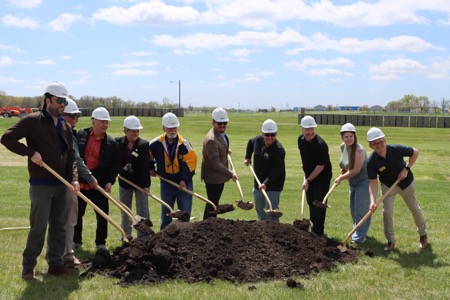
Los Alamos County, New Mexico is inching closer to the launch of its “Atomic Fiber” county-wide open access fiber network, recently announcing they’ve received signed contracts with the partner ISPs that will be tasked with providing affordable fiber access to local residents.

An announcement by the county indicates that they’ve signed agreements with four providers:  XMission, Anthem Broadband, Intellipop, and LANet. The county says network construction is still slated to begin this spring (likely April). Some locals are expected to be connected by the fall of 2026, with network completion expected sometime in 2030.

As with most open access fiber networks, locals will eventually have the option to quickly switch between multiple competing broadband providers in pursuit of the best price, speed, customer service, and performance.

Bonfire Fiber (Bonfire Engineering & Construction LLC) is the primary partner contracted by Los Alamos County to design, build, and operate the Atomic Fiber Community Broadband Network (CBN). County officials previously told ISLR that the total network cost is expected to be around $35 million, and the finished network should pass 10,014 addresses.

A 2023 Strategic Leadership Plan adopted by the County Council identified that broadband is an “essential service,” stating that a county-owned community broadband network would be a top priority to improve economic vitality of the county. So in late 2023, the county issued a project request for proposals (RFP).

Thirty Years Later, the Telecom Act’s Legacy Remains Unfinished

When Congress passed the Telecommunications Act of 1996, it sought to foster innovation and competition in telecommunications markets, expand the definition of universal service, and modernize regulatory structures for the digital age. Three decades later, architects of the ‘96 Act say it achieved many of those goals, but numerous legal challenges following its passage reshaped how key provisions were implemented.

“Litigation shaped so much of what the Act eventually became,” said Mignon Clyburn, a former commissioner of the Federal Communications Commission, speaking Thursday among a panel of former FCC regulators, legal counsel, and policy advisors who helped shape and defend the landmark telecom law.

Gathered for an event organized by the Benton Institute for Broadband & Society marking the law’s 30th anniversary, the event reflected on both the spirit and letter of the landmark legislation which has shaped much of the modern Internet in the United States. The first major overhaul of telecommunications law in more than 60 years, the ‘96 Act required the FCC to conduct more than 80 separate rulemakings addressing everything from appropriate pricing, to interconnection rules and the unbundling of incumbent telephone networks.

Lehi, Utah Finishes Open Access Fiber Network

Lehi, Utah and its partner Strata Networks say they’ve completed construction of Lehi Fiber, the city-owned, open access fiber network that’s dramatically reshaped broadband affordability and competition in the city of 80,000.

When last we checked in with the folks in Lehi back in 2022, they had just broken ground on the new network after a feasibility study by Magellan found widespread local frustration with the lack of affordable local next-generation broadband access.

Three years later, the city says they’ve completed construction of the network, which is owned by the city but managed by Strata.

Lehi Fiber Administrative Services Manager Shaye Ruitenbeek tells ILSR that they’re pleased by the community response so far.

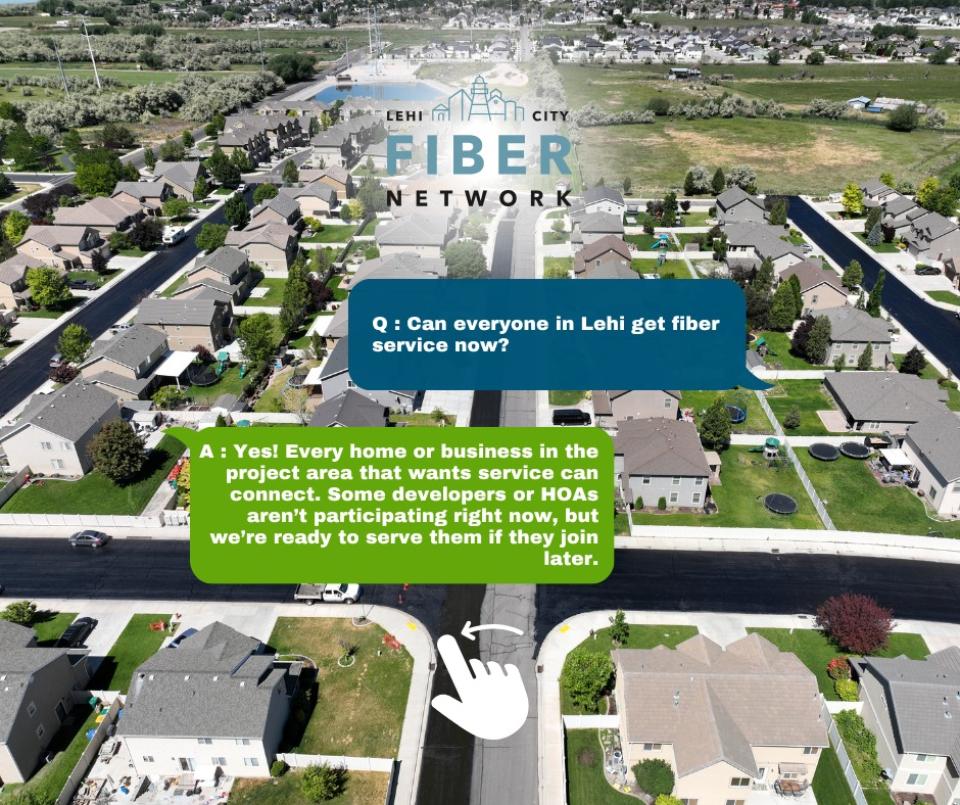
Image
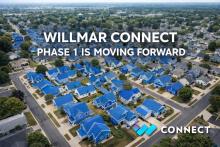
An aerial picture of Lehi announcing fiber connectivity is now available

Residents Now Have Choice of Five ISPs

“The Lehi Fiber Network has now passed approximately 23,000 locations, and we will continue expanding as the city grows,” Ruitenbeek said. “Currently, the network supports about 6,400 subscriptions, which represents an approximate 28 percent take rate.”

Vienna, Maine Looks To Grow Fledgling Muni-Network

Vienna, Maine recently launched its own municipal fiber network, finally bringing affordable next-generation broadband access to the small town’s 600 residents. As soon as service was made available, 240 of the town's 400 plus households immediately signed up for service, and the town’s focus has shifted to demonstrating the value of fast affordable access to remaining locals that regional incumbents are trying to lure away with temporary promotional offers.

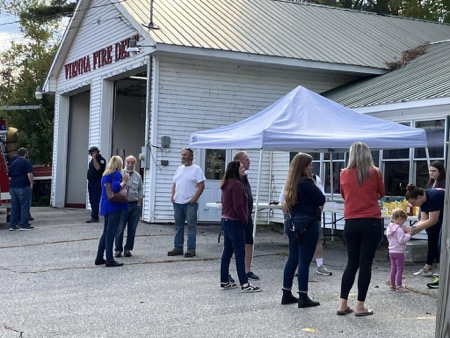
The Vienna Broadband Authority recently told the Bangor Daily News it needs 270 consistent subscriber households to maintain financial viability, so they’ve taken to demonstrating high speed connectivity at the local firehouse in order to pique the public interest.

The Vienna network was made possible largely thanks to a $2.3 million grant in 2023 from the Maine Connectivity Authority (MCA), which in turn was made possible by the 2021 American Rescue Plan Act (ARPA) passed by Congress. The town-owned network is being run in cooperation with Machias-based Axiom.

Image
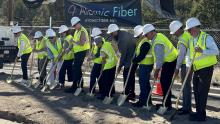
A dozen or so residents stand outside the Vienna Fire department for an event

Axiom is providing locals with three options for service: symmetrical 100 megabit per second (Mbps) service for $60 a month; symmetrical 250 Mbps service for $65 a month; and symmetrical 500 Mbps service for $110 a month. The town also offers yearly seasonal rates of $612, $663, and $1122, respectively.

The municipality’s pricing comes without usage caps, hidden fees, or long term contracts. Interested locals have to pay a $99 installation deposit that is refunded once a customer is connected.  

Williston, Florida’s $4.6 Million City-Owned Fiber Network To Go Live Soon

The city of Williston, Florida is joining the ranks of municipalities across the nation that are building their own fiber broadband networks with an eye on ubiquitous, affordable access. City leaders say they’re preparing to launch a city-owned $4.6 million fiber optic ISP to break the local telecom monopoly logjam and finally provide fast, affordable access to the local populace.

Earlier this year the Williston city council voted unanimously on a $4.6 million loan to help fund a Williston Fiber network that will reach all 3,433 local residents. Last December, the city held a city council meeting to finalize the arrangement, construction of which had technically started last summer.

“They’re excited,” Williston Mayor Charles Goodman tells local ABC affiliate WCJB. “People are just chomping at the bit, ready for it. I deal with phone calls every day. ‘When is it ready? When is it going to be here? They’re putting it in front of my house, can I hook it up now?’, you know these kinds of things.”

“What I tell them is we’re just building the project,” he added. “It’s still under construction. We’re hoping to have everything done by the end of the year.”

Image
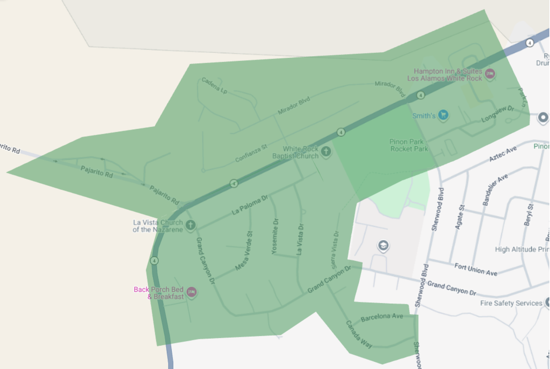
Williston FL Levy County map

Goodman has publicly expressed concern about the cost of the project, but local supporters, and all of the city council members, say the network is a necessary remedy to the lack of affordable, fast, and reliable broadband access, increasingly essential for online educational, health, employment, and other opportunities.

Alton, Illinois Altonworks Partnership Eyes Citywide Fiber

Alton, Illinois officials say they’ve struck an expanded agreement with AltonWorks, a company built specifically to revitalize the city and deal with residents’ longstanding frustration at the lack of affordable, next-generation broadband access.

Altonworks was created in 2018 by local attorney John Simmons as a “social impact development company,” tasked with revitalizing the city of 25,000. The provider was created on the back of a $20 million grant authorized by the Illinois Department of Commerce and Economic Opportunity (DCEO).

“This project’s impact extends way beyond Alton,” DCEO Assistant Director Cameron Joost recently said at the project’s unveiling

“It’s a model for communities across Illinois approaching broadband infrastructure with vision, partnership, and commitment to equity.”

Altonworks is partnering with i3 Broadband, which broke ground on a new $25 million FiberNet project. FiberNet is projected to reach 94 percent of the city's residents with fiber broadband speeds up to 10 gigabits per second (Gbps). The $25 million fiber build is slated to be completed sometime in 2027.

Image
A street line with low rise brick facade buildings in Alton's historic district

The deployment comes to a community where broadband access is primarily dominated by entrenched incumbent telecom giants like Charter Communications and AT&T. A lack of real competition has resulted in spotty access, slow speeds, high prices, and substandard customer service.

Gateway Cities Fiber Project Rolls On, Aims To Revolutionize California Broadband

Two dozen California cities are making progress bringing affordable fiber to 16,500 new locations in the Golden State. The collaborative middle mile project, dubbed the Gateway Cities Council of Governments' (GCCOG) Gateway Cities Fiber Optic Network Project, could revolutionize connectivity for a broad swath of Californians long stuck on the wrong side of the digital divide.

While the project should be transformative, questions remain if the project will reach the full potential of its original 2021 vision after some significant revisions were made to California’s expansion plans in the summer of 2023.  

The $104 million broadband infrastructure project is leveraging money from the California Department of Technology’s Middle Mile Broadband Initiative and the California Public Utilities Commission’s Last Mile Federal Funding Account Grant Program (FFA).

Both are part of a broader $6 billion California “Broadband For All” initiative aimed at boosting broadband competition and driving down broadband access costs statewide. The initiative in turn was enabled by 2021 federal infrastructure and COVID relief legislation resulting in a generational flood of historic broadband subsidies.

All told, the $104 million Gateway Cities Fiber Optic Network Project aims to connect 24 cities, 4,254 unserved locations, and as many as 16,500 locations with 74 miles of next-generation gigabit-capable fiber. The network will also bring faster fiber connectivity to 72 anchor institutions and public safety entities scattered across Southeast California.

Decorah, Iowa Strikes Partnership to Build City-Owned Fiber Network

Decorah, Iowa has struck a public private partnership with West Union Trenching to deploy a modern fiber-to-the-home (FTTH) network that passes every household in the city.

The project is the culmination of decades of planning and frustration at the lack of affordable, next-generation broadband in the city of 7,500.

According to the city, the Decorah 2025 Fiber to the Home Project will finally begin construction early next year.

The city has also struck a deal with Minnesota-based AcenTek to operate the system and provide retail internet service to residents. Network equipment and construction is being financed by a $13.7 million loan approved last month by the city’s Municipal Telecommunications Utility Board of Trustees.

“The fiber plant and electronics will be city owned, our operations side of it is being handled by Acentek,” Chopper Albert, Decorah IT Director told ISLR.

The first subscribers are expected to come online sometime in early 2027. The project’s origins extend back more than a decade after locals struggled to gain access to affordable, fast, and reliable broadband access.

“This is a unique start-up arrangement for Iowa,” said Travis Goedken, City Manager of the City of Decorah.  “After reviewing multiple business plan options since the successful election by Decorah residents in 2015 to establish a Board-governed municipal telecommunications utility, this was the most favorable option.

"City staff and the Municipal Telecommunications Utility Board have been working diligently the last two years to organize and execute the necessary steps to make this a reality.”

Superior, Wisconsin’s ‘Game Changing’ Open Access Fiber Network Goes Live

Superior, Wisconsin’s community-owned open access fiber network has gone live in its first two deployment neighborhoods, as the city works toward providing affordable next-generation fiber access to the city’s long under-served community of 26,000.

When we last checked in with Superior back in April, the city was working with Nokia for final configuration and testing before launch. Now, the municipal broadband network says its ConnectSuperior fiber network is live in its first two target neighborhoods in the northern part of the city (see the city’s latest deployment map).

The city’s open access network means that multiple broadband providers can compete over the same shared infrastructure. Historically such a model helps boost competition and drive down costs for both consumers and competitors. That’s already the case in Superior, where the city’s website lists two providers – Advanced Stream and Superion Networks – with more on the way.

Image
Superior Wisconsin UW Superior entrance

Advanced Stream is offering locals three tiers of service: a symmetrical 300 megabit per second (Mbps) tier for $63 a month; a symmetrical 650 Mbps tier for $75 a month; and a symmetrical one gigabit per second (Gbps) tier for $83 a month.

Superion is offering three tiers of service as well: a symmetrical 300 Mbps tier for $63 a month; a symmetrical 650 Mbps tier for $75 a month; and a symmetrical 1 Gbps tier for $85 a month. Both companies offer phone bundles for a modest additional surcharge.