Infrastructure Investment and Jobs Act

Content tagged with "Infrastructure Investment and Jobs Act"

Related Topics
Displaying 71 - 80 of 102

ISPs Large and Small Push for Tax Exempt Broadband Grants

After years of efforts, the telecom industry and a range of independent broadband experts are making progress in a quest to make broadband grants tax exempt, a move industry players large and small say is necessary if the federal government wants the historic round of new federal broadband funding to benefit as many un- and under-served Americans as possible. 

During previous broadband grant programs, such as the (Broadband Technology Opportunities Program) BTOP and (Broadband Initiatives Program) BIP grants in 2010, the Internal Revenue Service had the authority to unilaterally exempt some grants from taxation. 

The Tax Cuts and Jobs Act (TCJA) required that broadband grants be treated as taxable income. As a result, telecom industry watchers have been warning since March that upwards of 21 percent of new grant awards would need to be paid back to the United States government in the form of taxation, complicating project financing and scale. 

“Entities expecting to receive grant funds would need to budget for the tax bill, potentially requiring a reduction in the scope of their project,” Casey Lide of the law firm Keller & Heckman wrote in a post detailing the implications. “Entities might also consider structuring a project so that grant funds are received by tax-exempt entities.”

With more than $50 billion in Infrastructure Investment and Jobs Act (IIJA) and American Rescue Plan Act (ARPA) funding waiting in the wings, industry players large and small are working to reverse the changes imposed in 2017 before the tax man comes knocking.

Annual Digital Infrastructure Investment Event in Washington DC

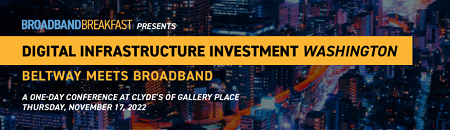
Joined by an array of leading broadband experts, infrastructure investment fund managers, institutional investors, private equity, and venture capitalists will gather in the nation’s capital next week for a day-long in-person conference to discuss and explore the digital infrastructure and investment asset profile required to support a 21st century information economy.

The Annual Digital Infrastructure Investment conference, which brings the broadband infrastructure and financial services communities together, will be held on Thursday, November 17, 2022, at Clyde’s of Gallery Place in Washington, D.C. And though spots are filling up fast, there is still time to register to attend here.

The conference program will begin at 8:30 a.m. and run until 3:30 p.m. and will feature four panels. The first panel – What’s the State of the Infrastructure Investment and Jobs Act (IIJA)? – will be led by moderator Gabriella Novello, Assistant Editor of Communications Daily, and Glen Howie, Director, Arkansas State Broadband Office. The panel will explore how state broadband offices are feeling about the pace of the National Telecommunications and Information Administration (NTIA) in moving the BEAN program forward, what states are doing to prepare for it, how big of an impact the infrastructure bill will have on the broadband industry.

Image

The second panel – Broadband Mapping: Are We on the Right Track or the Wrong Track? – will include Bryan Darr, Executive Vice President of Smart Communities at Ookla and Jim Stegeman, President of CostQuest Associates. That panel will get into the nitty gritty of the Federal Communications Commission’s (FCC) quest to publish more accurate broadband maps.


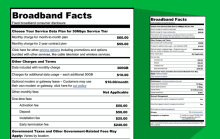
Following Through on Transparency: A Broadband Nutrition Label Status Report

Nearly one year ago on November 15, 2021, Congress passed the Infrastructure Investment and Jobs Act (IIJA), which contained significant legislation around broadband. One piece, which the Institute for Local Self-Reliance (ILSR) has studied closely over the past year and a half, is the implementation of a broadband nutrition label which would require the transparent disclosure of broadband pricing and service information.

While this issue gets very little news coverage, it is an important undertaking as the big providers have a long-established habit of hiding pricing and speed information from subscribers, which prevents them from making informed choices and can leave them vulnerable to exploitation. Our advocacy for the label, and the original research behind our position, can be found here. The FCC is now under deadline to release an order to “promulgate regulations to require the display of” the label by November 15 of this year. We’ve taken a moment here to re-access the issue, offer a few updates, and highlight the ingredients of a strong broadband nutrition label. 

Pushing for Clarity, Easy Accessibility, and Enforcement

ILSR, along with 30 other digital equity organizations, recently filed a letter to the FCC supporting the creation of the broadband consumer label and advocating that it be published in a way that makes it clear and easily accessible for customers. While ILSR believes the label is a key decision-making tool and should be published at the point of sale, we reject proposals to limit the label’s display to the point-of-sale only. We emphasize in this letter that the label should also be published on the monthly bill to provide an additional provider accountability mechanism that allows customers to understand what they're paying for.  

Charter, Comcast Continue to Dominate State Grant Awards

While cooperatives, utilities, and municipalities are seeing a welcome portion of Covid relief and infrastructure bill funding, the nation’s two biggest cable broadband monopolies continue to hoover up the lion’s share of most new broadband infrastructure grants. 

All told, the American Rescue Plan Act and Infrastructure Investment and Jobs Act will deliver more than $50 billion in new funding for broadband infrastructure. And while cooperatives and utilities have been big winners in states like Tennessee, a recent breakdown by Fierce Telecom of money awarded so far shows that cable monopolies have been the biggest winners by far. 

Charter, Comcast Continue to Dominate State Grant Awards

While cooperatives, utilities, and municipalities are seeing a welcome portion of Covid relief and infrastructure bill funding, the nation’s two biggest cable broadband monopolies continue to hoover up the lion’s share of most new broadband infrastructure grants. 

All told, the American Rescue Plan Act and Infrastructure Investment and Jobs Act will deliver more than $50 billion in new funding for broadband infrastructure. And while cooperatives and utilities have been big winners in states like Tennessee, a recent breakdown by Fierce Telecom of money awarded so far shows that cable monopolies have been the biggest winners by far. 

As of September, Charter (which sells service under the Spectrum brand) had won more than $170.8 million in grants across Ohio ($51 million), Kentucky ($49.9 million) Indiana ($27 million), Georgia ($12.2 million), Maryland ($8.5 million), Louisiana ($7.88 million), Alabama ($7.26 million), Wisconsin ($5.9 million) and Pennsylvania ($1.2 million).

Alabama, New Mexico Voters Eye Constitutional Amendments for Broadband Funding

Alabama and New Mexico voters will soon be given the midterm option of changing their state constitutions to help boost broadband funding and deployment, albeit in notably different ways. 

In Alabama, voters will head to the polls on November 8th to vote on a Broadband Internet Infrastructure Funding Amendment that would amend the state's constitution "to allow local governments to use funding provided for broadband internet infrastructure under the American Rescue Plan Act (ARPA) and award such funds to public or private entities."

County leaders have spent much of this year warning that Section 94 of the Alabama Constitution bans the state from granting public money or “things of value” to local governments for public and private use. That’s a significant problem when it comes to the $276 million in ARPA funds Alabama Governor Kay Ivey earmarked for broadband expansion last March.

Programs such as the USDA’s ReConnect and the FCC’s Rural Digital Opportunity Fund (RDOF) haven’t run afoul of the Alabama Constitution because they both involve the federal government directly doling out funds for broadband expansion. But ARPA funding allows local municipalities to distribute a portion of state-allocated funds.

In Our View: Slightly Better FCC Maps on Horizon, Maybe

Welcome to another installment of In Our View, where from time to time, we use this space to share our thoughts on recent events playing out across the digital landscape and take the opportunity to draw attention to important but neglected broadband-related issues.

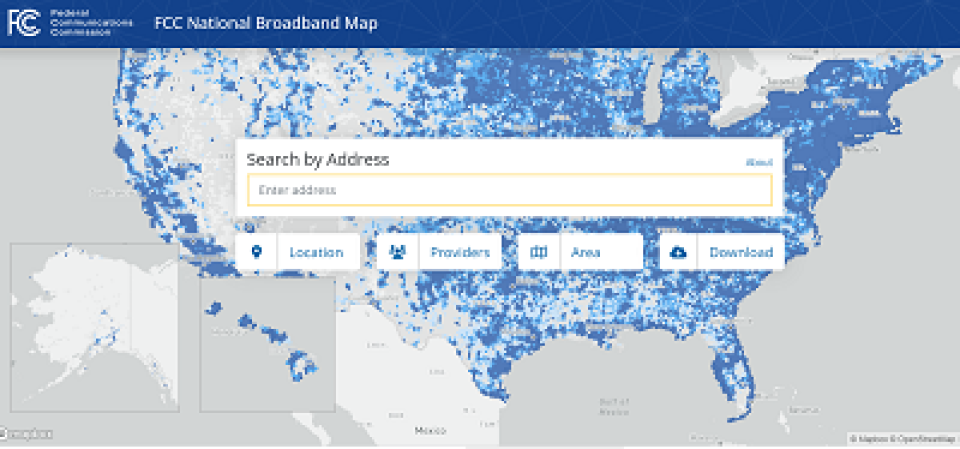
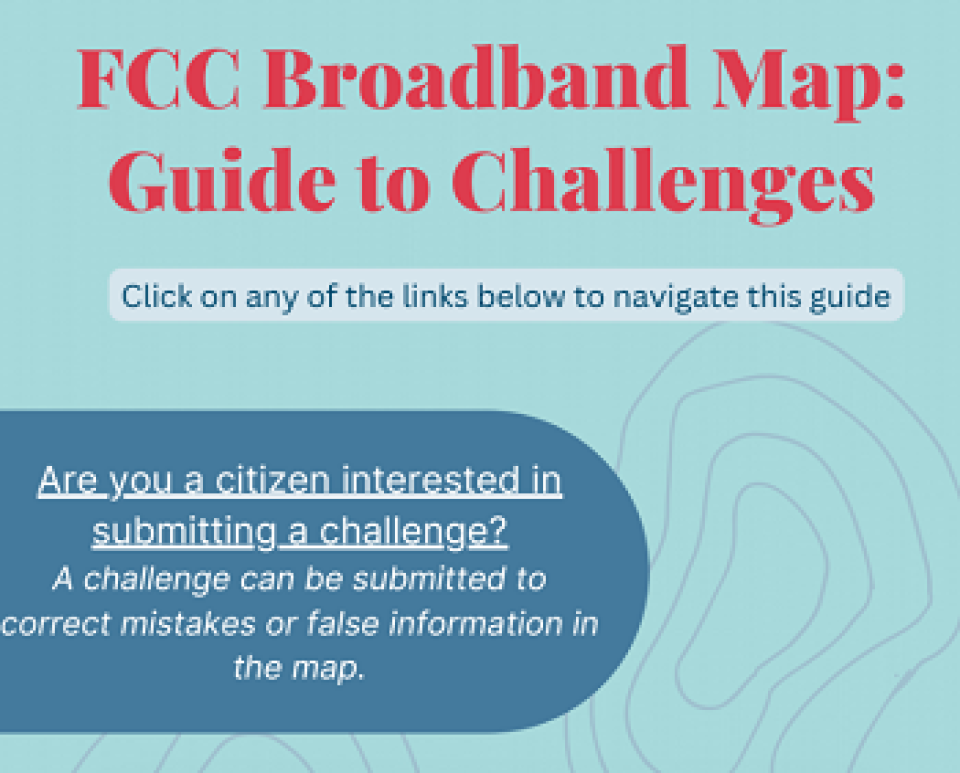
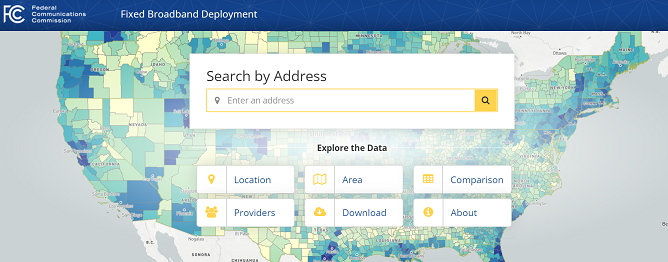
As its ongoing work to revamp the agency’s notoriously inaccurate broadband coverage maps continues, the Federal Communications Commission (FCC) announced last week the opening of a window for states, local and Tribal governments, service providers, and other entities to challenge the service data submitted by providers over the summer.

At the end of June, as FCC chairwoman Jessica Ronsenworcel noted, the FCC “opened the first ever window to collect information from broadband providers in every state and territory about precisely where they provide broadband services.” 

The key word here is “precisely” because the truth is: no one really knows precisely where broadband is, or is not, available. And with tens of billions of dollars in federal funding being spent to deploy high-speed Internet infrastructure, accurate mapping data is essential for targeting where those funds would be best allocated in each state and U.S. territory.

Image

Historically, the FCC relied on self-reported submissions of Internet service providers (ISPs) for information on which locations they serve and what speeds are available at those addresses. However, in practice, that meant the FCC maps could declare an entire census block to be “served” by a broadband provider if that provider claimed the ability to serve just one home in the entire block; thereby overcounting how many households have access to broadband.

Louisiana First State to Get BEAD Planning Funds as State GUMBO Grants Get Messy

The National Telecommunications and Information Administration (NTIA) announced earlier this week that Louisiana will be the first state in the nation to receive federal grant planning funds to help states prepare for the deployment of high-speed Internet infrastructure and digital skills training under the Biden Administration’s “Internet for All” initiative.

Enabled by last year's passage of the Infrastructure Investment and Jobs Act (IIJA), the $2.9 million heading to the Pelican State is from the Broadband Equity Access and Deployment (BEAD) program and the Digital Equity Act (DEA) – a development Commerce Secretary Gina Raimondo said was a signal that “the Internet for All initiative is on track and on schedule.”

Over the coming weeks, every state and territory will have funding in hand as they begin to build grant-making capacity, assess their unique needs, and engage with diverse stakeholders to make sure that no one is left behind. My thanks go to Governor Edwards and his team; Louisiana was among the first to sign onto Internet for All and to apply for funding, and I know they’re ready to get to work for the people of Louisiana.  

According to NTIA’s press announcement, $2 million of the planning funds being allocated to Louisiana come from the BEAD program and will help the state:

Cleveland Seeks Partner to Turn ‘Worst-Connected City’ into Smart Fiber City

Three years ago, the National Digital Inclusion Alliance (NDIA) ranked Cleveland as the worst-connected city in the United States (with more than 100,000 households).

City leaders are now using its American Rescue Plan funds to make that dishonorable distinction a thing of the past with a plan to invest $20 million to get the “Comeback City’s” digital future rockin’ n rollin’.

Although the city (pop. 383,000), home to the Rock & Roll Hall of Fame, is currently underserved by AT&T, Charter Spectrum, and T-Mobile, earlier this summer the city issued a Request for Proposals (RFP) that “seeks one or more partners” to help bridge Cleveland’s digital divide following a two-phased approach that first addresses the city’s immediate needs before tackling its longer-term strategic goals.

More specifically, the RFP details “the Phase I goals: ensuring that individuals who do not engage online can become full Internet users as quickly as possible, relying on digital adoption and affordable access strategies. (While) the Phase II goals (envision) —ubiquitous fiber optic connections and Smart City deployments.”

Or, as Cleveland Mayor Justin Bibb told Cleveland.com:

The first phase is on making sure on the short-term basis we connect as many families as we can to high-speed broadband, and the second phase will consist of making sure we lay fiber all across the city so we can be competitive, not just five years from now, but 20, 30 years from now, as a city and as a region.

Technically, the RFP that was issued is to fully implement the first phase of the city’s vision and set the table for the second phase. Work beyond the $20 million the city has set aside would require the issuance of a second RFP.

Should the BEAD Program Be As Onerous As It Seems? - Episode 512 of the Community Broadband Bits Podcast

This week’s podcast comes from the Fiber Connect 2022 conference held in Nashville, Tennessee last month where Christopher caught up with Heather Mills, Vice President for Grants and Funding Strategies at CTC Technology & Energy. During the conversation, Heather challenges Christopher’s assessment of the BEAD program in the Infrastructure Investment and Jobs Act (IIJA) and what he calls the program’s “complex and onerous” requirements. Heather kicks things off by telling Christopher to “get over it” because ultimately the program uses tax dollars, emphasizing how important it is that those funds are not misspent.

Christopher and Heather then dive into the various criticisms that have been lodged since the BEAD NOFO was released, including the letter of credit requirement, compliance with the Davis-Bacon Act, environmental assessments and the meaning of “climate resiliency,” and whether the various regulatory hoops program participants have to navigate will ultimately crowd-out smaller and mid-sized ISPs.

This show is 34 minutes long and can be played on this page or via Apple Podcasts or the tool of your choice using this feed

Transcript below. 

We want your feedback and suggestions for the show-please e-mail us or leave a comment below.

Listen to other episodes here or view all episodes in our index. See other podcasts from the Institute for Local Self-Reliance here.

Thanks to Arne Huseby for the music. The song is Warm Duck Shuffle and is licensed under a Creative Commons Attribution (3.0) license.