
Infrastructure Investment and Jobs Act

Content tagged with "Infrastructure Investment and Jobs Act"

Related Topics
Displaying 61 - 70 of 102

Cleveland, Tennessee’s City-Owned Utility Getting Into Broadband Business

The Cleveland, Tennessee city council has approved the creation of the Cleveland Utilities Authority, the first step in allowing the city-owned utility to get into the broadband business. The goal: improve utilities services and provide city residents with faster, cheaper, and more reliable fiber access after years of neglect by often-apathetic regional telecom monopolies.

The plan, approved by the city council with a 7-2 vote (see full video here), paves the way for Cleveland’s city-owned utility, Cleveland Utilities, to begin deployment of a $72 million fiber network. The city’s plan, documented in detail here, is heavily inspired by the successes seen by Chattanooga, Tennessee’s publicly-owned utility, EPB.

Of the initial $72 million investment, $64 million will be funded by public-issued debt, and go towards construction of the network, which Cleveland Utilities states should begin in March of 2024 and be completed in “roughly two to three years” barring complications.

Image
Cleveland Utilities logo

An additional interdivisional loan of $8 Million will fund three years of operation for the new division. The utility’s plan is based on a 30 percent take rate, and aims to become cash flow positive between years 2-3, with all debt paid between years 10 and 12.

Maryland Awards $92 Million In Grants For 35 Projects

Maryland officials have announced that the state is doling out $92 million in new broadband grants to expand access to affordable broadband. The latest round of funding was made possible via the Connect Maryland Network Infrastructure Grant Program, and will help expand broadband access to 14,500 unserved locations statewide.  

According to a state press release, this latest round of funds should help fund portions of 35 different projects scattered around the state. A full breakdown of award winners indicates that while Comcast and Verizon secured $14.4 million and $11 million respectively in new funding, smaller ISPs and cooperatives were, unlike in many states, well represented.

Quantum Telecommunications, a smaller local ISP founded in 1995, was slated to receive $15.3 million in funding to connect 1,693 locations to broadband. Choptank Electric Cooperative, first founded in 1938, was among the biggest award winners, receiving $16 million to deliver broadband to 1,693 locations currently lacking broadband access.

New Report: Universal Broadband Infrastructure Would Return $43 million Annually to Counties Across Rural Black Belt

In partnership with the Southern Rural Black Women’s Initiative (SRBWI), today ILSR is releasing a new report that examines the link between high-speed Internet infrastructure, access to healthcare, and the economic implications involved.

The report – “Increased Wellness and Economic Return of Universal Broadband Infrastructure: A Telehealth Case Study of Ten Southern Rural Counties” – has particular relevance for those living in rural broadband deserts as it details how universal, affordable, broadband infrastructure would return $43 million per year using telehealth across 10 counties in the Black Belt of Alabama, Georgia, and Mississippi.

At a virtual press briefing today, SRBWI leaders and organizers were joined by Dr. Sandra B. Reed of Emory Healthcare; as well as ILSR Senior Researcher and the report’s lead author, Ry Marcattilio, to explain how robust broadband infrastructure could pay for itself in short order and open up untold access to healthcare, educational opportunities, economic development, community engagement, and other benefits along the way.

Image
Telehealth report savings table

“It’s easy to miss the connection, but hard to overlook what’s at stake as rural hospitals close and the cost of transportation to get to far-off healthcare facilities presents a real barrier. This is about access to healthcare and Black women being denied the opportunity to take advantage of telehealth. The broadband infrastructure that’s needed for that just isn’t there,” said Shirley Sherrod, SRBWI State Lead for Georgia and Director of the Southwest Georgia Project in Albany Georgia.

Broadband … to Access Longer, Healthier Lives

LA County Selects Pilot Communities for Major Broadband Expansion

LA County is accelerating its plan to deliver affordable broadband access to the city’s unserved and underserved, with an eye toward building one of the biggest municipal broadband networks in the nation. But the county is first taking baby steps, recently announcing target communities prioritized in a pilot program aimed at bridging the digital divide.

In late 2021, the LA County Board of Supervisors unanimously approved a major new broadband expansion plan. The plan’s first order of business: deliver free broadband to the 365,000 low-income households in Los Angeles County that currently do not subscribe to service, starting with a 12,500-home pilot project.

Last September, the LA County Board of Supervisors approved using a total of $56 million in American Rescue Plan funding to help connect these families to fast, free, and reliable Internet service.

To help coordinate the effort, LA county designated the Internal Services Department (ISD) as the lead agency responsible for managing this and any future projects. The ISD is now working in conjunction with the Los Angeles County Board of Supervisors to determine which areas of the county should see funding and logistical priority. 

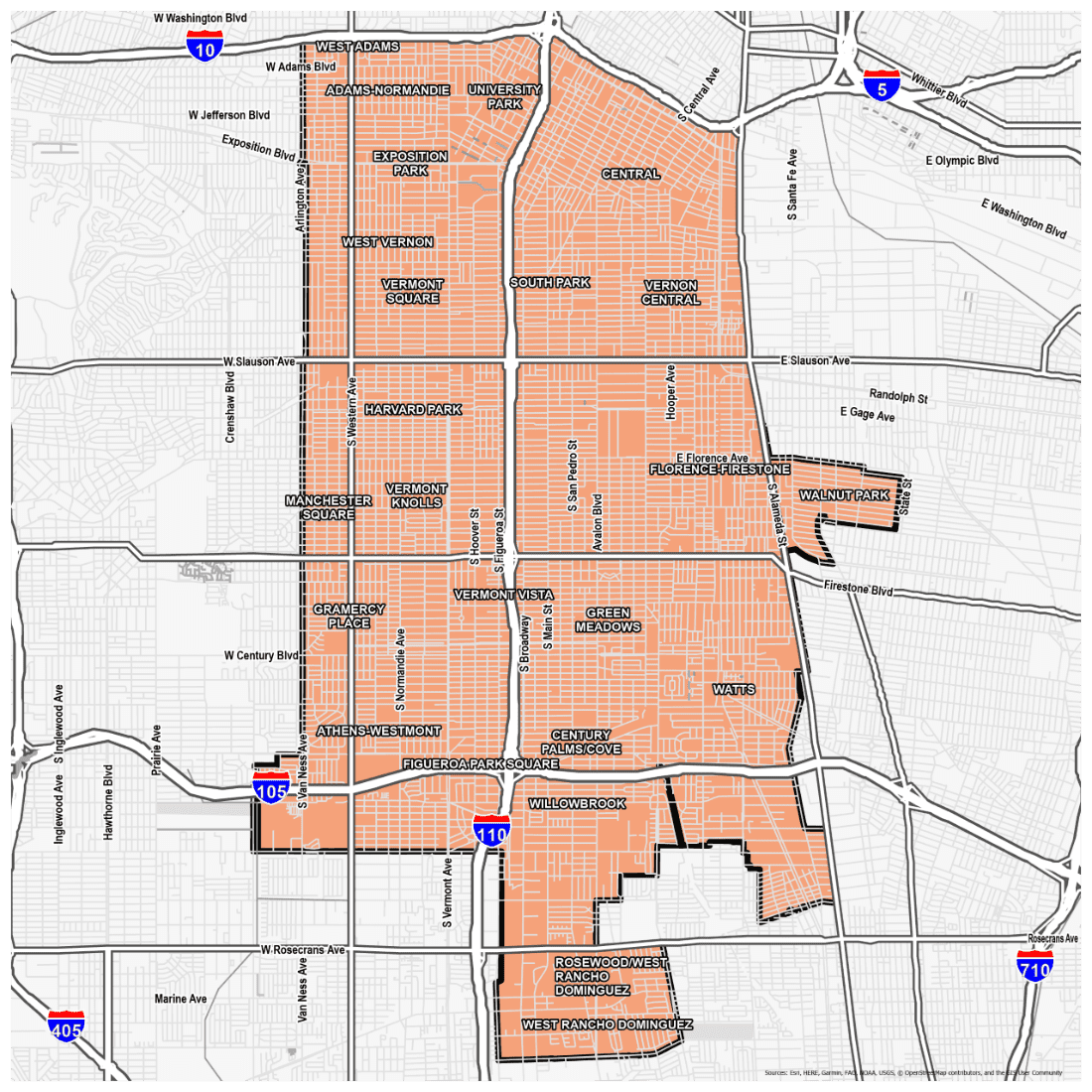
The ISD and LA County Supervisor Holly Mitchell recently released a map of priority locations where the County will build low-cost internet for households in the Second District. 

“I joined the Los Angeles County Board of Supervisors in the height of the pandemic,” Mitchell said in an announcement. “And it became very clear that access to reliable Internet was critical to our success of emerging out of the pandemic. In the Second District, as much as 30 percent of households lack home internet [access]. This is unacceptable, and Los Angeles County is working aggressively to upend this. We are leading the nation on a plan to crush the digital divide.” 

IN OUR VIEW: Friday the 13th Mapping Challenge Deadline Highlights Failed Process

Last Friday was a major milestone in the process of moving $42.5 billion from the federal government to states to distribute mostly to rural areas to build new, modern Internet access networks. January 13th marked the deadline for error corrections (called challenges) to the official national map that will be used to determine how much each state will get. 

As an organization that has worked in nearly all 50 states over the past 20 years on policies to improve Internet access, we spent the last few weeks struggling to understand what was actually at stake and wondering if we were alone in being confused about the process. Despite the stakes, almost no expert we talked to actually understood which challenges – if any – would fix errors in the map data before it was used to allocate the largest single federal broadband investment in history. 

Update: On January 13th, Joan Engebretson confirmed in Telecompetitor that the location challenges deadline was October 30, 2022, and not Jan 13, 2023.

Image
FCC logo

This article will explore what is going wrong with the distribution of that $42.5 billion, the mapping process, and continued failure of the Federal Communications Commission (FCC) to show competence in the broadband arena. And it offers ways to fix these important problems as every jurisdiction from Puerto Rico to Hawaii feels overwhelmed by the challenge. 

Wireless Is Essential, But Fiber Remains the Future (For Now)

From the miraculous benefits of WiMax to the hype surrounding 5G, U.S. wireless companies have long promised near-Utopian levels of technological revolution.

Yet time after time these promises have fallen short, reminding a telecom sector all-too-familiar with hype that fiber optics remains, for now, the backbone of bridging the digital divide. 

From Google Fiber to Starry, numerous companies have promised to use wireless technology as a supplement or even replacement for future-proof fiber. But more often than not these promises have failed to have any meaningful impact at scale. Worse, many wireless services often fail to deliver on a routinely neglected aspect of telecom policy: affordability.

That’s not to say that wireless doesn’t have an immense, integral role to play in shoring up the nation’s broadband gaps. 5G, rural and urban small WISPs, satellite, and other wireless options are all essential in bridging the digital divide and extending access to rural communities and tribal nations (see: the FCC Tribal Priority Window and the beneficial wireless options that have emerged). 

But reality continues to demonstrate that there’s simply no substitute for the kind of high capacity, affordable fiber efforts being deployed by a steady parade of municipalities, cooperatives, and city-owned utilities. And as an historic level of federal subsidies wind their way to the states, the distinction is more important than ever. 

A Rich History Of Wishful Thinking

The industry crown for unwarranted wireless industry hype likely belongs to WiMax, a family of wireless broadband communication standards based on the IEEE 802.16 set of standards and introduced in 2001.

From 2001 to 2011, there were no shortage of missives about how the standard would revolutionize connectivity worldwide, ushering forth the golden age of affordable broadband access. There were countless warnings that marketing departments had gotten well ahead of themselves, all widely ignored by the speculative investment set.

FCC Issues Notice of Proposed Rulemaking to Address Digital Discrimination

While many of us were in the midst of celebrating the holiday season, a number of significant broadband developments were being unwrapped in the nation’s capital.

The National Telecommunications and Information Administration (NTIA) announced that all 50 states and territories have received critical broadband infrastructure planning funds from the bipartisan Infrastructure Investment and Jobs Act (IIJA); the opportunity to make sure you're represented on the Federal Communication Commission (FCC) national broadband maps is closing in a week; and the FCC is kicking off a major initiative to combat digital discrimination which will have far-reaching consequences for the lowest-income households that only have access to low-speed or high-cost connections.

Image
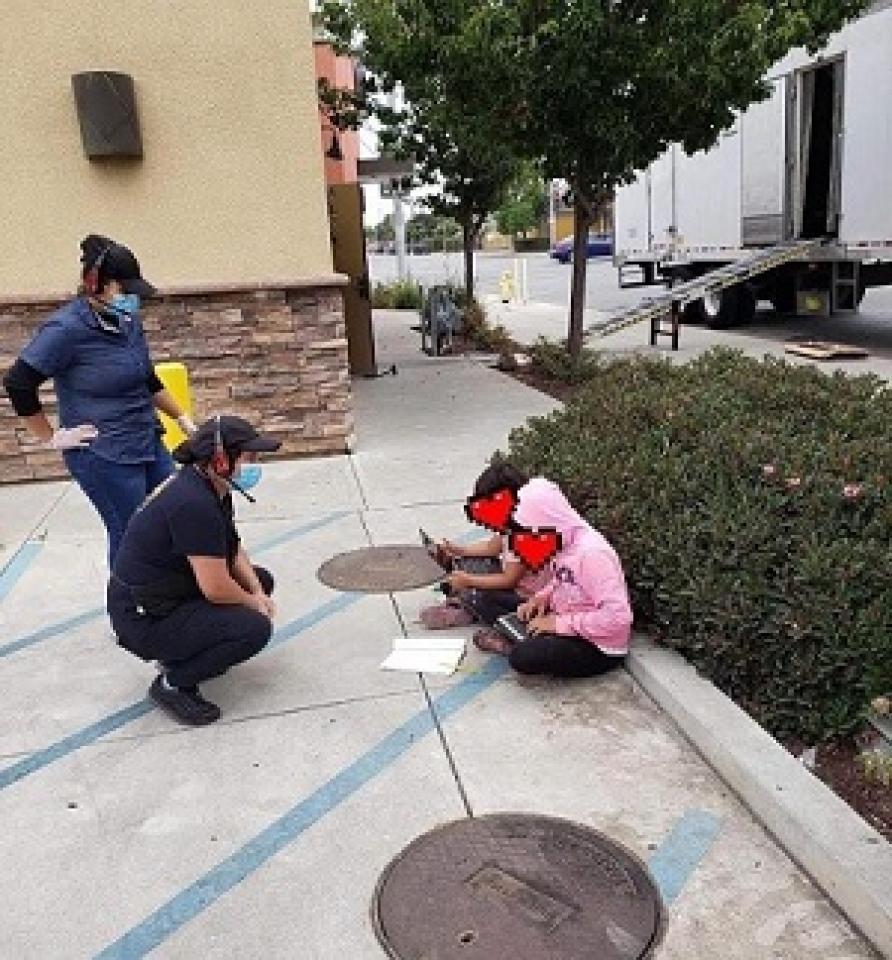
students in fast food lot using WiFi

In the days before Christmas, the FCC issued a Notice of Proposed Rulemaking, kicking off the implementation of a provision required by the IIJA on the “Prevention and Elimination of Digital Discrimination.”

As explained in the Notice, the FCC will “seek to identify and address the harms experienced by historically excluded and marginalized communities; provide a grounding for meaningful policy reforms and systems improvements; and establish a framework for collaborative action to promote and facilitate digital opportunity for everyone.”

All States Now Have ‘Internet for All’ Planning Funds; Eyes Now on FCC Maps

As the bipartisan Infrastructure Investment and Jobs Act (IIJA) is set to unleash an unprecedented amount of federal funds to expand high-speed Internet access as part of the Biden-Harris administration’s “Internet for All” initiative, all 50 states and U.S. territories have now received their initial planning funds.

Just before Christmas, the U.S. Commerce Department’s National Telecommunications and Information Administration (NTIA), which is administering the broadband funds in the infrastructure bill, announced Massachusetts as the final state to receive its portion of the planning funds ($6 million) in a joint press conference with outgoing Massachusetts Gov. Charlie Baker.

U.S. Commerce Secretary Gina Raimondo said the end-of-the-year allocation of planning funds for Massachusetts marked a significant milestone in the federal government’s support of state broadband offices rolling out competitive grant programs to build new broadband infrastructure and an array of other initiatives to close the nation’s digital divide.

All 50 states, Washington, D.C., and Puerto Rico have now received these planning funds. In a matter of months, we’ll begin to see plans from around the country, detailing how each state will connect all their residents to high-speed, affordable Internet service.

With the broadband-related portion of the IIJA made up of two major funding sources – $42.5 billion in the Broadband, Equity, Access and Deployment (BEAD) program and $2.5 billion in Digital Equity Act (DEA) programs – each state will receive $100 million in BEAD funding, plus an additional amount based on a formula that includes how many unserved and underserved households are in each state.

Daily Yonder: Do You Really Have the Broadband the FCC Thinks You Have?

As we head into the holiday break, we present you with a bit of commentary made possible by a practical gift created by our GIS and Data Visualization Specialist Christine Parker.

Image
FCC new map

You can read about it in The Daily Yonder, who published our piece on the challenge process for the Federal Communication Commission (FCC) new Broadband Availability Map.

It details why it’s important to make the map as accurate as possible and points readers to Christine’s short videos and PDF walk-through guide on how to file a challenge.

You can find it here.

Happy Holidays!

New Resource: How to Submit Challenges to the FCC Broadband Map

In November, the Federal Communication Commission (FCC) unveiled its new Broadband Availability Map.

Along with a new map style, the FCC also introduced a challenge process that allows everyone – from governments to citizens – the ability to highlight false claims of availability and ensure that every home and business location is accounted for in the map.

With good reason, many are confused about the information shown in the map, the challenge process, and why we should care about helping the FCC make corrections.

Image
FCC Challenge Guide

While we too are frustrated about the cost and subsequent quality of this map, we believe it is important to contribute to improving this map to enable an equitable allocation of the $42 billion in Broadband Equity, Access, and Deployment (BEAD) Program funds to states next year.

Step-By-Step Guide

In an effort to provide a better understanding of the map itself, and the challenge process, we created a short series of instructional videos and a click-through guide. Through the videos we provide: