
Infrastructure Investment and Jobs Act

Content tagged with "Infrastructure Investment and Jobs Act"

Related Topics
Displaying 1 - 10 of 102

New Law Would Force FCC To Restore Communications Equity And Diversity Council

Lawmakers are pressuring the FCC to restore a council dedicated to ensuring that broadband availability is both equitable and affordable, especially for marginalized communities that have historically been overlooked and overcharged when it comes to Internet access.

A cornerstone of the Trump administration has been the wholesale (and at times illegal) termination of any and all digital equity initiatives aimed at making broadband more uniformly available and affordable for those long stuck on the wrong side of the digital divide.

That included last year’s dismantling of the federal Digital Equity Act, which mandated the creation of three different grant programs intended to shore up equitable, widespread access to affordable Internet, while providing the tools and digital literacy education needed to help neglected U.S. communities get online.

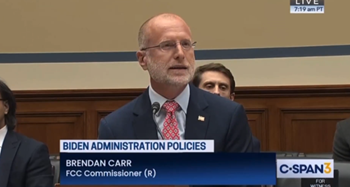
It also included the Trump FCC’s dismantling of the Communications Equity and Diversity Council (CEDC), which has operated in some capacity since 2003 under multiple partisan administrations to make the communications sector more equitable and reduce digital discrimination. Until FCC Chair Brendan Carr arbitrarily disbanded it in January 2025.

Image
FCC Commissioner Brendan Carr on CSPAN

Carr has historically been allied with the nation’s biggest telecom giants, consistently siding with regional monopolies on nearly all policy initiatives. But he’s also dutifully loyal to President Trump, who has targeted efforts to combat systemic racism.

San Juan Islands’ Rock Island Communications Passes 7,000 Subscribers

The remote islands of San Juan County, Washington are increasingly being served with next-generation fiber and wireless thanks to Rock Island Communications (RIC), a locally-owned Internet subsidiary of the Orcas Power & Light Cooperative (OPALCO).

Part of a member-owned, cooperative utility that’s been providing electricity to the county since 1937 – RIC is celebrating a decade of what it calls “remarkable growth” for the tall task of remote island deployments to the county of 18,000.

The subsidiary says it just reached 7,000 subscribers across San Juan County, and that its annual revenue has grown dramatically during the last decade – from approximately $1.8 million in 2015 to more than $12.3 million in 2025.

“Over the past decade, Rock Island has also achieved several important financial milestones that demonstrate the success of OPALCO’s long-term vision,” OPALCO’s Krista Bouchey says of the expansion. “The company became cash-flow positive in 2020, and in 2023 and 2024 achieved positive net income, marking a major turning point after years of investing in infrastructure and growing its subscriber base.”

Image
Rock Island Communications headquarters in building that looks like house

The San Juan Islands are clustered in the most northwest tip of Washington state, off the coast of the cities of Bellingham and Anacortes, not far from the Canadian border. A little more than a third of the residents of the 20 islands are seasonal, and the lion’s share of the territory is only accessible by ferry.

Illinois Takes Major Steps To Improve Broadband Affordability, Cooperative Expansion

The Illinois Legislature has taken several major legal steps to not only improve broadband affordability in The Prairie State, but empower local cooperatives to expand affordable, reliable fiber access to state residents long trapped on the wrong side of the digital divide.

Illinois State Sen. Rachel Ventura (D-Joliet) recently introduced Senate Bill 3612, which would amend the state’s Utilities Act to require that large private telecoms in the state provide affordable, fast broadband access to low-income state residents.

More specifically the updated law, which would take effect at the beginning of 2027, would require ISPs to provide minimum broadband download speeds of 25 megabits per second (Mbps) for no more than $15 per month and $20 per month for high-speed service of at least 200 Mbps, including all recurring taxes and equipment fees, to qualifying households.

As with other proposals of its kind, recipients would need to already participate in existing low-income assistant programs.

“Investments in broadband are essential for all Illinoisans, regardless of whether they live in a rural, suburban or urban community,” Ventura said of the proposal. “We’ve entered a new age where broadband is no longer a luxury, but an essential amenity, driving economic activity, improving education, expanding health care access and enhancing public services for all.”

BEAD ‘Non-Deployment’ Fund Guidance A No Show, Creating More Delays

The Trump administration continues to give muddled guidance in terms of the whopping $21 billion in “non-deployment” funds states should have at their disposal from the “savings” created by unwelcome changes to the federal BEAD (Broadband Equity, Access and Deployment) program.

As we noted last month, dramatic, unpopular, and unlawful changes to BEAD by the National Telecommunication and Information Administration (NTIA) have resulted in infighting and delays, after the Trump administration tried to steer billions in taxpayer funds to slower and more congested satellite broadband networks owned by the President’s biggest donors.

The broadly-criticized shift was sold as a new “benefit of the bargain” program necessary to “cut costs.” The change required that all 56 BEAD eligible states and territories complete a “benefit of the bargain” round of subgrantee selection and completely retool their broadband deployment plans – often at significant cost to states.

Bois Forte Band Begins Construction on $20 Million Tribal Fiber Project

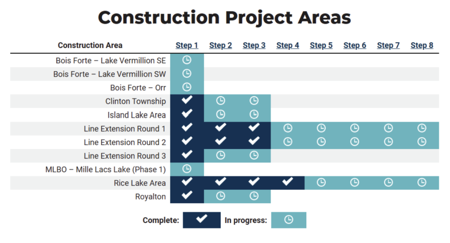
The Bois Forte Band of Chippewa (also referred to as Ojibwe) has officially begun construction on a foundational fiber optic broadband expansion project in northern Minnesota that is poised to bridge the digital divide for thousands of Tribal residents.

The ambitious undertaking is supported by a significant $20 million grant awarded under the 2021 Tribal Broadband Connectivity Program, marking a major step forward in modernizing infrastructure for the sovereign nation.

The massive project aims to overhaul the existing connectivity landscape across the Bois Forte Reservation.

Image
A graphic illustrates the status of the tribe's fiber network construction

Once completed, the new network will deliver a high-speed, future-proof up to 10 gigabit per second (Gbps) fiber-to-the-home network to over 2,097 largely-underserved Native American households, businesses, and community anchor institutions.

Many Tribal nations were skipped over by past fiber deployments either due to outright hostility to Tribal interests, or a disinterest in the work required to align for-profit deployments with the needs and wishes of what is often multiple Tribal territories.

For Bois Forte, this new fiber network is expected to have a transformative impact across several key sectors, fundamentally improving community access to vital services:

NTIA Signals It Will Follow Law on Non-Deployment Funds, But Wants More Ideas

Close to a 1,000 broadband-minded registrants attended yesterday’s listening session on how to spend an estimated $21 billion in “non-deployment” funds states should have at their disposal from the federal BEAD (Broadband Equity, Access and Deployment) program.

Hosted by the National Telecommunication and Information Administration (NTIA), the Commerce Department agency administering the program, the online listening session featured about 50 selected speakers. Most of those who spoke advocated using the money to tackle the array of non-infrastructure barriers to expand broadband (affordability, device distribution, and digital skills programs) – made all the more urgent in light of the Trump administration’s sudden “termination” of the Digital Equity Act last year.

Though it runs counter to the bipartisan infrastructure law that established the program, a handful of speakers actually suggested the funds simply be returned to the U.S. Treasury, presumably to “save taxpayer dollars.”

One speaker even tried to make the case that money Congress explicitly intended to address the nation’s massive digital divide should instead be given to Air Traffic Controllers.

Starlink Demands Less Oversight As It Receives Hundreds Of Millions In New Subsidies

Elon Musk’s Starlink is making new demands of states with an eye on eroding accountability and oversight, reheating concerns about whether spending big money on the Low Earth Orbit (LEO) network is the best possible use of taxpayer resources.

Last year, the Trump administration made revisions to NTIA rules surrounding the $42.5 billion Broadband, Equity, Access, And Deployment (BEAD) program, demanding that states de-prioritize fiber and dole out significantly more money to LEO satellite providers – a move broadly seen as a personal gift to one of the President’s biggest financial donors.

This subsidy reward, slated to be at least $733 million to start, is money that in some cases is being redirected away from higher-capacity, more affordable local options like open access community-owned fiber networks.

The NTIA changes introduced significant new delays in a program already rife with them. The Trump administration’s threat to withhold grant awards from states that focus on affordability – and the high consumer costs, environmental impact, and capacity constraints of the LEO network – risks undermining BEAD’s promise of faster, more affordable access.

Standoff Orbits 'LEO participation' 

Last week, Broadband.io and the Benton Institute for Broadband & Society obtained a copy of a letter Starlink parent company SpaceX sent to individual states, demanding freedom from state oversight and monitoring should they bungle installs or fail to deliver acceptable bandwidth.

Maryland Lawmakers Advance Broadband Affordability Bill Despite Federal Pushback

Despite a memo issued by the NTIA last summer that sought to discourage states from passing affordable broadband legislation similar to New York State’s Affordable Broadband Act, two dozen state lawmakers in Maryland have signed on to the Broadband Opportunity and Fairness Act, state legislation that seeks to address the single biggest barrier to Internet access anywhere: affordability.

HB-382, if passed, would require Internet Service Providers (ISPs) operating in Maryland to offer low-cost Internet service plans to eligible low-income households.

Introduced by Delegate Kris Fair (D-3A, Frederick Co.), the bill now has 25 co-sponsors and is slated for a Feb. 12 legislative hearing before the House Economic Matters Committee. Companion legislation has yet to be filed in the Senate, though Delegate Fair’s office says they are in discussions with state Senators about advancing a bill through that chamber as well.

Stepping Up and 'Doing Something'

New York Expands Its Historic Investment In Municipal Broadband

New York Governor Kathy Hochul has announced a dramatic expansion of the state’s Municipal Infrastructure Program (MIP), resulting in an additional $36 million cash infusion for the growing number of creative, community-owned and operated fiber expansion projects in the state.

According to a state announcement, the existing MIP program, launched in early 2024, has already funded more than $268 million in assorted open access fiber projects across the state. A state broadband office dashboard tracks all active municipal projects funded to date.

That includes efforts like the growing open access municipal fiber network in Dryden, New York, which has been steadily delivering affordable next-gen fiber to the long-underserved rural communities of Dryden and nearby Caroline (population 3,321).

New York State officials say the $268 million in MIP grant funding has funded active projects across 24 New York counties, resulting in more than 2,300 miles of new fiber optic infrastructure and 68 new wireless hubs serving more than 96,000 homes and businesses. Most of this funding was made possible by the 2021 federal American Rescue Plan Act (ARPA).

The MIP program is part of New York state’s billion dollar ConnectALL Initiative, and was specifically designed to support municipal broadband projects proven to be a viable, and increasingly popular, way to bring affordable, high-quality Internet service to long-neglected U.S. communities.

IN OUR VIEW: Decoding The Possible Meaning of “Reforms” to the Tribal Broadband Connectivity Program

In the last two months of the Biden administration, nearly $500 million in grants were announced to support Tribal broadband projects. From Alaska to Virginia, 55 Tribal nations were poised to improve Internet access and advance digital sovereignty in their communities.

As President Trump took office, more than a hundred applicants still awaited word on their proposals, with nearly $500 million still available in the Tribal Broadband Connectivity Program (TBCP).

Then, silence. Ten months of silence.

In early November, Senators Maria Cantwell (D-Wash.) and Brian Schatz (D-Hawaii) sent a letter to NTIA officials asking about the TBCP. The program was established with two appropriations totaling nearly $3 billion. The first round of TBCP grants rolled out throughout 2022 and 2023, totalling nearly $100 million in use and adoption funding and over $1.7 billion in planning or infrastructure funding.

Image
Sen. Maria Cantwell stands behind a microphone and podium with her hands raised in the air, palms upward

The $500 million announced at the end of the Biden administration was part of round two of the program, for which applications were due in March 2024. With about $1 billion available, only about half of the funding in round two had been allocated.

What was happening, the Senators asked, with the rest of that funding? There were other questions too.