
fixed wireless

Content tagged with "fixed wireless"

Displaying 131 - 140 of 185

Santa Maria, California's Conduit Investment Attracting ISP

The soil is frozen in many parts of the country, but that doesn’t stop plans to improve local connectivity with underground conduit in warmer regions. Santa Maria, California, is taking advantage of its conduit to bring a private provider to town.

Grapes And Gigs

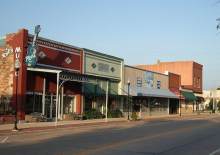
Located in wine country about 150 miles north of Los Angeles, Santa Maria (pop. 106,00) has for years been installing extra conduit whenever the community needed to make street repairs or similar infrastructure improvements. Over time, they’ve established the necessary publicly owned conduit to attract the attention of a private ISP. Santa Maria recently announced that private sector ISP, Wave Broadband, will deploy a fiber optic network within the city’s conduit. The fiber optic ring will run around the downtown area and will also connect Santa Maria’s municipal facilities, including the bus yard and the landfill.

In exchange for space in the conduit and space in Santa Maria’s data center, Wave will install and own the fiber and provide Internet access to city facilities. High-quality connectivity is critical to the city’s Police Department in its work in providing communications and support to other surrounding communities. The city also plans to offer free Wi-Fi in the downtown area.

The network will support Santa Maria Area Transit’s (SMAT) pilot to bring Wi-Fi to passengers using public transportation. Riders on a limited number of routes will have access to free connectivity starting this summer and SMAT hopes to expand the program in the future.

Improving Life In Santa Maria

City leaders see the network as an economic development tool to revitalize their downtown and attract businesses. They consider the fiber optic network a step toward Smart City projects that will attract employers and a work force seeking a high quality of life. Community leaders also intend to appraise the possibility of expanding publicly owned infrastructure to other areas of Santa Maria.

FCC Ends Speculation On Broadband Speeds, Mobile Internet Access

On January 18th, the FCC ended months of speculation and released a fact sheet that included several key conclusions to be included in the 2018 Broadband Deployment Report. The most important is that the FCC continues to recognize that mobile Internet access is not a substitute for fixed access. The Commission has also decided to leave the definition of broadband at 25/3 Mbps (down/up).

Download the fact sheet here.

“Broadband” Will Not Slow Down

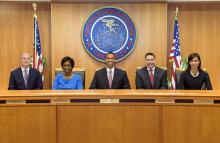
The Commission had proposed reverting to a slower definition of broadband from the current standard of 25 Megabits per second (Mbps) download and 3 Mbps upload. Under Tom Wheeler’s leadership, the FCC decided to update the standard to its current definition in January 2015, but current Chairman Ajit Pai and other Republican Commissioners suggested in last year’s Notice of Inquiry (NOI) that the FCC might effectively take us backward to a 10 Mbps/1 Mbps standard. 

The suggestion rankled better connectivity advocates and Internet users. Many recognized that lowering the standards would make it easier for the FCC to proclaim that the U.S. was making strong progress toward universal household deployment. The Commission would have been justified making such a conclusion under the standard because large sections of rural American receive DSL, fixed wireless, satellite, or mobile Internet access that would meet a lowered 10/1 standard.

Hundreds of thousands of people, organizations, and businesses filed comments opposing a slower standard. Many of them live in areas where 10/1 speeds are already available but who have been waiting for better options. Commissioners Rosenworcel and Clyburn also spoke out against the lowering broadband speeds. 

Commissioner Rosenworcel tweeted:

Christopher on TWiET: Net Neutrality, Munis, And Local Movements

It wasn’t long after FCC Chairman Ajit Pai and the other Republicans on the Commission rescinded network neutrality protections that murmurs began to rise about the future role of municipal networks. Soon, journalists reporting on tech issues began contacting us for comment about the intersection between network neutrality and publicly owned Internet network infrastructure.

The day after the FCC decision, Christopher appeared on This Week in Enterprise Tech (TWiET) with Fr. Robert Ballecer for episode 269, “After Net Neutrality.” Christopher’s segment of the show starts at around 14:16 and finishes around 44:22. Fr. Ballecer comments that, while municipal networks were of interest in the past, now that network neutrality protections have been revoked, they are a more urgent possibility.

Christopher shared some of the data we’ve discovered that reveals how very little competition actually exists, even though the FCC uses market protection as a crutch for dismantling network neutrality. The guys also discuss local franchises and how they helped to encourage deployment, limits to local franchises that exist in certain states, and existing telecommunications monopolies.

Even though municipal networks typically adopt policies that adhere to network neutrality standards, there remains a question of what will happen when those network connect to the middle mile, often controlled by companies known to by network neutrality violators. The hosts and Christopher speculate on whether or not publicly owned networks can create the competition needed to put the big companies on their best behavior. They also get into wireless vs. mobile vs. fiber and the struggle to accept the need for complements. Christopher offered some tips on ways to initiate a grassroots movement for a muni network initiative and creative early steps to situate a community favorably for a future network.

Check out the conversation:

Transcript: Community Broadband Bits Episode 281

This is the transcript for Episode 281 of the Community Broadband Bits podcast. Will Rinehart of the American Action Forum in Washington D.C. discusses telecommunications and economics with our host Christopher Mitchell. Listen to this episode here.

Will Rinehart: And I do think that obviously good policy is very very important and that's where you and I agree a lot. You know there's obviously some good policies that can be enacted. There's probably better conversations that could be had in this space and that's also something else that I really do really want to see. You're

Lisa Gonzalez: listening to episode 281 of the Community Broadband Bits podcast from the Institute for Local Self-Reliance. I'm Lisa Gonzales as a research organization. We here at the institute make it a habit to hear all sides of the debate along the way we make connections with people who offer perspectives on policy that differ from ours. We consider these conversations critical as we analyze factors that help us create policy recommendations and resources for local communities. This week Christopher talks with Will Rinehart from the American Action Forum. They got together at the recent broadband community's economic development conference in Atlanta. In this conversation you'll hear the two discuss a variety of topics they talk about the area of telecommunications and economics and the forum's approach. You'll also hear that these different perspectives aren't as black and white as they first appear. Now here's Christopher with Will Rinehart from the American Action Forum.

Christopher Mitchell: Welcome to another edition of the community broadband bits podcasts. I'm Chris Mitchell with the Institute for Local Self-Reliance. Coming to you from Atlanta sitting practically on a runway at the Atlanta airport with Will Rinehart the Director of Technology and Innovation Policy with the American Action Forum. Welcome to the show. Thanks Chris. Thanks for having me. We're at the broadband community's event here. We just had our second panel which is called a blue ribbon panel and general session kind of thing. And you and I are typically brought on as people who have very opposing points of view.

Another Perspective on Policy From American Action Forum - Community Broadband Bits Podcast 281

Christopher went to Atlanta for the Broadband Communities Economic Development Conference in early November, and while he was there, he touched base with this week’s guest Will Rinehart. Will is the Director of Technology and Innovation Policy at the American Action Forum, a DC nonprofit organization that’s been around since 2009.

Will and Christopher don’t always see eye to eye on issues that affect telecommunications and broadband policy, but both agree that it’s important to have spirited debate to share perspectives. Only by examining issues from different sides can we craft policy that creates lasting benefits.

In this interview, Will describes his organization and his work there. Chris and Will look at compelling issues such as ISP competition, government regulations, and how the FCC’s 2015 upgraded definition of broadband has reverberated in the market. The two get into franchising and ubiquitous broadband, local authority, and connectivity in rural America. It’s a spirited discussion chock-full of issues.

You can tweet to Will, he’s @WillRinehart on Twitter.

This show is 30 minutes long and can be played on this page or via Apple Podcasts or the tool of your choice using this feed

Transcript below. 

We want your feedback and suggestions for the show-please e-mail us or leave a comment below.

Listen to other episodes here or view all episodes in our index. See other podcasts from the Institute for Local Self-Reliance here.

Thanks to Arne Huseby for the music. The song is Warm Duck Shuffle and is licensed under a Creative Commons Attribution (3.0) license.
 

Transcript: Community Broadband Bits Episode 277

This is the transcript for Episode 277 of the Community Broadband Bits podcast. Luis Reyes from Kit Carson Electric Cooperative joins the show to explain how electric cooperatives are solving the digital divide in rural America. Listen to this episode here.

Luis Reyes: People trust co-ops. They trust Electric co-ops. They've been - been around since the mid 30s. I think there was a lot of faith that we could pull this off and make it as reliable as we made the electric system.

Lisa Gonzalez: You're listening to episode 277 of the Community Broadband Bits podcast from the Institute for Local Self-Reliance. I'm Lisa Gonzalez. Rural New Mexico has some of the most scenic landscape in the U.S. It also presents some of the most difficult challenges in getting its widely dispersed population connected with high quality connectivity. The Kit Carson Electric Cooperative it's changing the situation in the north central area of the state. For several years now they've been connecting people in the region with fiber to the home improving connectivity for residents, businesses, and local entities. This week we hear more about the project from Luis Reyes CEO of Kit Carson who gives us a history of the project and how high quality Internet access is benefiting the region. Now, here's Christopher and Luis.

Christopher Mitchell: Welcome to another edition of the Community Broadband Bits podcast. I'm Chris Mitchell from the Institute for Local Self-Reliance up in Minneapolis, Minnesota. Today I'm speaking with Luis Reyes the CEO of Kit Carson Electric Cooperative. Welcome to the show, Luis.

Luis Reyes: Thanks Chris. I'm happy to talk to you.

Christopher Mitchell: Well I'm excited to talk to you as well. We've we've been covering a lot of the electric cooperatives getting into fiber networks. You've been doing this longer than many. We've interviewed a few others but I think this is incredibly important for rural America. Maybe start by telling us a little bit about Kit Carson. Where are you located and what's the geography around your area?

Kit Carson Fibers up New Mexico - Community Broadband Bits Podcast 277

The Kit Carson Electric Cooperative serves rural north central New Mexico and has been an early investor in a fiber-optic network that has brought high quality Internet service to a state largely stuck with 90's era DSL from incumbent CenturyLink. 

Luis Reyes, CEO of Kit Carson, joins us for episode 277 to discuss how the utility is ensuring its members all have high-quality Internet access available and some of the lessons they have learned in building the network. They have seen population growth and a rise in small businesses, especially people who can work from home. 

One of they key lessons is how to manage sign-ups. They have a significant waiting list, from a combination of greater demand than expected and the challenges of managing the home install process. 

Finally, we talk about how Kit Carson is working with another local cooperative to expand that high-quality access in New Mexico.

Read the transcript for this episode here.

We want your feedback and suggestions for the show-please e-mail us or leave a comment below.

This show is 28 minutes long and can be played on this page or via iTunes or the tool of your choice using this feed.

You can download this mp3 file directly from here. Listen to other episodes here or view all episodes in our index.

Thanks to Arne Huseby for the music. The song is Warm Duck Shuffle and is licensed under a Creative Commons Attribution (3.0) license.

Allband All-in For Rural Michigan Internet Access - Community Broadband Bits Podcast 276

After being told by the large telephone incumbent that he could pay a nominal fee in rural Michigan to get phone service, John Reigle built a home. And when the telephone company changed its mind after quoting an outrageous price, he created a cooperative that is building fiber networks in a very rural region of Michigan. 

General Manager Ron Siegel of Allband Communications Cooperative joins us for episode 276 of the Community Broadband Bits podcast. We talk about the realities of connecting the most rural unconnected, while fighting for what meager support is available from state and federal sources. 

Along the way we talk about how the cooperative grew up and where its future lies in an uncertain time for local networks as the federal government showers money on the biggest incumbents that aren't really investing in rural America.

We previously wrote about Allband here.

This show is 22 minutes long and can be played on this page or via Apple Podcasts or the tool of your choice using this feed

Transcript below. 

We want your feedback and suggestions for the show-please e-mail us or leave a comment below.

Listen to other episodes here or view all episodes in our index. See other podcasts from the Institute for Local Self-Reliance here.

Thanks to Arne Huseby for the music. The song is Warm Duck Shuffle and is licensed under a Creative Commons Attribution (3.0) license.

Garrett County Builds Better Connections By Combining Technologies in Rural Maryland - Community Broadband Bits Podcast 275

Maryland may be home to our nation’s bustling, urban capital, but on the other side of the state are the Appalachians and many rural communities that struggle with poor Internet access. One of those communities is Garrett County. Residents, businesses, and institutions have limped along for years using outdated connections.  Some people don’t have any access to the Internet; all that is changing.

In episode 275 of the Community Broadband Bits podcast, the county’s Natural Resources Business Specialist Cheryl DeBerry and county CIO Nathanial Watkins join Christopher to discuss the initiative that is changing the local connectivity landscape.

Cheryl, Nathaniel, and Christopher discuss the project that combines fiber, fixed wireless, and TV white space technologies in order to reach people and businesses across the county. They also talk about how a significant portion of people in the rural community simple can’t afford the high cost of satellite and how mobile Internet access just doesn’t cut it in a rural area like Garrett County. Cheryl describes how the project is an economic development initiative and Nathaniel shares more details about their need to combine technologies and the results.

This show is 23 minutes long and can be played on this page or via Apple Podcasts or the tool of your choice using this feed

Transcript below. 

We want your feedback and suggestions for the show-please e-mail us or leave a comment below.

Listen to other episodes here or view all episodes in our index. See other podcasts from the Institute for Local Self-Reliance here.

Thanks to Arne Huseby for the music. The song is Warm Duck Shuffle and is licensed under a Creative Commons Attribution (3.0) license.

Deploying In A Reasonable And Timely Fashion? Comment To The FCC

September 21st is the last day individuals and organizations have to submit initial comments on the FCC’s “Inquiry Concerning Deployment of Advanced Telecommunications Capability to All Americans in a Reasonable and Timely Fashion,” Docket 17-199. As of this writing, more than 1,400 filers have submitted comments but the gravity of the policies the FCC is reviewing should have more input from all over the country. So far, people and organizations that have commented are not happy with the ideas of dumbing down the definition of "broadband" and letting mobile and satellite Internet access satisfy connectivity needs in rural America. What do you think? Let the FCC know.

Time and Speeds

The FCC released the Notice of Inquiry (NOI) on August 7th, asking for comments from the public on a broad range of issues. Many experts and organizations quickly zeroed in on a few topics that many thought would never become matters that would ever need to be argued again. Due to the magnitude of the issues to be decided, 13 organizations that work on telecommunications and digital divide policy requested that the agency extend the comment period, originally set for September 7th. Thirty days was just not enough time to address the numerous issues in the NOI.

speed-test.png The agency proposed reversing a policy established by the Obama administration’s FCC which raised the definition of “broadband” to 25 Megabits per second (Mbps) download and 3 Mbps upload. The 2015 change better reflected our forward direction in technology. Chairman Ajit Pai’s leadership has questioned that move and is considering reversing course to a 10 Mbps download/1 Mbps upload definition, which reflects speeds more in line with DSL connections. The 10/1 benchmark is already considered obsolete by policy experts who see DSL connections already overly stressed by multi-device households.