
digital equity

Content tagged with "digital equity"

Related Topics
Displaying 11 - 20 of 126

Baltimore Issues RFP For Plan To Expand Affordable Broadband

Baltimore city leaders have issued a request for proposals (RFP) for a partner willing to help the city’s ongoing efforts to expand affordable broadband access to marginalized city residents.

According to the RFP, the city’s latest efforts would help bring affordable, high-speed Internet to over 4,100 new housing units spread across eight different public housing communities.

“The RFP is part of Baltimore's Broadband Access Initiative, a citywide effort aligned with our broader Digital Inclusion Strategy to close the digital divide – starting with communities that have been historically underserved,” Baltimore Communications Manager Rafael McFadden says of the effort.

Data indicates that Baltimore, population 565,000, sees some of the highest rates of digital disconnectivity in the nation. Over 96,000 Baltimore households lack wireline Internet service, and 75,000 city residents lack access to a desktop or laptop computer.

Image
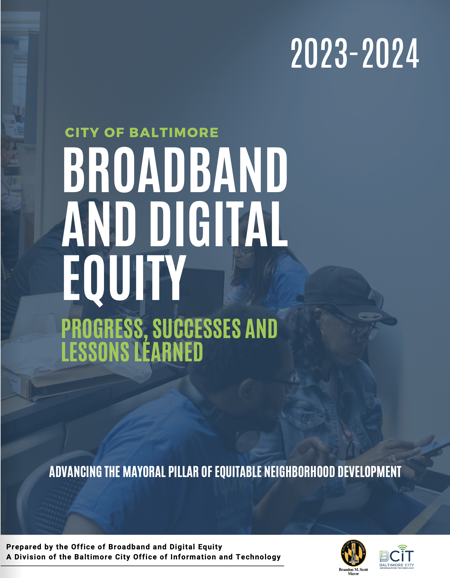
Coversheet of Baltimore Digital Equity plan cover sheet.png

Baltimore has used American Rescue Plan Act (ARPA) funds to create a $5 million Digital Equity Fund grant program, which is driving partnerships with local nonprofits to expand access and improve local digital literacy. The city’s digital equity report, released last March, details the progress the city has made in bridging the digital divide over the last two years.

In addition to numerous other initiatives, the city says it continues to expand its public Wi-Fi network, FreeBmoreWiFi.

SAVE THE DATE: Next #B4DE Celebrates Digital Opportunity In The Face of Challenges

Manacled by the Trump administration “termination” of the Digital Equity Act (DEA), Internet access advocates still in the fight are invited to save the date for the next Building For Digital Equity (#B4DE) livestream.

Days before Independence Day, the virtual gathering – slated for July 1 from 3 to 4:15 pm ET – will be centered around the theme: “Wired for Freedom: Digital Access and the American Dream.”

The agenda is shaping up to offer attendees new battlefield intelligence and how community-centered organizations and coalitions are carrying on in the face of vital funding and programming cuts.

Image
B4DE July 2025 Flyer

A line up of digital inclusion advocates working to expand broadband access will share practical insights and inspiration for digital navigators and other frontline workers looking to navigate the shifting landscape.

Register for the free event here.

As with the previous #B4DE events, the live stream will once again be sponsored by UTOPIA Fiber and co-hosted by the Institute for Local Self Reliance (ILSR) Community Broadband Networks Initiative and the National Digital Inclusion Alliance (NDIA).

Don't miss out on this exciting opportunity to learn, connect, and make a difference as digital equity advocates across the nation chart a new course forward.

Pushback Mounts Over Trump Administration ‘Termination’ of Digital Equity Law

The Trump administration’s dismantling of a popular broadband grant program has been greeted with disgust and anger by those doing the heavy lifting to bridge the country’s digital divide, leaving many states' planned broadband expansions in limbo, and affordable broadband advocates contemplating potential legal action.  

The unprecedented choice to destroy digital skills training and broadband adoption programs created by an act of Congress is seeing escalating pushback by a growing coalition of frustrated lawmakers and state broadband offices.

Last week, President Trump announced via a Truth Social post that he was ending the Digital Equity Act, falsely claiming that the program was “unconstitutional” and “racist.”

“No more woke handouts based on race!” the President said. “The Digital Equity Program is a RACIST and ILLEGAL $2.5 BILLION DOLLAR giveaway. I am ending this IMMEDIATELY, and saving Taxpayers BILLIONS OF DOLLARS!"

Image
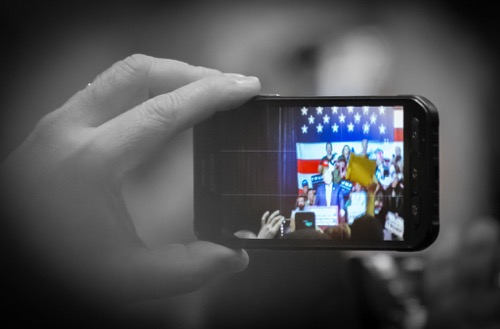
A black and white hand holds up a cell phone to photograph President Trump

But the popular program was perfectly legal, barely focused on race, and was proving to be of broad benefit to countless Americans – including many of the President’s own supporters in long-neglected rural counties.

The $2.75 billion Digital Equity Act was passed by Congress as part of the 2021 infrastructure bill. It mandated the creation of three different grant programs intended to shore up equitable, widespread access to affordable Internet, while providing the tools and digital literacy education needed to help neglected U.S. communities get online.

A legal challenge to the Trump administration’s unilateral decision to kill a law passed by Congress seems all but certain.

Kansas City's Digital Equity Journey - Episode 648 of the Community Broadband Bits Podcast

In this episode of the podcast, Chris sits down with Tom Esselman of DEPO-KC to explore how Kansas City is meeting the digital equity challenge with grassroots action, local partnerships, and nonprofit leadership. 

They trace the city’s long digital inclusion journey—from the arrival of Google Fiber and early federal initiatives to today’s uncertain funding landscape. 

Tom shares powerful personal stories of connection, community trust, and workforce development that reveal why local, relationship-driven work remains central to closing the digital divide.

This show is 40 minutes long and can be played on this page or via Apple Podcasts or the tool of your choice using this feed.

Transcript below.

We want your feedback and suggestions for the show-please e-mail us or leave a comment below.

Listen to other episodes or view all episodes in our index. See other podcasts from the Institute for Local Self-Reliance.

Thanks to Arne Huseby for the music. The song is Warm Duck Shuffle and is licensed under a Creative Commons Attribution (3.0) license

The Hidden Cost: The Ripple Effects of Canceling the Digital Equity Act - Episode 647 of the Community Broadband Bits Podcast

In this episode of the podcast, Chris speaks with Jade Piros de Carvalho about the cascading impact of the federal government’s decision to cancel the Digital Equity Act.

They discuss how this sudden move threatens not just digital inclusion programs, but the very foundation of state broadband offices—and by extension, the success of the $42.5 billion BEAD infrastructure program.

With broadband office funding models built on a delicate web of interconnected federal grants, Jade explains why pulling one thread puts everything at risk.

This show is 24 minutes long and can be played on this page or via Apple Podcasts or the tool of your choice using this feed.

Transcript below.

We want your feedback and suggestions for the show-please e-mail us or leave a comment below.

Listen to other episodes or view all episodes in our index. See other podcasts from the Institute for Local Self-Reliance.

Thanks to Arne Huseby for the music. The song is Warm Duck Shuffle and is licensed under a Creative Commons Attribution (3.0) license

Digital Inclusion Leaders Brace for Impact

Digital inclusion organizations are reeling after the Trump administration announced the Digital Equity Act grant programs, embedded in the bipartisan infrastructure law, was being cancelled months after federal grants had already been reviewed and awarded.

On Friday evening, President Trump announced via a Truth Social post that he was cancelling the Digital Equity Act, claiming it to be “unconstitutional” and “racist,” and, therefore, “ending this immediately.” Yesterday, state broadband offices began receiving letters from NTIA, the federal agency administering the program, to formally announce funding was being terminated.

As news began to trickle out, many of those working on these issues across the nation had more questions than answers as they scrambled to process a mix of confusion and frustration, especially mindful of the fact that the Digital Equity Act barely touches on the subject of race. Although Black, Brown, and Indigenous communities have been disproportionately left on the wrong side of the digital divide, only one of the of eight “covered populations” identified by Congress in the law even mentions race.

President Trump Targets Digital Equity Act —What It Means for Communities and the Future of Connectivity - Episode 646 of the Community Broadband Bits Podcast

In this urgent episode of the podcast, Chris is joined by Angela Siefer and Amy Huffman of the National Digital Inclusion Alliance (NDIA) to unpack a stunning announcement: President Trump has declared the Digital Equity Act “unconstitutional” and vowed to cancel it.

Angela and Amy explain what the Digital Equity Act really does, who it serves, and why this sudden political attack puts millions of Americans—and the country’s digital future—at risk.

They offer insights into what’s still unclear, how local organizations are reacting, and what’s at stake if this critical program is dismantled.

NDIA's response to President Trump's statement can be found here.

This show is 33 minutes long and can be played on this page or via Apple Podcasts or the tool of your choice using this feed.

Transcript below.

We want your feedback and suggestions for the show-please e-mail us or leave a comment below.

Listen to other episodes or view all episodes in our index. See other podcasts from the Institute for Local Self-Reliance.

Thanks to Arne Huseby for the music. The song is Warm Duck Shuffle and is licensed under a Creative Commons Attribution (3.0) license

BEAD: The Metamorphosis | Episode 109 of the Connect This! Show

Connect This! Show

Catch the latest episode of the Connect This! Show, with co-hosts Christopher Mitchell (ILSR) and Travis Carter (USI Fiber) joined by regular guests Kim McKinley (TAK Broadband) and Doug Dawson (CCG Consulting) to talk about major changes coming to the BEAD program and a grab-bag of other topics, including:

Join us live on March 7th at 2pm ET, or listen afterwards wherever you get your podcasts.

Email us at broadband@communitynets.org with feedback and ideas for the show.

Subscribe to the show using this feed or find it on the Connect This! page, and watch on LinkedIn, on YouTube Live, on Facebook live, or below.

‘The Human Infrastructure of Broadband’ Will Take Center Screen at Upcoming B4DE

As digital inclusion advocates look to get their bearings amid an all-out assault on federal broadband funding programs, the next Building For Digital Equity livestream offers a port in the storm.

Slated for March 13 from 3 to 4:15 pm ET – and once again co-hosted by ILSR’s Community Broadband Networks Initiative and the National Digital Inclusion Alliance (NDIA) – the keynote speaker for the UTOPIA Fiber sponsored event will be Revati Prasad, Vice President of Programs with the Benton Institute for Broadband & Society.

Charting the Course: Adapting to Policy Shifts While Keeping Our Eyes on the Prize” promises to bring hundreds of digital inclusion practitioners together to regroup and recalibrate while hearing from those working in the trenches to adequately address broadband access challenges across the nation.

Registration for the increasingly popular live stream is now open here.

Prasad will focus on Benton’s recently published report: “The Human Infrastructure of Broadband: Looking Back, Looking Around, and Looking Ahead.”

Trump FCC Begins Dismantling Agency Civil Rights Reforms

After decades of redlining and broadband “digital discrimination” by the nation’s biggest telecom monopolies, the FCC finally began taking aim at the problem in 2023. Now the entirety of those efforts are poised to be dismantled, courtesy of the Trump administration’s broad, controversial frontal assault on discrimination reforms and civil rights.

The 2021 infrastructure bill set aside $42.5 billion to expand broadband into all unserved parts of the United States.

But it also tasked the FCC with crafting new rules taking aim at “digital discrimination.” On November 15th of 2023 the agency obliged, passing rules banning ISPs from broadband discrimination based on income, race, or religion.

Civil rights and digital equity activists were split on the potential impact of the rules, but they did agree on one thing: it was historic for federal policymakers to finally admit that telecom monopoly deployments had unfairly excluded many low income and minority neighborhoods from affordable, next-generation broadband access.