
competition

Content tagged with "competition"

Related Topics
Displaying 281 - 290 of 710

Overbuilding and the Value of Real Competition - Episode 451 of the Community Broadband Bits Podcast

This week on the podcast, Christopher talks with Travis Carter (CEO, US Internet), Deb Socia (President/CEO, The Enterprise Center), and Brian Worthen (President, Visionary Communications and CEO, Mammoth Networks) to talk about overbuilding. 

The group discusses the importance of reclaiming the term as what it really is: plain old competition. They talk about the economics of building competitive broadband infrastructure in rural and urban areas, pending Washington State legislation which would unlock the power of the state’s utility districts to deliver retail service, and why we don't see more small, competitive fiber builders around the country.

This show is 59 minutes long and can be played on this page or via Apple Podcasts or the tool of your choice using this feed

Transcript below. 

We want your feedback and suggestions for the show-please e-mail us or leave a comment below.

Listen to other episodes here or view all episodes in our index. See other podcasts from the Institute for Local Self-Reliance here.

Thanks to Arne Huseby for the music. The song is Warm Duck Shuffle and is licensed under a Creative Commons Attribution (3.0) license.

Overbuilding and the Value of Real Competition - Episode 7 of Connect This!

This episode, co-hosts Christopher and Travis Carter (CEO, US Internet) are joined by Deb Socia (President/CEO, The Enterprise Center), and Brian Worthen (President, Visionary Communications and CEO, Mammoth Networks) to talk about overbuilding. 

The group talks about the importance of reclaiming the term as what it really is: plain old competition. They discuss the economics of building competitive broadband infrastructure in rural and urban areas, pending and related Washington Public Utility District legislation, and why we don't see more small, competitive fiber builders around the country.

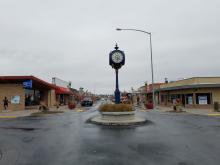
We also get the first installment of a recurring segment during the episode, wherein Christopher asks Travis to identify a picture of random piece of wireless infrastructure from the area around his house.

Referenced during the discussion was Benton Institute for Broadband and Society Senior Fellow John Sallet's recent paper "Broadband for America’s Future: A Vision for the 2020s."

Subscribe to the show using this feed

Email us with feedback and ideas at broadband@muninetworks.org

Digging IT in Dayton, Texas

DayNet, a new Internet utility emerging in Dayton, Texas, is looking to lasso a broadband-minded boss for this small East Texas city of approximately 7,200, about 37 miles east of Houston.

Applications are being accepted for a Broadband Manager/Head Network Engineer to oversee the business and technical operations of DayNet as the city has begun construction of a citywide Fiber-to-the-Home (FTTH) network.

In addition to hiring a Broadband Manager/Head Network engineer, the city is banking on the project to “increase competition and choice . . . while having a positive impact on economic development, education, and the technology amenities that are available to citizens and businesses.”

Good Credit, Better Broadband

To finance the construction, the Dayton City Council approved a $13.7 million bond issuance at a 2.56% interest rate, thanks to the city’s rising credit rating. Network construction began at the start of the year. And when the network is fully built, which is expected to be complete by 2023, 110 miles of fiber will criss-cross the city’s 11 square miles, passing every home, business, and anchor institution in Dayton.

Potatoes and Fiber Aplenty in Grant County, Washington

Idaho is better known for producing potatoes than the state of Washington. But actually, it’s the 2,800 square miles (an area about twice the size of Rhode Island) within Grant County in central Washington that grows more spuds per acre than any county in the United States.

As you might expect, the Grant County Public Utility District (PUD) has a long history of supporting the region’s potato farmers. But for the past 20 years, the county-owned utility has been planting more than potatoes in the fertile soil of the Evergreen State, the benefits of which are being enjoyed by county residents on and off the farm.

Building a Fiber Foundation

In early 2000, Grant County PUD built an open access fiber optic network, allowing multiple local Internet Service Providers (ISPs) to compete in delivering Fiber-to-the-Home (FTTH) service to the county’s 97,700 residents. After investing $182 million to bring high-performance Internet connectivity to 75% of the county, over the past several years the utility has been working to expand the network to cover the remaining 25% into the most rural parts of the Grant County PUD service area.

Join us Thursday, March 4th to Talk About Overbuilding - Episode 7 of Connect This!

The notion that states and the federal government should go to great lengths to make sure any funds they distribute for broadband infrastructure don't accidentally create competition for private providers is one that perplexes us. While the monopoly cable and telephone companies (and their Republican allies) have gone to great lengths over the last two decades to push the narrative that anything more than monopoly control in an area constitutes "wasteful spending," we're not so sure.

Join us Thursday, March 4 at 2 ET, to talk about overbuilding with Travis Carter (CEO, US Internet), Deb Socia (President/CEO, The Enterprise Center), and Brian Worthen (CEO, Mammoth Networks).

Subscribe to the show using this feed

Email us broadband@muninetworks.org with feedback and ideas for the show. We appreciate your patience as we continue to explore the livestream format, and I welcome any advice or production ideas you have (email me at ry@ilsr.org).

For timely updates, follow Christopher Mitchell or MuniNetworks on Twitter and sign up to get the Community Broadband weekly update.

Watch below, or on YouTube Live.

“This Isn’t a Game:” The RDOF Auction, Unforced Errors, and Getting Infrastructure Funding Right - Episode 448 of the Community Broadband Bits Podcast

The conclusion of the RDOF auction was met with a good deal of drama and uncertainty, leaving many of us working after the fact to understand the policy and practical impacts of its outcomes.

This week on the podcast Christopher talks with Jonathan Chambers, a partner at Conexon, a network solutions provider for electric cooperatives around the United States who helped organize a consortium of nearly 100 cooperatives to successfully bid for more than $1 billion in funding from the recent Rural Digital Opportunity Fund Auction administered by the FCC. 

Christopher and Jonathan unpack the design and implementation of RDOF not only in the context of the current broadband landscape, but the history of FCC auctions and federal infrastructure subsidy policy. They discuss how the funding will support upcoming projects which will bring fiber networks — many of them owned and operated by electric cooperatives — to hundreds of thousands of Americans over the next decade. 

But they also talk about the multitude of winning bids that went for a worryingly low percentage of what it will actually cost to build those networks across the country. Jonathan and Christopher discuss why we saw that happen, but also what kind of guardrails we don’t but should have in place to make sure that public money for broadband infrastructure doesn’t go to waste and, equally importantly, so that households in those areas don’t go another decade without a quality Internet connection. 

This show is 53 minutes long and can be played on this page or via Apple Podcasts or the tool of your choice using this feed

Transcript below. 

We want your feedback and suggestions for the show-please e-mail us or leave a comment below.

Listen to other episodes here or view all episodes in our index. See other podcasts from the Institute for Local Self-Reliance here.

Thanks to Arne Huseby for the music. The song is Warm Duck Shuffle and is licensed under a Creative Commons Attribution (3.0) license.

SiFi Networks Building Fiber Cities Coast-to-Coast

Privately-owned broadband infrastructure builder and operator SiFi Networks is sprouting roots in cities from California to the Commonwealth of Massachusetts.

The Fullerton FiberCity network was SiFi’s first FiberCity — a privately built, financed, and operated open access network. Network construction in Fullerton started in November 2019 and involved over 600 miles of micro-trenching underground fiber, a technique designed to minimize traffic and neighborhood disruption sometimes associated with ripping up roads to install fiber conduit. The first residential customers were hooked up in June, with an anticipated completion date in the fall of 2021.

And while construction of the fiber network in Fullerton isn’t quite finished yet, eight other communities across the country are in the process of becoming the next SiFi fiber cities.

Salem

In Salem, Ma., SiFi Networks announced at the end of November it had completed a “construction trial” which is a “practice run” ahead of the actual construction of the citywide network, slated to start this spring.

Once completed, the Salem project, in which SiFi Networks is partnering with GigabitNow, will offer the city’s 43,180 residents an alternative to the monopoly services of Comcast. GigabitNow, which will be the Internet Service Provider (ISP) for Salem FiberCity, estimates they will be able to begin providing services as early as summer 2021.

Read this Op Ed: Broadband would close NC’s digital divide; Big Telecom is blocking it

Paul Meyer, the Executive Director of the North Carolina League of Municipalities, has a new piece out outlining clearly and concisely what anyone living in or familiar with the state of broadband in North Carolina is thinking: the connectivity problems shown in such stark detail by the ongoing pandemic are nothing new, and the entities to blame are the huge out-of-state monopoly Internet Service Providers like Charter Spectrum and AT&T.

Both companies, and AT&T in particular, have spent hundreds of thousands of dollars over the last ten years to reduce competition across the state so that they can extract as much profit from North Carolina's communities as possible. Since the passage of HB 129 in 2011, no new municipal networks have been built in the state.

Meyer outlines the consequences of this reality, with residents and businesses alike stuck on old, slow, expensive connections that service providers have no incentive to upgrade in a broken marketplace.

Read the whole piece here, but see some excerpts below:

It has simply become unacceptable and unconscionable that a handful of companies stand in the way of allowing this to happen almost a decade after banding together to block municipalities from building and operating their own systems, and proclaiming as they did so that they would address the digital divide in the state.

Removing Roadblocks on Bridge Over Digital Divide: Explaining the Affordable, Accessible Internet for All Act - Part 5

While the bulk of the Accessible, Affordable Internet for All (AAIA) Act proposes to invest $100 billion to expand broadband access in unserved and underserved parts of the country, the legislation also looks to build an essential bridge across the digital divide that goes beyond new infrastructure. An important part of the equation involves addressing laws and policies that have proven to be obstacles to Internet connectivity for tens of millions of Americans.

In our previous installments examining the AAIA, we covered the big-ticket items – the why, how and where the $100+ billion would be invested. This final installment in the series covers the last three major sections of the bill: Title IV – Community Broadband; Title V – Broadband Infrastructure Deployment; and Title VI – Repeal of Rule and Prohibition on Use of NPRM.

These last three sections of the AAIA do not call for any federal appropriations but instead aim to tackle several thorny policy challenges.

The referenced media source is missing and needs to be re-embedded.
Removing State Barriers to Municipal Broadband Initiatives

Title IV – Community Broadband (Section 4001) of the bill is straight-forward. It would prohibit state governments from enforcing laws or regulations that prevent local governments, public-private partnerships, and cooperatives from delivering broadband service.

As it stands now, there are 19 states across the country where state legislators have passed laws designed to shield the biggest corporate Internet Service Providers (ISPs) from competition. Those laws were mostly written by lobbyists for these behemoth monopolies and duopolies, despite the fact that the Big Telcos have failed to deliver reliable, affordable and truly high-speed Internet access to large segments of the population.

Grant Program Helps Arkansas Communities Large and Small Get Started on Broadband

A host of cities and counties in Arkansas are about to get a major broadband boost thanks to local officials taking steps to act on a grant program deployed by the state last year. Borne out of the state’s 2020 1st Extraordinary Session at the end of March 2020 in response to the Covid 19 pandemic, the new Rural Broadband I.D. Expenses Trust Fund Grant Program will disburse $2 million in funds divided into 30 one-time grants of $75,000 each to towns, cities, and counties to tackle the digital divide in the Toothpick State. The program is financed via Arkansas’ Restricted Reserve Fund with money given to the state by the CARES Act, and is administered by the University of Arkansas for Medical Sciences (UAMS) Institute for Digital Health & Innovation. And while an array of projects have been awarded funds, money remains available and applications are being accepted on a rolling basis for those who have yet to take advantage.

A Win for Local Self-Reliance and Increasing Competition

The program is expressly designed to bridge the gap for communities that want to begin to improve local Internet access but are stymied by a necessary first step: paying for those economic, design, and feasibility analyses which require pulling together the wide range of options available in the context of local conditions. That’s where this program comes in, according to Rachel Ott, the UAMS Institute’s for Digital Health and Innovation Grant Director. Communities can use the work produced to apply for federal grants down the road, including the recently concluded Rural Digital Opportunity Fund (RDOF), the U.S. Department of Agriculture’s ReConnect Program, funds from the Agriculture Improvement Act of 2018, and any other forthcoming federal funding programs.