
Fast, affordable Internet access for all.
jobs
SpringNet Continues Driving Jobs and Revenue for Local Community
A year has passed since we covered SpringNet in Springfield, Missouri, and its remarkable impact on local businesses and economic development. We recently spoke with SpringNet Director, Todd Murren, and Network Architecture Manager, Todd Christell, to get an update on how the network is progressing.
Demand for SpringNet’s high-speed data services continues to grow steadily. Financial statements for City Utilities of Springfield show the network generated $16.4-million in operating revenue last year against costs of $13.2-million. Better yet, revenues have increased around 3% per year while cost increases are closer to 0.5%. The end result is close to $3 million in annual net income for SpringNet. And all of this comes from a network that only serves commercial and public sector clients because Missouri state law restricts municipal network provision to only “Internet service,” meaning SpringNet cannot offer triple-play packages to compete with incumbent providers.
One of the highlights of SpringNet’s economic development success has been the attraction and retention of travel giant Expedia. After a large national provider failed to deliver on negotiations with the company, SpringNet stepped in to make sure Expedia brought its call center to Springfield. That effort has paid off handsomely for SpringNet and the local community. Expedia now employs close to 900 in the area after announcing in July that it was hiring another 100 employees in Springfield.
Up next for SpringNet is an effort to leverage its fiber infrastructure to create even more jobs. Believing that future job growth will revolve around the advancements enabled by gigabit networks, SpringNet is working with the Mid-America Technology Alliance (MATA) to host a hackathon with partners in Kansas City to explore what is possible between gigabit cities.
Danville Continues to Attract Jobs to Region After Building Fiber Network
Danville's open access network has fueled economic development in the Virginia community's resurgence after tobacco’s demise and job losses from a once thriving textile industry put a hurt on the local economy. Danville’s technological prowess is now attracting companies from China, in addition to other economic development gains we covered previously.
Jason Grey, nDanville’s Network Manager, told us that Zeyuan Flooring International, a Chinese wood floor manufacturer, is locating its first U.S. facility in Danville. Zeyuan CEO, Sindy Cui, said the company initially thought about locating in Los Angeles, but was eventually swayed by the hospitality and resources available in Danville. Zeyuan plans to invest $15-million in a 40,000 square foot manufacturing plant that will employ 100 people within three years.
Zeyuan is the second Chinese company to locate in Danville in the past year. Last September, Chinese furniture assembler GOK International announced it will invest $12.5-million to establish its U.S. headquarters and showroom in Danville. GOK International plans to employ 300 people within three years.
Not coincidentally, both companies are locating in Cane Creek Centre, one of Danville’s five industrial parks connected to nDanville’s fiber network. Serving businesses was a high priority in building the network. As the first fully automated open-access network in the country, nDanville passes more than 1,000 businesses including every parcel in each of the industrial parks. Many businesses take 100-Mbps fiber connections, some take advantage of 1-Gbps connections.
These recent additions to Danville’s thriving commercial sector are just the latest in a steady string of economic development successes for the area that include the likes of Goodyear and IKEA. And it’s not just manufacturing.
Dublin, Georgia: Offering Connectivity to Businesses, Schools, Government Since 1999
Dublin, home to 16,000 people, is also home to a network that snakes through the city and parts of Laurens County. In addition to a natural gas utility that serves the region, the city provides connectivity to two area school districts and local businesses. We contacted Guy Mullis, IT Director for the City of Dublin.
The fiber optic network was installed in 1999 to provide connectivity for the two separate school systems in the community, Laurens County Schools and Dublin City Schools. The school districts needed better connectivity because dial-up was the only option at the time. The school districts could not afford the cost of installing their own fiber networks.
The City used its own funds to construct a network that is 85% aerial. Mullis was not an employee of the City at the time, but he estimates the network cost approximately $1.5 - $2 million. He also believes the funds were a combination of capital improvement funds and economic development funds. From the start, the plan has been to serve the schools but also to provide connectivity to spur economic development.
Eight city school facilities and six county school facilities use the network today for connections between buildings. Dublin City Schools have 10 Gbps speeds between facilities; Laurens County Schools have equipment in place for 1 Gbps connections between schools. Both school districts use the Georgia Technology Authority for Internet access.
Once the network was in place, AT&T and Charter Communications began building in Dublin. Mullis says he does not believe AT&T and Charter would have invested in Dublin in 2000 if not for the presence of the community network. He notes that AT&T begin installing DSL in areas of town within a year of the fiber network deployment.
Update on Baltimore's Municipal Fiber Plan
Kevin Litten, of the Baltimore Business Journal has published a good discussion of why Baltimore is considering a public investment to expand the City's fiber network.
Councilman William H. Cole IV still bristles when he talks about the absence of FiOS in the city, a decision industry observers say has played out in other urban areas where the suburbs outrank the city in wealth. “When you look at a map of Maryland and what counties they chose to skip, Baltimore stands out, and it stands out for all the wrong reasons,” Cole said. “We need to explore every option we have to remain competitive. You can’t talk about being a great city for biotech and trying to attract startups and continue to expand the [University of Maryland] BioPark and not continue to invest.”
Litten also explored how Comcast is damaging area businesses by abusing its position as the sole citywide provider of fast Internet access (Verizon does poor DSL):
At No Inc., a 10-employee tech firm that develops software for commercial real estate, Chief Technology Officer Alex Markson said that Comcast wanted to charge $20,000 to build infrastructure to the company’s small office building on Water Street downtown.
The company had to settle for an affordable, but vastly inferior wireless connection from Clear using WiMAX. Keep this in mind the next time you hear that wireless is providing an alternative to the cable and telephone monopolies.
But that setup, which includes a barbecue grill-like satellite dish pointed out the window of the company’s offices, isn’t ideal. Productivity plummets when employees have to wait for long downloads. When using technology such as GoToMeeting to make sales pitches, “you’re not crushing it because you look like you’re slow,” Markson said.
And finally, Litten quotes some guy named Christopher Mitchell that seems to know what he is talking about:
WindomNet Creates Jobs, Benefits for SW Minnesota - Community Broadband Bits Episode #64
Morristown Network Creates Cost Savings and Spurs Job Growth
Located in the northeast corner of Tennessee, Morristown Utility Systems (MUS) offers gigabit broadband throughout a region that covers 30,000 residents and businesses. I recently spoke with MUS General Manager and CEO, Jody Wigington, about FiberNET’s progress and he had much to report, starting with over $5 million in cost savings for local businesses, residents, and the local government itself.
Asked about cost savings to Morristown’s city government, Wigington pointed to $840,000 in total savings from a smart meter program - a combination of lower annual power consumption and operational efficiencies. Another $20,000 in annual savings is due to the county not having to pay out-of-town IT contractors to maintain its network because the required expertise can now be found locally thanks to MUS’s dedicated network specialists.
Morristown businesses and residents are also saving, to the tune of $3.4-million annually thanks to FiberNET’s introduction of lower prices in the local broadband market. That’s $3.4-million, every year, which can be spent locally rather than being siphoned out of the community to corporate shareholders.
In terms of revenue, FiberNET generated $8.6-million during the most recent fiscal year and is projected to generate $8.8-million during the current one. FiberNET's solid financials have translated into increases in MUS’s payments in lieu of taxes (PILOT) to the city, which now amount to $350,000 per year, up from $150,000 in 2010. FiberNET’s strong financial performance resulted in MUS becoming cash flow positive just two years after launch, and net income positive after five years. Both of these key milestones were reached significantly quicker than initially projected.
MUS FiberNET’s impact on economic development is also notable. Oddello Industries, a contract furniture manufacturer that relies on FiberNET for its communications, recently announced a $4-million expansion in Morristown, resulting in 228 new jobs. Oddello CEO, Tom Roberts, cited “reliable utilities” among the reasons for investing in Morristown. This growth is part of a larger trend for Oddello, which has grown its Morristown presence from 35 to 415 employees in just the past year.
Knoxville Downtown Wondering 'Where Is All the Broadband?'
Knoxville Metro Pulse reporter Paige Hunton published a story last month about a common complaint from downtown residents and businesses - "Downtown Knoxville's Internet Access Kinda Sucks. Can It Be Fixed?" The problem worked its way from local talk to twitter and city leaders have met with residents and business owners to publicly discuss options.
This is a perfect example of what happens to a community that refuses to take responsibility for ensuring local businesses and residents have access to the essential infrastructure they need. Knoxville's approach to improving its Internet access is akin to crossing one's fingers and hoping really hard for the best.
Hunton' describes modern day disaster in the downtown area comprised of an inconsistent patchwork of AT&T DSL, Comcast, and a very limited amount of private provider fiber optics. Some areas have no access, others have no choices. While the city tries to encourage downtown commerce with tax credits for developers and a new entrepreneur center critical high-speed connections are missing.
City officials say the downtown area has a limited amount of aging conduit, discouraging private providers and cost prohibitive to expand. Likewise, old buildings with substandard internal wiring discourage investment from private companies.
Hunton tells the story of Ian Blackburn, a former colleague that now works for a downtown employer impacted by the lack of high-speed broadband downtown. After outgrowing its T1, the company went with 6 Mbps through AT&T DSL. AC Entertainment soon outgrew DSL:
"On one occasion in our DSL days, we had to download a video spot from an artist management site, make a few edits, burn it to disc, and get it to FedEx that day. The browser was estimating over an hour remaining for the download, which would miss the FedEx cutoff point. I remotely logged into a server in my living room, started the download, jumped on my bike, pedaled home, burned the file to a DVD, and was back in the office inside of 20 minutes,” he says. “The problem got solved, but that’s a ridiculous way for a company to have to operate. You can’t do business if you can outrun your Internet on a bicycle.”
Moultrie City Manager Discusses Origins of CNS Network in Georgia for Community Broadband Bits Episode 39
Mike Scott, City Manager of Moultrie in Georgia, joins us for Episode #39 of the Community Broadband Bits podcast to share the origins of the Community Network Services (CNS) network that joins four towns in four counties in rural southwest Georgia. In this interview, Mike Scott shares some of the benefits of the network for local schools and community savings. Built originally because the existing cable and telephone companies would not invest in their communities, CNS has proved itself an incredibly valuable community investment. CNS is credited with creating over 6,000 jobs in the communities it serves, a tremendous boon for the communities that joined together to create this network. During our interview (below), we note a video they created to show off some of the benefits of this network. Here it is: Read the transcript from this podcast here. We want your feedback and suggestions for the show - please e-mail us or leave a comment below. Also, feel free to suggest other guests, topics, or questions you want us to address. This show is 20 minutes long and can be played below on this page or subscribe via iTunes or via the tool of your choice using this feed. Search for us in iTunes and leave a positive comment! Listen to previous episodes here. You can can download this Mp3 file directly from here. Find more episodes in our podcast index. Thanks to D. Charles Speer & the Helix for the music, licensed using Creative Commons.
Open Access Network in Mount Vernon, Washington Created More Jobs and Government Savings
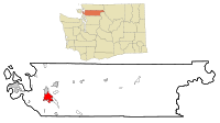
Mount Vernon, Washington, started building their own fiber optic network in 1995 and over the past 18 years have continued to add incrementally. While the network started as a way to connect a few municipal facilities, it has since expanded to nearby Burlington and the Port of Skagit. The network now serves government, schools, hospitals and clinics, and a broad range of businesses in the area.
We spoke with community leaders from Mount Vernon for our 38th episode of the Broadband Bits podcast. Mount Vernon owns the network and operates it out of the Information Systems office.
The network required no borrowing or bonding because initial funding came from a state Community and Economic Revitalization Board (CERB) grant. Since then, Mount Vernon has used revenue from the network and creative cost sharing with partners to expand throughout the city. When expanding into Burlington and the Port of Skagit in 2008, city leaders received a county sales tax grant to fund deployment.
The Mount Vernon School District became a partner early in the evolution of the network. According to Kim Kleppe, Information Services Director, K-12 schools do not pay a monthly fee to receive up to 1 gig of capacity for their 10 facilities. He estimates the current costs of a dark fiber connection for one facility at $700 per month. Total savings are astronomical, allowing the schools to dedicate significant dollars toward other expenses.
Mount Vernon city government saves over $100,000 per year and nearby Burlington saves over $52,000. The network has never been in debt and maintains a reserve.
Mount Vernon's network is an open access model on which ISPs serve customers via the city's infrastructure. Subscribers pay a one time fee to the city to be connected. Onging revenue comes from the ISPs, who pay to the city a percentage of what they collect in customer connectivity fees. Currently, eight different providers offer services via the Mount Vernon network, providing ample competition.