
feature

Content tagged with "feature"

Related Topics
Displaying 1 - 10 of 237

California Regulators Accuse AT&T of Misleading the Public on Wireless Coverage
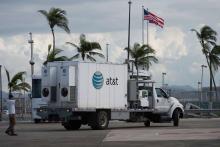
California regulators are locked in a fierce battle with AT&T over state residents' access to life-saving emergency communications.  

Officials have accused the telecom giant of actively misleading the public as the state considers stricter rules to make wireless coverage maps more accurate, and providers more accountable for reliability failures.

At the heart of the standoff is California’s Carrier Of Last Resort (COLR) obligations, which mandate that state residents have reliable access to voice calls, 911, deaf and disabled assistance services, customer service support, protection from unwanted charges, and flexible billing options.

AT&T lobbyists have worked tirelessly to eliminate such requirements in 20 of its 21 state service territories, falsely claiming the regulations stifled the company’s ability to install next-generation fiber. In reality, AT&T has long been criticized for cheaping out on fiber investments, and is primarily interested in eliminating already dwindling oversight.

Image

In many areas, AT&T has refused to upgrade aging DSL infrastructure, instead shoveling California residents off to “good enough” wireless service. But AT&T’s wireless service isn’t consistently available, affordable, or reliable – particularly when it comes to providing Californians dependable access to essential 911 infrastructure.

Despite this, more than 80 percent of 911 calls in California are now placed from a wireless device. CPUC data also shows that of the more than 1,000 recent wireless service outages in California, many lasted longer than 24 hours, including 359 that lasted longer than 72 hours.

Sherburne, NY Making Steady Progress On Open Access Fiber Build

Construction on the regional expansion of Sherburne’s municipal open-access fiber network is advancing across neighboring Chenango County borders, backed by a $6.9 million state grant intended to turn a local pilot project into a regional community-owned utility model.

The project, branded Sherburne Connect, originated as an early municipal fiber deployment operated in coordination with the village’s century-old public electric utility, Sherburne Electric, after being designated in 2022 as one of four initial municipalities (alongside Nichols, Diana, and Pitcairn) to participate in New York State’s $1 billion ConnectALL initiative.

Partnering with the New York Power Authority (NYPA) and Empire State Development, the village shared an initial $10 million state pilot allocation to engineer a publicly owned open-access fiber network utilizing Sherburne Electric’s existing poles, bucket trucks, and municipal rights-of-way.

This project initially passed roughly 1,800 to 2,000 premises inside the village of Sherburne and immediate electric territory. Village of Sherburne Board of Trustees meeting minutes from last June indicate that the core network in Sherburne now has more than 1,000 active subscribers.

Image
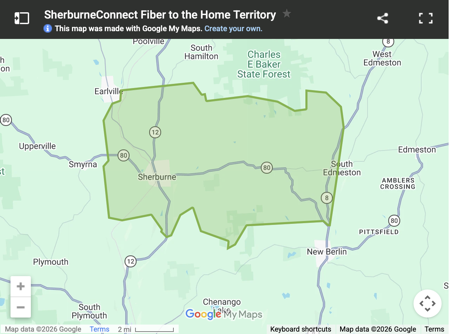
Sherburne Connect Service Territory map

Those same meeting minutes indicate that Sherburne officials had requested a deadline extension but were denied it by Albany. “Superintendent [Travis] DuBois said Sherburne is furthest ahead with this fiber project than the other 13 systems and Albany want to show at least one project closed out by year end,” the minutes indicate.

Willmar, Minnesota’s Open Access Fiber Network Set To Go Live This Year

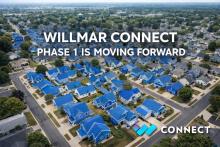
Willmar, Minnesota officials say they’re making steady progress on construction of the city’s planned $24.5 million open access fiber network, with the first residential and business customers slated to come online sometime later this year.

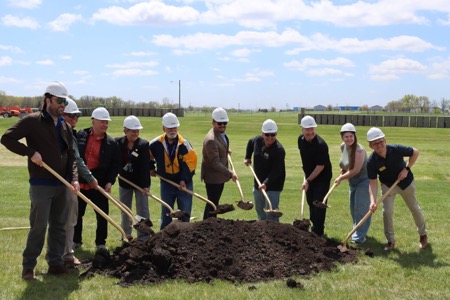
Dubbed Willmar Connect, construction of the city-owned fiber-to-the-home (FTTH) network broke ground in May 2026, marking a pivotal turn from years of feasibility studies and council debates to actual directional boring, conduit placement, and fiber splicing.

When we last checked in on Willmar back in March, the city council had just voted 4-3 to sign off on the $24.5 million open access project. After a summer of steady construction the city says it’s making meaningful progress toward a full commercial launch.

Image
A dozen city officials holding shovels above a mound of dirt at groundbreaking ceremony

“We expect to light up our first users on the network this year,” Willmar City Administrator Kyle Box tells ILSR.

Phased Construction Starting From GO (Bond)

Construction of the network is occurring in three phases.

Phase one of the project, focused on Southwest Willmar, is budgeted for between $7.6 million to $9.2 million. This phase of the project will focus on backbone construction, neighborhood conduit boring, lateral connections, and converting a former municipal wastewater facility into the network operations center (NOC).

Falmouth Didn’t Build Its Own Network, But a Citizen Led Effort Still Brought Fiber to Town

At long last, fiber-to-the-home connectivity is coming to Cape Cod.

Gateway Fiber, a Missouri-based Internet service provider already operating in western and central Massachusetts, has announced it has begun network construction in Falmouth and says service will be available to residents and businesses later this year.

It’s a development that, after decades of frustration with high prices for cable service, will bring residential fiber connectivity to the region for the first time, initiated seven years ago by an effort to build a community-owned solution.

While the plan is for Gateway to first offer service in Falmouth, the company also has its sights set on expanding its network into other towns on the Cape — including the towns of Barnstable and Yarmouth, the most populous parts of the peninsula.

For years, Cape residents have complained about the high-priced, spotty service of the Comcast cable monopoly as their only wireline option. Enter Gateway. It represents a watershed moment for the region, as the ISP looks to tap the pent-up demand for the gold-standard of Internet access technologies (fiber) by first targeting Falmouth, home to about 33,000 residents.

Tribal Broadband Is About Sovereignty, Not Just Speed

*The following story was originally published here by Broadband Breakfast.

Tribal broadband is not simply a faster connection. For tribal nations, panelists said Wednesday, durable infrastructure can preserve language, extend health care and education, support economic development and strengthen sovereignty, but only when tribes control the choices shaping their networks.

That connection between culture and infrastructure emerged during a Broadband Breakfast Live Online discussion on tribal broadband and adoption. 

The conversation ranged from fiber and satellites to open-access networks, spectrum rights, data sovereignty and the cost of helping residents get online.

“We want our members to learn the language. We want other people to learn the language,” said Rob Griffin, tribal broadband director for the Choctaw Nation of Oklahoma. “But to do so, we have to have good infrastructure.”

The Choctaw Nation began pursuing fiber after encountering a school limited to satellite internet, Griffin said. It has since received $110 million in grants and is building 1,000 miles of fiber alongside fixed wireless connections. Such networks can support language programs, remote work, testing and telehealth for decades.

Infrastructure and sovereignty

Federal investment has helped accelerate tribal deployments. Christopher Mitchell, director of the Community Broadband Networks initiative at the Institute for Local Self-Reliance (and co-founder of the Tribal Broadband Bootcamp), said his organization is tracking about 190 tribal networks, including roughly 100 already operating. (Check out ILSR's in-depth Tribal networks tracker and interactive map here).

IN OUR VIEW: Misleading Study Paints Inaccurate Picture Of New York Broadband Grant Programs

A recent study suggesting New York State officials are trying to hide that the state’s ambitious grant programs are facing significantly higher costs and lower reach doesn’t appear to be based in reality, and originates from a group that fails to disclose its funding.

A recent analysis of New York State’s broadband grant programs by the Advanced Communications Law and Policy Institute (ACLP) at New York Law School claims that New York State’s ConnectALL Municipal Infrastructure Program (MIP) is facing $38 million in higher costs, resulting in 34,000 fewer connections than originally promised.

“10 projects have had their grant revised up by at least 5 percent since first announced, against 7 revised down,” the analysis claims. “The upward revisions add about $38M to the programs’ combined cost. To cover these increased costs, the state moved unspent funds from the AHCP program to cover the MIP shortfall.”

The study also claims, incorrectly, that New York State is attempting to hide this data from the public.

Image
NY ConnectALL logo

“This fact was buried in a footnote in the state’s latest CPF Performance Report submitted to the U.S. Treasury in July,” the authors wrote, at other times insisting that “none of these changes were announced by the state broadband office,” and that “New York does not report these grants consistently.”

But there’s a problem: despite the study making the rounds at various media outlets, there’s little evidence that the analysis is accurate.

Los Alamos Prepares To Light Up Open Access Fiber Network

Los Alamos County, New Mexico is inching closer to the launch of its Atomic Fiber county-wide open access fiber network, which aims to dramatically improve affordable Internet access to the county’s 19,400 heavily-rural residents.

Network construction formally began in May, and county officials say they’re hopeful the first customers will come online by the end of the year.

“We have been delayed a bit with getting our Phase 1 construction done, so first customers will likely be December,” Los Alamos County broadband manager Jerry Smith tells ILSR.

The project was first conceived back in 2024, after locals expressed continued aggravation at the high prices, spotty coverage, and slow speeds of regional telecom monopolies. Officials settled on an open access network that will allow private ISPs to compete in layers on top of the county’s publicly-owned infrastructure.

“Although a need for Internet upgrades in Los Alamos County has long been clear, the private sector was unwilling to take the project,” county officials wrote. “In response, the Los Alamos County Council awarded contracts to Bonfire Fiber to design and build a fiber-to-the-premise (FTTP) network for $35 million at the November 19, 2024 Council Meeting.”

The $35 million network price tag is being financed via $40 million in New Mexico Gross Receipts Tax (GRT) revenue bonds. County leaders have stated that the 20-year maintenance and operations cost of the network will be around $15.9 million and paid off via subscription revenues.

Image
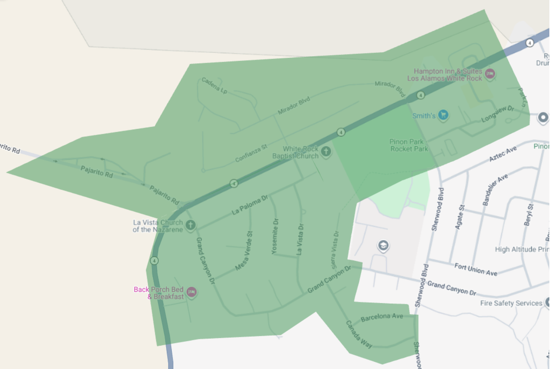
Los Alamos Phase 1 construction map

Once completed, every last rural county resident will have access to next-generation fiber at speeds and prices much better than what’s available in many dense urban markets.

Open Access Brings Open Competition

Southwick Rescues Municipal Broadband Effort With Smaller Fiber Pilot Project

A crushing near-miss at the ballot box last year hasn’t stopped the town of Southwick, Massachusetts from chipping away at Comcast’s local monopoly. 

The town is now making progress on a scaled-down pilot project aimed at helping sell locals on the benefits of community-owned-and-operated affordable fiber optics.

After falling just 14 votes shy of the two-thirds majority required to authorize a full $16 million municipal fiber build at Town Meeting (353-204) last year, local officials refused to shelve the project. 

Instead, the Select Board approved a municipal agreement with Westfield Gas & Electric’s Whip City Fiber to construct a targeted pilot network funded entirely by existing money.

The smaller phased deployment aims to prove out subscriber demand, connect vital anchor institutions, and demonstrate that a publicly owned fiber-to-the-home (FTTH) network can pay for itself without leaving general taxpayers on the hook.

According to local news outlet The Reminder, this scaled-back pilot project will target three of the original 19 fiberhoods targeted under the original plan to deploy fiber to the entire town of 9,346.

Pilot Cleared for Takeoff

Rather than wait around to convince hesitant voters at another contentious town meeting, Southwick leadership pivoted to what was already sitting in the town’s war chest.

Sustain, Empower, Evolve: Next Building for Digital Equity Marks Digital Inclusion Week, Looks at What's Actually Working

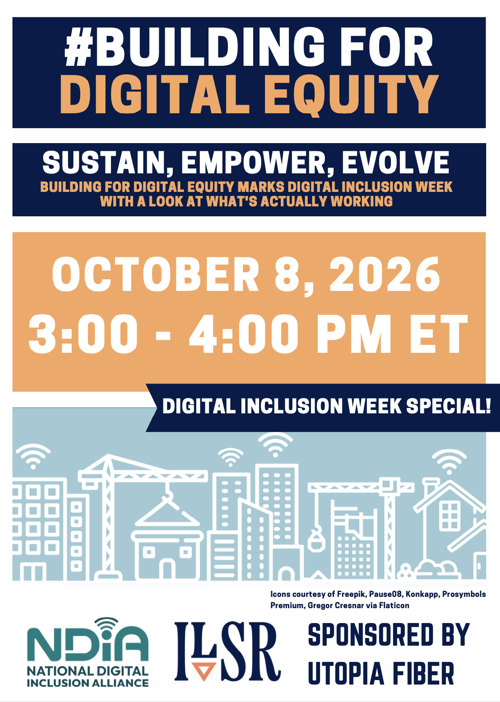
As Digital Inclusion Week 2026 kicks off October 4-10, the Building for Digital Equity webinar series returns with a timely question: with federal support for digital equity work in retreat, what does it actually take to keep this work alive, growing, and reaching people at the local level?

On October 8 at 3 pm ET the hour-long livestream — titled “Sustain, Empower, Evolve: Planting Local Seeds for Digital Equity” — will be co-hosted by the Institute for Local Self Reliance’s (ILSR) Community Broadband Networks Initiative and the National Digital Inclusion Alliance (NDIA), the latest in the popular on-going webinar series, sponsored by UTOPIA Fiber.

Image
B4DE DIW Oct 8 flyer

Registration for the event is now open here.

It will open with a policy update on where Digital Equity Act funding actually stands, what’s moving, and what’s stalled.

From there, the show turns to the ground-level with a special spotlight on building wireless connectivity for tiny-home communities in Seattle that will uniquely engage the audience in a case-study exploring how local expertise is harnessed, coordinating a cadre of local volunteers, and facing down the challenges of sustainability.

The livestream closes with a forward-looking conversation focused on how digital inclusion work is evolving in practice as front-line workers speak to how funding models and digital navigators are adapting.

Federal Agencies Still Can't Get Their Broadband Data Straight, GAO Finds

A recent Government Accountability Office (GAO) report reveals what’s been obvious to broadband deployment experts for years now: the federal government’s multi-agency approach to closing the digital divide is undermined by a lack of coordination and data-management among agencies.

The result is an FCC broadband coverage map with an amalgamation of inaccuracies that misrepresents where high-speed Internet service does or does not exist, a flaw that can steer taxpayer dollars away from communities that actually need them.

Since 2020, four federal agencies — the FCC, NTIA, USDA and Treasury — have been administering nine different grant programs to build-out new Internet networks in unserved and underserved areas across the nation, including the $42.5 billion federal flagship BEAD (Broadband Equity Access and Deployment) program.

As ILSR’s Senior GIS Analyst Christine Parker notes, the report devotes considerable attention to “de-duplication” — the process of cross-referencing which locations have already received funding or service commitments from one program so that other programs don't waste money doubling up, or worse, leave locations out entirely because it was wrongly assumed to be covered elsewhere.

Image
GAO sign and building in background

“But there’s no documented process or timeline for actually doing this,” Parker says.

Garbage In, Garbage Out

Part of the problem, the report notes, is that agencies track and report funding data in different formats, with some programs collecting far more granular location-level detail than others so that it is much harder to reconcile the datasets and match them up. GAO indicates the agencies are aware of the issue and are working to reconcile it, but as of the report’s release, no consistent process was in place.