
Riverside, California, Named Intelligent Community of 2012

Riverside, California was just named the Intelligent Community of the Year 2012 by the Intelligent Communities Forum. It is only the fourth U.S. city to win in the 14-year history of the award. Among its top qualifications are a publicly owned fiber optic network linking public buildings (eliminating the need for any leased lines) and a free Wi-Fi network that aids an impressive digital inclusion approach.
The path to the award began in 2005, when the City hired a full time CIO, Steve Reneker, and launched SmartRiverside as a way to attract technology companies. In addition to efforts to connect to California's reputation as a technology leader, the City invested in the basics. From a Government Technology article:
A year later, the City Council addressed physical infrastructure needs by approving Riverside Renaissance, a $2 billion effort to improve traffic flow; replace aging water, sewer and electric infrastructure; and expand and improve police, fire, parks, library and other community facilities.
“We’ve done a number of things that have changed Riverside to make us competitive,” said Mayor Ron Loveridge.
Part of being competitive was capitalizing on the City's existing fiber network ring, managed and maintained by the City Public Utility. The fiber network was originally focused on running the operational facilities for power and water but according to Reneker, via email:
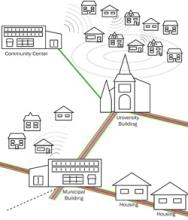
...over the past 4 years, IT was able to work with our City Manager’s office and finance the construction of fiber to every City facility. So all telco lines have been eliminated and now all voice, data and video traverses the 1Gb network to City Hall. In addition, the City went live with City wide WiFi in May 2007, and the fiber was run to 6 tower locations to enable WiFi coverage city wide.
The fiber network provides the needed infrastucture to offer free Wifi all over the City. From the Intelligent Communities website: