
Tribes

Content tagged with "Tribes"

Displaying 101 - 110 of 119

Methow Valley Broadband Action Team Seeks Planning Proposals for Better Broadband in Central Washington

In central Washington, the Methow Valley, Okanogan County, and the Colville Confederated Tribes Broadband Action Teams (BAT) are teaming up to improve connectivity and shrink the digital divide across the Methow Valley. As part of the process the BAT has released a Request for Proposals (RFP) for technical assessment and technical implementation planning to help them meet their goals. Deadline for proposals is September 30th, but the BAT has indicated that they will grant an extension upon request.

Review the RFP here.

Making Improvements

Methow Valley boasts its scenic treasures, including the North Cascades National Park and the Columbia River. Tourists visit the region for hiking, mountain biking, cross-country skiing, and vibrant arts scene. Like other similarly situated communities where natural beauty is an important feature, high-quality Internet access is difficult to come by.

According to the RFP:

Many residents of the Methow Valley live below the poverty line and have limited access to affordable, high-speed Internet services. This lack of access has impacts on education, economic growth and viability, emergency services, and quality of life. Simply put, this area lacks reliable wide-spread broadband access necessary to overcome these challenges. 

In September, the Washington State Department of Commerce's Community Revitalization Board awarded a $50,000 grant to the BAT and the Twisp Public Development Authority (PDA) to dig deeper into the need for broadband service in the Methow Valley. Okanogan County provided a match of $16,667 to secure the state grant. The funding has allowed the BAT to move forward on this project.

Read more in the TwispPDA Methow Valley Position Paper [PDF] here.

In 2018, the BAT began working toward better connectivity by creating a work plan, seeking out stakeholders, and obtaining community input. This year, they wish to expand on their planning process and conduct a technical assessment. In order to complete this phase of the plan, the BAT wants a consultant who will:

Remote Havasupai Tribe Connects With Community Network

Rural tribal communities in the U.S. struggle with some of the worst connectivity in the country. Decades of neglect have put them even farther behind other rural communities, many of which are moving toward community networks rather than depending on national Internet access providers. The most isolated tribal community in the continental United States has chosen to shrink their disadvantages by establishing a community network.

Within the Canyon

The Havasupai Indian Reservation, home to about 600, is surrounded by the Grand Canyon National Park in Arizona. Having populated the region for centuries, the federal government restricted them to the reservation, an area of about 518 acres in Havasu Canyon, in 1882. Non-Indian ranchers, settlers, and miners started takng over the area in the 1870s and Executive Order confiscated the Havasupai homelands for public use. After the establishment of the Grand Canyon National Park and generations of persistence, the tribe finally won back more than 188,000 areas of plateau and canyon lands in 1975 through an Act of Congress.

The community, on the floor of the Grand Canyon, can only be reached by helicopter, or an 8-mile hike that starts 67 miles away from the nearest town. Mail is still delivered by mule.

Seeking Spectrum

That persistence is paying off again as the Havasupai Tribal Council focuses their attention on broadband access. They're collaborating with nonprofit MuralNet to connect the main residential area in Supai, where about 450 tribal members live. The nonprofit's mission is to assist tribes like the Havasupai develop infrastructure to obtain high-speed Internet access. 

South Dakota Fiber All About the Local - Community Broadband Bits Podcast 369

When rural Internet access providers work together to reach common goals, they improve their chances of succeeding. Groups such as the South Dakota Telecommunications Association (SDTA) help members get organized and pursue common needs together. The SDTA also provides a way for entities to connect with each other, research common challenges, and discover solutions. This week, SDTA Director of Industry Relations Greg Dean talks with Christopher about fiber optic deployment in South Dakota, a place that has more fiber optic connectivity than most people realize.

Greg attributes the healthy state of fiber deployment to the fact that small ISPs, such as municipal networks, networks on tribal lands, and cooperatives, have strong ties to local communities. He discusses some of the advantages in South Dakota, such as a collaboration that resulted in a statewide fiber optic backbone.

Christopher and Greg also spend time talking about funding for rural Internet access and how critical it is for organizations like the SDTA and its members to continue to push for deployment dollars. Greg hammers home the fact that connectivity is more important today then ever in places like South Dakota. He offers a few examples that illustrate situations unique to less populated areas that people who have never lived in a rural region might never have considered.

Learn more about the SDTA at their website, sdtaonline.com

This show is 32 minutes long and can be played on this page or via Apple Podcasts or the tool of your choice using this feed

Transcript below. 

We want your feedback and suggestions for the show-please e-mail us or leave a comment below.

Listen to other episodes here or view all episodes in our index. See other podcasts from the Institute for Local Self-Reliance here.

Thanks to Arne Huseby for the music. The song is Warm Duck Shuffle and is licensed under a Creative Commons Attribution (3.0) license.

Elizabeth Warren Has A Plan for That - Broadband

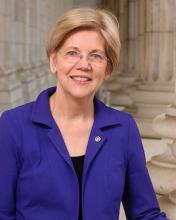
Earlier this week, Presidential hopeful Elizabeth Warren released her Plan to Invest in Rural America, which contained a framework for improving broadband policy and expanding high-quality Internet access.

You can read her full plan on Medium.

Funding Needed, Spent Wisely

Some of Warren’s goals for proposed policy changes include:

  • Passing federal statute that ensures municipalities have the right to invest in network infrastructure
  • Ending anti-competitive behavior from big corporate Internet access companies that engage in activity designed to reduce competition
  • Pass a Digital Equity Act, which will provide $2.5 billion over 10 years to states in order to help them develop digital inclusion projects

Warren’s plan also focuses on financing infrastructure development in rural areas, and creates some guidelines to address the problems with the current system. Her plan includes:

  • Dedicating $85 billion to expand broadband networks with grant funds awarded exclusively to cooperatives, non-profit organizations, tribes, and local government
  • Funding will be reserved for regions that are unserved, underserved, or where there is minimal competition
  • Grants will only go to projects that offer one discount plan and must include a 100 Mbps symmetrical tier, along with specific requirements for low-income subscribers
  • $5 billion will be earmarked for grants to projects that will benefit people on tribal Native American lands

Improving the FCC

Warren also wants FCC Commissioners who will restore network neutrality protections and improve mapping. By making changes in the FCC’s Office of Native Affairs and Policy, Warren plans to further attack the digital divide for indigenous people.

Read more of Elizabeth Warren’s Plan to Invest in Rural America at Medium.

Building a New Path Toward Tribal Connectivity - Community Broadband Bits Podcast 362

Matt Rantanen, director of technology at the Southern California Tribal Chairmen’s Association and director of the Tribal Digital Village Network, has been working for years to get tribal communities connected to broadband. In his conversation with Christopher, he talks about his experience with creative wireless solutions, the potential of the Educational Broadband Service (EBS) to get folks connected, and shifting attitudes around the importance of broadband.

“We’re trying to help solve that rural connectivity problem. America’s got a lot of talented people that live outside the city centers, and they just don’t have access to the resources that they need — and a lot of those people are on reservations. So it’s really important to get those people connected.”

Matt’s newest venture, Arcadian InfraCom, is creating new, diverse fiber paths thanks to innovative partnerships with tribal communities. Phase 1 of their plan, scheduled to be completed in 2022, will connect Salt Lake City to Phoenix and Phoenix to Denver, with add/drop locations within the Navajo Nation and throughout Utah, Colorado, and Arizona.

We talked to Matt previously on Community Broadband Bits episode 76 and on an episode of our Community Connections series. Check out our other stories on tribal lands connectivity here.

This show is 34 minutes long and can be played on this page or via Apple Podcasts or the tool of your choice using this feed

Transcript below. 

We want your feedback and suggestions for the show-please e-mail us or leave a comment below.

Listen to other episodes here or view all episodes in our index. See other podcasts from the Institute for Local Self-Reliance here.

Thanks to Arne Huseby for the music. The song is Warm Duck Shuffle and is licensed under a Creative Commons Attribution (3.0) license.

U.S. Government Accountability Office Criticizes FCC Data on Tribal Broadband

According to the Federal Communications Commission (FCC), at least 35 percent of tribal residents do not have access to fixed broadband. In comparison, only 7.7 percent of all U.S. residents lack access to fixed broadband, defined as minimum speeds of 25 Megabits per second (Mbps) download and 3 Mbps upload.

However, a recent report from the Government Accountability Office (GAO) concludes that this disparity is probably even starker.

The report, prepared at the request of the U.S. Senate Committee on Indian Affairs, finds that the FCC’s broadband data is inadequate and inaccurate. As a result, the data overstate sbroadband availability nationwide, particularly in tribal areas. Additionally, the report notes that the FCC fails to engage tribes in the data collection process.

Bad data isn’t just a bureaucratic recordkeeping problem. Tribal communities can miss out on federal funding to improve connectivity in unserved and underserved areas if the FCC data shows that they already have access to broadband.

Reporting Methodology Overstates Access

For the most part, the FCC gets its information on fixed broadband availability through Form 477. Internet service providers (ISPs) submit the form twice a year, listing the census blocks they serve and the highest speeds they advertise.

This data collection methodology inherently exaggerates Internet access. Since ISPs report coverage by census block, an entire block is considered served even if the provider offers, or could offer, access to only one home.

logo-GAO.jpeg Many tribal lands are located in rural areas, the report notes, where large census blocks result in vast overstatements of broadband availability. Census blocks can also contain both tribal and non-tribal lands, further obscuring the extent to which tribal communities lack connectivity.
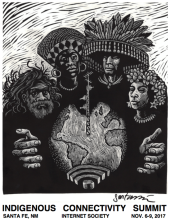
Read The Indigenous Connectivity Summit Community Report

In November 2017, about 200 people attended the first Indigenous Connectivity Summit in Santa Fe, New Mexico. The summit brought together activists, network administrators, researchers, and many more to consider the successes and challenges in improving Internet access in indigenous communities. The Internet Society has released the Indigenous Connectivity Summit Community Report outlining next steps on leaving the summit.

I was on the ground in Santa Fe and experienced first-hand the collaborative discussions that took place. Although brief, this report contains the key takeaways from these conversations. The saying, “for the Community, with the Community, by the Community,” appears as a title in the report and was a constant refrain during the summit. If we are to have affordable, reliable Internet access in our communities, we must have an active role in creating the solution.

Highlights from the Report

The ten page document outlines recommendations on what will make this possible. Some of these action items are creating sustainable connectivity and building capacity within our communities. Policies that can support these goals include making spectrum easier to access, developing collaborative backhaul solutions, and collecting better data on connectivity. 

The report underscores how Internet access relates to native nations’ autonomy and self-determination. Internet access can support cultural revitalization and language preservation as well as economic development. The summit offered a creative space to dive into the details and learn from one another. 

More Info

Read the report on the Internet Society’s website or download it here If you want to get into more details or to experience the summit for yourself, watch a recording of the event:


Mapping Broadband Competition In Idaho

Like many other states, connectivity across Idaho is unequally distributed. Urban areas may have a choice of one or two broadband providers while many rural areas have no options whatsoever. We have compiled the latest data from December 2016 into a map to highlight competition and show these disparities.

According to the Federal Communications Commission's (FCC) 2018 Broadband Progress Report, 98 percent of urban areas and 68 percent of rural areas in Idaho have broadband service, defined by the FCC as 25 Megabits per second (Mbps) downstream and 3 Mbps upstream. While about 1 million people in Idaho have access to two or more options, nearly half a million people are not nearly as lucky. Approximately 327 thousand of the state's 1.683 million people have only one option for broadband service, and 169 thousand still do not have access to broadband. This, however, is actually a best-case scenario.

Image

Failures In Broadband Data

These statistics and this map, like most broadband data, rely on FCC Form 477. Internet Service Providers (ISPs) complete the form explaining which census blocks they serve or could serve. Census blocks are the smallest unit of measurement for the U.S. Census, and they vary in size. Rural census blocks often cover more land mass than urban areas. ISPs need only be able to offer service to one person in a census block in order to claim the entire census block. This can lead to an overstatement of how many people are actually served. The FCC launched an interactive map with this data, and FCC Commissioner Jessica Rosenworcel has invited people to submit corrections to broadbandfail@fcc.gov

Livestream The Indigenous Connectivity Summit From Santa Fe

In addition to municipal networks and rural cooperatives, Native American Tribal Governments have been instrumental in recent years in bringing better connectivity to rural areas. Many large incumbent providers won’t serve tribal lands because, as with other rural areas, they don’t consider the investment profitable. As a result, some of these communities have exercised their own resourcefulness and invested themselves through a range of creative solutions.

In order to share discoveries and methodology, the Internet Society has organized the Indigenous Connectivity Summit in Santa Fe, New Mexico. The event started this morning and runs through tomorrow. The agenda includes presentations from all types of experts who’ve worked on tribal community networks and topics cover business models, advocating, digital tools, and a range of other matters.

Check out the agenda here.

We realize this is last minute, but the folks at the Summit are live streaming the event so you can still almost be there.

You can also watch the event on Facebook.

Fond du Lac Band Builds Fiber Network In Northeast Minnesota

Native nations are building community networks, owned and operated by tribal governments to ensure that Indian Country has high-speed Internet access. In July 2017, the Fond du Lac Band of Ojibwe announced a plan to build a Fiber-to-the-Home (FTTH) network to 900 homes that only had access to dial-up Internet service.

The Duluth News Tribune reported that the Fond du Lac tribal government is putting more than $2 million towards the venture and has secured about $6 million in federal grants. We spoke with Jason Hollinday, the Planning Director, to get more details on Fond du Lac Communications and what it means for the community. 

Fond du Lac Connectivity

The Fond du Lac reservation, “Nagaajiwanaang,” covers about 150 square miles in northeastern Minnesota, and the FTTH project will encompass most of the area - about 120 square miles. The network will offer voice, video, and Internet service.

Anyone, including non-tribal members, will be able to get connected within the service area. Prices have yet to be determined, offering affordable rates is a priority. In a recent Pine Journal article, Band IT director Fred Underwood pointed out that "Connectivity is available anywhere, but is it affordable?" and added that affordability in rural areas is often hard to find. Connectivity for the FTTH network will include a program to connect low-income residents and installation fees have been waived for any subscriber who signed up before July 31st.

Community centers and public buildings will all be connected and receive two years of free Internet service. The goal is to make sure that the network will be a community asset benefiting everyone.