
NTIA

Content tagged with "NTIA"

Displaying 1 - 10 of 150

Condition 50: The Fine Print Threatening California’s Internet Protections – Episode 30 of Unbuffered

Unbuffered Logo - Two text bubbles

In this episode of Unbuffered, Chris is joined by Chao Jun Liu (Electronic Frontier Foundation) to discuss Condition 50. NTIA added this term to the BEAD program last November. 

It would bar states that accept BEAD funds from enforcing laws that regulate the rates, terms, or conditions of broadband service, including net neutrality, open access, and affordability rules.

Together, they break down what California stands to lose. That includes its landmark 2018 net neutrality law and the $20 low-income plans required as conditions of the Charter-Cox and Verizon-Frontier mergers. 

Chao explains net neutrality’s core protections against blocking, throttling, zero rating, and paid prioritization. She also recounts how Verizon throttled firefighters during a record wildfire in 2018, which helped push California’s law over the finish line.

Moving to the stakes, they weigh roughly $1.4 billion in BEAD deployment funds against a Public Knowledge estimate that Condition 50 could cost California $5 to $16 billion in existing broadband benefits. 

They also cover New York’s decision to sign the agreement despite its Affordable Broadband Act, and how NTIA’s exemption from the Administrative Procedure Act let it add the condition without public comment.

Concluding with the decision facing Governor Newsom ahead of the November 1 deadline, they explore the legal and strategic calculus for a state that has already filed 100 lawsuits against the administration. They also discuss what the outcome could mean for Internet users well beyond California.

This show is 42 minutes long and can be played on this page or via Apple Podcasts or the tool of your choice using this feed. 

You can also check out the video version via YouTube.

Transcript below.

We want your feedback and suggestions for the show-please e-mail us or leave a comment below.

Listen to other episodes (formerly Community Broadband Bits) or view all episodes in our index. See other podcasts from the Institute for Local Self-Reliance.

Thanks to Whitedrift for the song Operator, licensed Creative Commons Attribution (3.0).

Why ISPs Fail and the Reality Facing State Broadband Offices - Episode 29 of Unbuffered

Unbuffered Logo - Two text bubbles

In this episode of Unbuffered, Chris is joined by Doug Dawson (CCG Consulting), Doug Adams (Broadband.io), and Jade Piros de Carvalho (IdeaTek) for a candid, wide-ranging discussion on why new Internet Service Providers stumble and the administrative realities bearing down on state broadband offices.

Together, they break down the common operational traps that derail network builds—from easily overlooked execution details like pouring concrete pads for field huts, to vendor bottlenecks with OSS/BSS software, poor contractor restoration that angers local communities, and the pitfalls of passive marketing. 

Moving behind the scenes of federal policy, the panel tackles the mounting compliance fatigue surrounding the BEAD program, examining high staff turnover in state offices, environmental review delays, pole attachment friction with co-ops, and shifting NTIA timelines.

Concluding with a look at the future of digital infrastructure, the group explores what happens when federal funding programs hit administrative walls and how local, state, and community-driven efforts can maintain momentum to get unserved communities connected.

This show is 52 minutes long and can be played on this page or via Apple Podcasts or the tool of your choice using this feed. 

You can also check out the video version via YouTube.

Transcript below.

We want your feedback and suggestions for the show-please e-mail us or leave a comment below.

Listen to other episodes (formerly Community Broadband Bits) or view all episodes in our index. See other podcasts from the Institute for Local Self-Reliance.

Thanks to Whitedrift for the song Operator, licensed Creative Commons Attribution (3.0).
The FWA Reality Check and the BEAD Final Numbers - Episode 25 of Unbuffered

Unbuffered Logo - Two text bubbles

In this episode of Unbuffered, Chris is joined again by Doug Dawson of CCG Consulting for a wide-ranging conversation about fixed wireless access performance, federal broadband definitions, the BEAD program's true-up process, and the potential impact of artificial intelligence on network infrastructure.

Chris and Doug begin by diving into a recent Ookla report on Fixed Wireless Access (FWA) from AT&T, Verizon, and T-Mobile. They break down how FWA operates on de-prioritized cellular capacity, why seasonal foliage can slow down speeds, and how the limitations of upload performance highlight the stark difference between cellular home broadband and wireline fiber connections.

From there, the conversation turns to federal policy and mapping challenges. Chris and Doug critique potential shifts at the FCC regarding broadband speed definitions and discuss a GAO report highlighting the hurdles local governments and Tribal nations faced during the bulk broadband collection challenge process. They also examine the NTIA’s plan for truing up unserved locations under the BEAD program, as well as the final funding distributions across fiber, Low Earth Orbit satellites, and fixed wireless networks.

Finally, Chris and Doug tackle the popular debate around AI and network congestion. They unpack why data center traffic differs from residential internet usage, address the security and infrastructural risks of rapid AI development, and discuss the long-term economic viability of major AI models.

Throughout the episode, Chris and Doug connect these technical and policy developments to broader questions about network reliability, federal oversight, market competition, and who will ultimately build and control the future of telecommunications.

This show is 46 minutes long and can be played on this page or via Apple Podcasts or the tool of your choice using this feed. 

You can also check out the video version via YouTube.

Transcript below.

We want your feedback and suggestions for the show-please e-mail us or leave a comment below.

Listen to other episodes (formerly Community Broadband Bits) or view all episodes in our index. See other podcasts from the Institute for Local Self-Reliance.

Thanks to Whitedrift for the song Operator, licensed Creative Commons Attribution (3.0).

Federal Agencies Still Can't Get Their Broadband Data Straight, GAO Finds

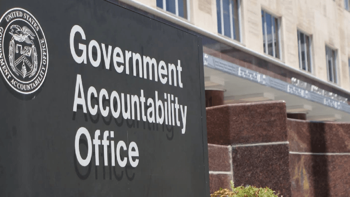
A recent Government Accountability Office (GAO) report reveals what’s been obvious to broadband deployment experts for years now: the federal government’s multi-agency approach to closing the digital divide is undermined by a lack of coordination and data-management among agencies.

The result is an FCC broadband coverage map with an amalgamation of inaccuracies that misrepresents where high-speed Internet service does or does not exist, a flaw that can steer taxpayer dollars away from communities that actually need them.

Since 2020, four federal agencies — the FCC, NTIA, USDA and Treasury — have been administering nine different grant programs to build-out new Internet networks in unserved and underserved areas across the nation, including the $42.5 billion federal flagship BEAD (Broadband Equity Access and Deployment) program.

As ILSR’s Senior GIS Analyst Christine Parker notes, the report devotes considerable attention to “de-duplication” — the process of cross-referencing which locations have already received funding or service commitments from one program so that other programs don't waste money doubling up, or worse, leave locations out entirely because it was wrongly assumed to be covered elsewhere.

Image
GAO sign and building in background

“But there’s no documented process or timeline for actually doing this,” Parker says.

Garbage In, Garbage Out

Part of the problem, the report notes, is that agencies track and report funding data in different formats, with some programs collecting far more granular location-level detail than others so that it is much harder to reconcile the datasets and match them up. GAO indicates the agencies are aware of the issue and are working to reconcile it, but as of the report’s release, no consistent process was in place.

Can't See the Sky for the Trees: Obstruction Could Plague Ohio’s Planned Starlink BEAD Plan

Researchers say they’re concerned that a massive influx of new federal grant money being redirected to Elon Musk’s Starlink satellite broadband company in Ohio will be thwarted by the simple fact that many targeted locations don’t have a clear, unobstructed view of the sky.

Tom Reid of Reid Consulting conducted a study earlier this year taking a closer look at the 30,000 locations in Ohio that are poised to receive subsidized service from Starlink, and found that as many as 70 percent of the target locations were covered by tree canopy preventing the minimum 110-degree field of view Starlink dishes require.

“Only about 30 percent of the households awarded in the state of Ohio have a clear enough view of the sky to get a good, stable Starlink signal,” Reid recently told local Ohio public media.

Ohio is slated to receive $793 million in federal Broadband, Equity, Access, and Deployment (BEAD) grants to fund fiber expansion. But after the Trump NTIA last year changed the program to benefit Elon Musk, Starlink quickly became the biggest state beneficiary of public tax money, receiving more than $51.6 million in grants.

The Trump administration’s changes not only eliminated affordability and equitable deployment requirements, they directed millions of dollars away from higher-capacity future-proof fiber, and toward the back pocket of a billionaire who had already planned to deploy the LEO satellite network without subsidization.

‘Not Living in the Cloud’: Hoopa Valley Tribe Builds Digital Sovereignty With New Network Hub

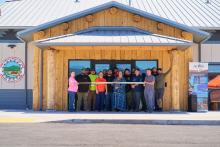
The Hoopa Valley Tribe is celebrating the opening of its new fiber network operations center as the Hoopa Valley Public Utilities District (HVPUD) expands fiber-to-the-home Internet service throughout the Hoopa Valley Reservation and into neighboring communities just outside of its Tribal lands.

To mark the occasion earlier this summer, more than 50 community members, Tribal leaders, HVPUD staff, and project partners attended the July 17 opening celebration.

At the celebration, Hoopa Valley Tribal Vice Chairman Jordan Hailey hailed the milestone moment:

“This is truly a great day for the Hoopa Valley Tribe, for the department and for the Hoopa people. It makes me proud as a Hoopa Tribal member and a member of this community to see everything that they’ve accomplished.”

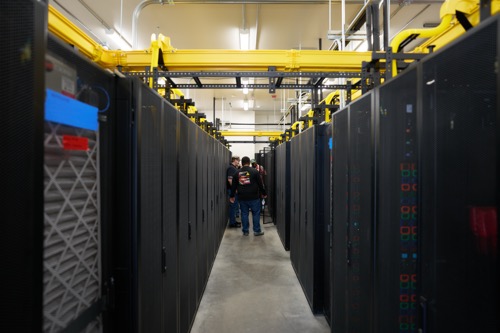
Though the new network operations headquarters is a storage and transport data center, General Manager of HVPUD Linnea Jackson made it clear that it is not a hyperscale/compute AI data center that have sparked controversy and protest in numerous local communities across the nation.

“The (data centers) that are sucking up all those resources — water, land, and energy — those are the AI data centers. Ours is a network hub, not a huge footprint,” Jackson tells ILSR. “We’re talking about servers and rack space for (Tribal) government operations and records, not a demand on our water resources — completely different from a large AI data center.”

Image
Three Hoopa Valley PUD fiber techs stand at the end of a row of black server racks

Establishing Data Sovereignty

Too Easy to Reach Orbit? - Episode 16 of Unbuffered

Unbuffered Logo - Two text bubbles

In this episode of Unbuffered, Chris is joined again by Douglas Dawson for a conversation about the challenges and opportunities shaping the future of broadband.

Chris and Doug begin by discussing the latest developments in the National Digital Inclusion Alliance's lawsuit against the Trump administration over the Digital Equity Act, examining what the case could mean for digital equity efforts and the communities working to expand access, affordability, and digital skills.

From there, they turn to the results of a recent survey examining how rural Americans use the Internet, exploring what it reveals about changing consumer habits, growing bandwidth demands, and the ways AI and other emerging technologies are reshaping how people connect online.

The conversation then shifts to the practical realities of building broadband networks, including the rising cost of Fiber construction, permitting delays, make-ready work, and why better pole inventories could significantly reduce deployment costs and speed up network expansion.

Chris and Doug also take a closer look at the Federal Communications Commission's evolving approach to satellite broadband, discussing recent regulatory changes, what they could mean for the industry, and whether the agency's approach strikes the right balance as more companies look to launch satellite broadband services. They also explore how satellite fits alongside Fiber and other technologies as communities work to expand reliable Internet access.

Throughout the episode, Chris and Doug connect today's policy debates with broader questions about technology, infrastructure, and what it will take to ensure communities have reliable, affordable Internet in the years ahead.

This show is 48 minutes long and can be played on this page or via Apple Podcasts or the tool of your choice using this feed. 

You can also check out the video version via YouTube.

Transcript below.

We want your feedback and suggestions for the show-please e-mail us or leave a comment below.

Listen to other episodes (formerly Community Broadband Bits) or view all episodes in our index. See other podcasts from the Institute for Local Self-Reliance.

Thanks to Whitedrift for the song Operator, licensed Creative Commons Attribution (3.0).
Rural Cooperatives Frustrated With NTIA BEAD Changes

Rural cooperatives have been the backbone of modern efforts to bring affordable next-generation fiber to long-neglected rural U.S. communities. 

So it’s important to listen to them when they warn that Trump administration NTIA changes to U.S. telecom subsidy programs are going to have a profoundly-negative impact on efforts to expand fast, affordable Internet access.

Earlier this month rural electric and broadband cooperatives gathered in Washington, DC, for the 5th annual Broadband Leadership Summit. 

The topic du jour was broadly unpopular changes made by the NTIA to the Broadband, Equity, Deployment, and Access program (BEAD) created by the 2021 infrastructure bill.

As ILSR has repeatedly explored, NTIA BEAD changes reduced oversight of deployment, lowered quality standards, stripped away requirements that the resulting taxpayer Internet access be affordable and equitably deployed, and redirected billions of dollars away from affordable fiber to the low-Earth orbit space ambitions of billionaires Jeff Bezos and Elon Musk.

That’s not sitting well with the cooperatives doing the heavy and costly lifting to bring affordable access into long-neglected rural communities.

The Plot to Hijack America’s Broadband - Episode 15 of Unbuffered

Unbuffered Logo - Two text bubbles

In this episode of Unbuffered, Chris is joined by Sean Gonsalves and Karl Bode for a wide-ranging conversation about the latest stories shaping the telecommunications landscape.

The group begins by discussing the upcoming 250th anniversary of the United States, prompting a broader discussion about the country's history, civic identity, and how Americans can use the milestone as an opportunity to reflect on the nation's past while looking toward its future.

From there, they dive into Sean and Karl's recent article for The Verge: Elon Musk and the Plot to Hijack America’s Broadband, reflecting on the state of broadband policy, the challenges facing community broadband, and how the national conversation around Internet infrastructure continues to evolve.

Finally, Chris, Sean, and Karl unpacked the recent House Committee on Energy & Commerce Hearings regarding Arielle Roth and the National Telecommunications and Information Administration's revised BEAD guidance, discussing changes to technology neutrality, the growing role of low-Earth orbit satellite providers, and what the new rules could mean for states, communities, and long-term broadband investment. 

Along the way, they debate the tradeoffs between Fiber, fixed wireless, and satellite service, and whether the updated approach will deliver the infrastructure communities need.

Throughout the episode, Chris, Sean, and Karl connect today's policy debates with broader questions about investment, local leadership, and what it will take to ensure communities have access to reliable, affordable Internet for decades to come.

This show is 53 minutes long and can be played on this page or via Apple Podcasts or the tool of your choice using this feed. 

You can also check out the video version via YouTube.

Transcript below.

We want your feedback and suggestions for the show-please e-mail us or leave a comment below.

Listen to other episodes (formerly Community Broadband Bits) or view all episodes in our index. See other podcasts from the Institute for Local Self-Reliance.

Thanks to Whitedrift for the song Operator, licensed Creative Commons Attribution (3.0).
Lawmakers Press Trump Admin To Stop Waffling On BEAD ‘Non Deployment Funds’

Lawmakers are pushing the Trump administration to stop being murky on whether states will be able to access tens of billions in “non-deployment funds” mandated by Congress that have been temporarily hijacked by the administration’s unpopular changes to a once-in-a-lifetime federal grant program to expand high-speed Internet access.

Representative April McClain Delaney (D-MD) is the latest politician to send a letter to the Trump NTIA asking for competent guidance on what will happen to the estimated $21 billion in “non deployment funds” suddenly stuck in limbo.

“States cannot build a workforce without workforce development funding; they cannot ensure safe adoption without digital safety education; they cannot support vulnerable populations without telehealth and remote-learning infrastructure; and they cannot protect critical networks without robust cybersecurity capacity,” Delaney and three other lawmakers wrote.

Image
Congress woman April Delaney

A year ago the Trump administration made numerous controversial changes to the $42.5 billion Broadband, Equity, Access, and Deployment (BEAD) program included in the 2021 infrastructure bill. That included removing rules ensuring that the resulting taxpayer-funded Internet access would be equitably deployed and affordable.