
ConnectMaine Authority

Content tagged with "ConnectMaine Authority"

Related Topics
Displaying 11 - 19 of 19

In Maine Event: MidCoast Internet Development Corporation Suffers Big Blow

Earlier this month, a plan to bring fiber connectivity to four towns in Knox County, Maine (pop. 39,500) spearheaded by the MidCoast Internet Development Corporation (MIDC) was dealt a major blow when Knox County Commissioners denied MIDC’s request to use the county's American Rescue Plan funds to pay for network construction.

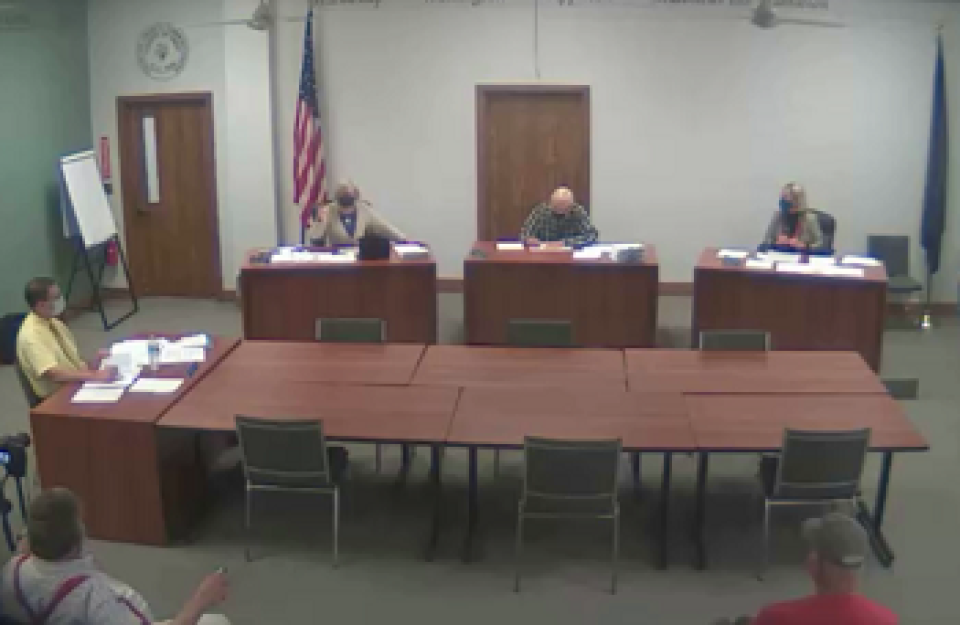
During a Knox County Commission meeting on Tuesday, October 12, after County Commissioners repeatedly barred local municipal leaders from commenting on broadband-related issues, they voted unanimously against awarding any of the county’s $7.7 million in American Rescue Plan (ARPA) funds to municipal broadband projects or any project benefiting an individual municipality.
Image

County Commissioners assembled to consider 58 ARPA project applications submitted by nonprofit and municipal entities, all vying for a portion of the county’s Rescue Plan funds. But, the meeting took an unexpected turn when one Knox County Commissioner accused representatives from the MIDC, a regional broadband utility formed by four Knox County towns, of “bullying” the Commissioners into spending the county’s Rescue Plan funds on regional and municipal broadband projects. 

After County Commissioner Dorothy Meriwether voiced her displeasure for how local community broadband advocates pursued the funding, three local Select Board members were not permitted to speak in support of MIDC. Adding insult to injury, the Commissioners then welcomed a representative from Charter Spectrum to talk for nearly 30 minutes.
Shifting the Mindset from Scarcity to Abundance: The Infrastructure Bill and Longterm Broadband Solutions - Episode 470 of the Community Broadband Bits Podcast

This week on the Community Broadband Bits podcast, Christopher Mitchell is joined by Executive Director of the ConnectMaine Authority, Peggy Schaffer to discuss strategies that might make Maine and other states successful in solving connectivity issues with the $42 billion in broadband funding the new infrastructure plan sets aside to go directly to states.

States will receive the funding directly and not through the FCC, as has worked in the past. The bill specifically says that when states award the grant money, they “may not exclude cooperatives . . . public or private utilities, public utility districts, or local governments from eligibility for such grant funds," which will allow states without restrictions on municipal networks to seriously consider investing in them. They discuss how this new structure will allow for more accountability and will prompt states to think critically about how to spend the funds. Schaffer, who helped shape the broadband piece of the infrastructure bill, talks about the conversations she’s having with communities across the state of Maine as they prepare to receive the funding, and how she is imploring them to think about future-proof solutions.

This show is 26 minutes long and can be played on this page or via Apple Podcasts or the tool of your choice using this feed

Transcript below. 

We want your feedback and suggestions for the show-please e-mail us or leave a comment below.

Listen to other episodes here or view all episodes in our index. See other podcasts from the Institute for Local Self-Reliance here.

Thanks to Arne Huseby for the music. The song is Warm Duck Shuffle and is licensed under a Creative Commons Attribution (3.0) license.

Community Broadband Legislation Roundup – July 19, 2021

Snapshot

Maine broadband authority redefines statewide broadband as symmetrical 100/100 Mbps connection

California Legislature and Governor reach $5.25 billion agreement on statewide middle-mile network

New Hampshire matching grant initiative aiming to promote partnerships signed by Governor

The State Scene 

Maine

The Maine Senate recently enrolled a bill (L.D. 1432) amending the Municipal Gigabit Broadband Access Fund to only allow communities, municipalities, and regional utilities access to grants through the program. The bill became law without State Governor Janet Mills’ signature on June 24. 

The legislation removes limits placed on the number of grants able to be awarded per project, but limits the amount of funds that may be distributed per project to 50 percent of total costs. The bill, aiming to support the deployment of municipal gigabit fiber optic networks, also requires the ConnectMaine (ConnectME) Authority to establish minimum upload and download speed definitions to foster widespread availability of symmetric high-speed Internet access, beginning in 2025. 

MidCoast Maine Communities Vote To Establish Regional Broadband Utility

Last Tuesday, residents of three coastal Maine communities - Camden, Rockport, and Thomaston - voted to support Town Meeting articles authorizing each town's Select Boards to enter an interlocal agreement establishing the MidCoast Internet Development Corporation (MIDC), a nonprofit regional broadband utility in the Penobscot Bay Region of MidCoast Maine.

The type of regional utility the communities are seeking to establish is a broadband network utilizing an open-access model, in which the fiber infrastructure is municipally-owned, the maintenance of the network is managed by an outside firm, and private Internet Service Providers (ISPs) provide retail service to end-users. The ultimate goal of MIDC is to build an open-access, Fiber-to-the-Home (FTTH) network to provide universal Internet access across any towns which vote to sign onto MIDC’s interlocal agreement.

More than nine communities located in Knox and Waldo County formed the MidCoast Internet Coalition earlier this year, to indicate their support of establishing the MIDC regional utility district. Now, the towns which form the MidCoast Internet Coalition (Northport, Lincolnville, Hope, Camden, Rockport, Rockland, Thomaston, South Thomaston, Union, and Owls Head) are voting in phases to sign onto an interlocal agreement, legally recognizing the public utility under Maine law.

Faced with aging populations, a need to consider their economic futures, and no hope of investment from the monopoly ISPs, many cities across Maine have joined forces to develop their own publicly-owned broadband utilities. MIDC is one of three regional broadband utilities in Maine, alongside the Katahdin Region Broadband Utility and the Downeast Broadband Utility (DBU). MIDC will follow the same regional approach as DBU, a utility which found deploying a fiber network and allowing local ISPs to offer services over the infrastructure was the most feasible approach to ensure high-speed, reliable

Maine’s Antique Capital Aims to Propel State Into 21st Century With Better Broadband Access

The Searsport Broadband Committee is pushing forward with a plan to bring a Fiber-to-the-Home (FTTH) network to town residents. The committee hopes to hold a special town meeting soon, where residents will be asked to vote on a bond to pay for it. 

Searsport, Maine (pop. 2,600), known for being “the home of famous sea captains” and the “Antique Capital of Maine,” is certainly not an antique when it comes to the town's perspective on the necessity of broadband and the long-term benefits that come from investing in fiber. 

“There’s a saying, ‘it’s future-proof,’” Searsport Town Manager James Gillway told the Bangor Daily News. “It’s so far ahead of what copper wire does. It’ll give us better connectivity, and we would run it, own it, like any other utility. That way, we can control the cost. We can be super competitive.”

The town recently put out an informational booklet to educate residents on what this network would look like. 

The network is estimated to cost between $2.5 million and $3 million, with the town seeking state grants to help cover some of the costs. Residents will have the option to subscribe for $60 to $70/month with speeds going up to 1 Gigabit per second (Gbps). Early news coverage suggests the town would contract with Axiom Technologies of Machias to be the Internet Service Provider (ISP).

Like many communities we’ve been covering over the course of the pandemic, working from home and distance learning has really put a spotlight on the need for fast, reliable Internet access in Searsport. 

The town received a $13,000 grant that it applied for back in July 2020 to help boost it’s free public downtown Wi-Fi, which the town believes will “set [them] apart and make [them] more of a destination then a rest stop or pass through town.”

Mainers Commit to Broadband Expansion with $15 Million Internet Bond Issue

Maine’s High-Speed Internet Infrastructure Bond Issue, which we first wrote about a month ago, has passed. 76% of voters said yes to Maine Question 1, which authorizes the issuance of $15 million in general obligation bonds to fund projects which will expand broadband access for residents in underserved and unserved areas. Underserved areas are those where less than 20% of the households have speeds of 25 Megabits per second (Mbps) download and 3 Mbps upload. Unserved areas are those where broadband service isn’t offered by provider. The northern and eastern parts of the state suffer from particularly poor connectivity options. The money will join $30 million in additional federal, local, and private money, for a total of $45 million to be invested in the near future.

Where We Go From Here

The ConnectME Authority will administer the grants. It’s a significant injection of funds for the broadband authority, which has given out slightly more than a million dollars a year over the last ten years to build mostly last-mile connections and bridge the broadband gap. Passing the measure makes Maine the first state to bond to fund broadband projects, serving as an example to other states looking for avenues to do the same. 

As it stands, somewhere around 83,000 households lack access, though this doesn’t include those families who can’t afford to subscribe. The impact of this digital divide has become even more starkly outlined over the last six months, and since the future of telework relies on affordable, reliable, high-speed connections, states that don’t commit resources to the problem will fall further behind. 

A Concerted Effort

Maine's Proposed Bond Issue Offers Significant New Funding for Internet Infrastructure

In less than a month Maine will hold a Special Referendum election which includes a measure with significant ramifications for Internet access in the state. On July 14, Mainers will be asked to vote Yes or No on Question 1, a $15 million Internet Infrastructure Bond Issue designed to bring high-speed service to the approximately 85,000 households in unserved or underserved areas.

The $15 million in general obligation bonds would go to the ConnectME Broadband Authority, which administers the state's broadband grants, to provide funding for projects with an emphasis on connecting unserved or underserved areas. This new funding would leverage an additional $30 million in matching federal, private, and local investments.

If voters approve the referendum, Maine will become one of few states (if not the first) to bond to fund broadband deployment, taking advantage of current historically low interest rates.

Meeting a Need

Tens of thousands of homes and businesses in Maine fall short of even the slowest upload and download speeds defined by the FCC as modern broadband. Those in the northern two-thirds of the 35,000-square-mile state deal with particularly poor conditions, with either no connectivity options or maximum download and upload speeds of 10/1 Megabits per second (Mbps). The ConnectME authority has given out $12 million over the last decade to fund projects, with an emphasis on last-mile connections, but broadband gaps still remain.

Nancy Smith, Executive Director of GrowSmart Maine, told WABI:

We know that access to high speed internet is critical for students to access education, even when they're at home. And for all of us to access medical care through tele-health. Investments in broadband are also critical to growing the economy and creating jobs, particularly in rural areas.

Mainers Weigh In

Maine House Representative Pushes for Better Internet Access - Community Broadband Bits Podcast 180

Eleven months ago, we noted the incredible energy in the Maine Legislature around improving Internet access. Maine State Representative Norm Higgins joins us this week for Community Broadband Bits Podcast episode 180. Rep. Norm Higgins, a newcomer to the Legislature, pushed hard for legislation to encourage municipal open access networks as well as removing barriers to increased investment including a tax on the Three-Ring Binder project. He was part of a large majority that moved some key bills forward despite fierce opposition from Time Warner Cable and others. 

We talk with Rep. Higgins about the various bills, including LD 1185, which would have created planning grants for community owned open access networks but passed without any funding. 

This show is 18 minutes long and can be played on this page or via Apple Podcasts or the tool of your choice using this feed.

Transcript below.

We want your feedback and suggestions for the show-please e-mail us or leave a comment below.

Listen to other episodes here or view all episodes in our index. See other podcasts from the Institute for Local Self-Reliance here.

Thanks to Arne Huseby for the music, licensed using Creative Commons. The song is "Warm Duck Shuffle."

More Muni Fiber Projects in Maine

Local communities in Maine are mobilizing to jumpstart economic development, expand educational opportunities, and improve Internet access. The town of Orono, located near the center of the state, announced earlier this month that it will working with nearby Old Town and the University of Maine to deploy an open access fiber network pilot project in an area they wish to promote as a technology park.

The news highlights connectivity improvements in Maine happening at the local level. In August, Rockport solidified its plans to bring fiber to its downtown with partner GWI. Soon after, South Portland announced a similar partnership with GWI to spur economic development. Sanford and Isleboro [PDF] have commissioned studies.

The Main Campus reports that Orono, Old Town, the University of Maine, and GWI have been in the planning phase for some time, but lacked funding to deploy:

“We tried to be the first on the map [with fiber-optics], but there were too many obstacles. Now we have the opportunity to do something,” said Orono Town Manager Sophie Wilson at last Monday’s Economic Development Committee meeting, where the opportunity was presented.

In early 2012, the town was in talks with Old Town and Maine broadband service provider GWI about connecting the towns and the University of Maine to the Three Ring Binder, an 1,100-mile long highway of fiber optic infrastructure that passes underneath Bennoch Road. In order to take advantage of the opportunity, the towns planned on coming together in a collaborative called Old Town-Orono Fiber (OTO Fiber) and applied for grant funding to go through with the project.

Although they weren’t able to receive the necessary funds in 2012, the town is in a better position this time around.