
rural

Content tagged with "rural"

Related Topics
Displaying 41 - 50 of 1065

Sherwood, Oregon Ferments ‘Future-Proof’ Fiber To Preserve and Expand Municipal Network

In the City of Sherwood, a mostly residential bedroom community 16 miles south of Portland, officials have been quietly cultivating a digital vineyard across Oregon’s “Gateway to Wine Country.”

As part of its on-going work to build out a citywide fiber network, Sherwood Broadband recently secured a $9 million grant from the Oregon Broadband Office Broadband Deployment Program (BDP) to continue expanding Sherwood’s municipally-owned network into neighboring rural communities just outside city limits.

The grant award is part of $132 million in federal Rescue Plan funds the state is doling out to an array of community-owned broadband initiatives for 16 projects across 17 counties.

Award winners include Beacon Broadband, a subsidiary of the Coos-Curry Electric Cooperative ($19.4 million); Jefferson County ($19.2 million); Douglas Fast Net, a wholly-owned subsidiary of the Douglas Electric Cooperative ($8.5 million); the Idaho-based member-owned cooperative Farmers Mutual Telephone Company, which offers broadband service in Malheur County, OR ($18.9 million); and a handful of independent providers like Blue Mountain Networks ($6.5 million) and Ziply Fiber ($10.2 million), recently acquired by Bell Canada.

Conexon Connect Completes First Major Florida Fiber Deployment

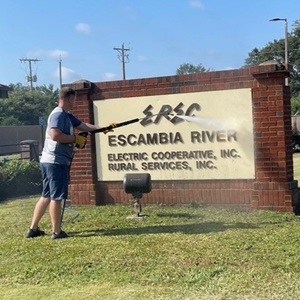
Conexon Connect has completed its first fiber to the home project in Florida, a 2,000-mile network launched in partnership with Escambia River Electric Cooperative (EREC).

In a public statement, Conexon noted that this was the sixth fiber project they’ve completed nationwide with fiber Internet access being delivered to 12,000 EREC members.

Image
Escambia River Elec Coop Sign Cleaning with hose

"Over the past two years, we've worked tirelessly to bring this critical infrastructure to every EREC member in Escambia and Santa Rosa counties," EREC CEO Ryan Campbell said of the milestone. "Today, every member of our cooperative has access to fast, reliable Internet, which is not just about improving connectivity – it's about enhancing quality of life, fostering economic growth and ensuring that no one in our community is left behind in the digital age.”

Conexon’s Alexis Madison told ILSR that the EREC project will be financed with approximately $21.8 million in grants, including an Escambia County grant of $6.3 million, two Broadband Opportunity Program (BOP) grants totaling $5.9 million, and a Broadband Infrastructure Program (BIP) grant of $9.6 million.

Bolt Broadband One Of Many Winners In Latest Oklahoma ARPA Grants

The Oklahoma Broadband Office (OBO) says local providers have broken ground on several new grant-fueled fiber projects designed to provide high-speed Internet access to long unserved or underserved communities across wide swaths of the Sooner state.

According to two different announcements by the state’s broadband office, the OBO recently greenlit $65.9 million in new fiber expansion initiatives in the Southern part of the state, as well as another $24.6 million in deployments for the northern-central part of the state.

Image
Oklahoma Bolt Fiber boring tractor

The fiber upgrade projects were made possible via $158 million in Capital Projects Fund grants made possible by the 2021 American Rescue Plan Act (ARPA). The grants are expected to help fund more than 50 projects in 28 counties.

In the Southern part of the state, $43.2 million in federal grants – plus $22.8 million in matching funds – will connect over 2,000 unserved homes and businesses in partnership with Medicine Park Telephone, Oklahoma Fiber Network, Oklahoma Western Telephone, Phoenix Long Distance, Southern Plains Cable, Southwest Oklahoma Telephone, and Texhoma Fiber.

North Dakota Nearing 100 Percent Fiber Connectivity

With the incoming Trump administration and the ascendance of GOP leaders taking aim at key aspects of broadband expansion initiatives embedded in the Bipartisan Infrastructure Law, industry insiders expect the $42.5 billion Broadband Equity, Access, and Deployment (BEAD) program to likely get a major facelift in the coming months.

GOP Senate leaders have signaled they will push for BEAD to be scaled back or reconfigured.

One way they may do that is to remove the law’s preference for funding fiber network deployments and create a path for subsidizing Musk’s satellite Internet company, arguing that Starlink would be a more cost-effective solution to bring broadband to rural America.

Late last week, in fact, NTIA released its “Final Guidance for BEAD Funding of Alternative Broadband Technology.” And while the updated guidelines still considers fiber deployments as “priority broadband projects,” the agency administering the BEAD program now explicitly says that states can award “LEO Capacity Subgrants.”

Roanoke Cooperative Thinks Big With North Carolina Fybe Fiber Expansion

North Carolina’s Roanoke Cooperative continues to make steady progress with expansion of its Fybe last mile fiber network within The Tar Heel State.

Cooperative officials tell ILSR that the cooperative and a coalition of organizations across North Carolina have major expansion plans in the works, starting with a fiber build in Halifax County, population 47,298.

Currently, Fybe provides fiber broadband service to around 6,000 subscribers in North Carolina, but thanks to an historic infusion of federal and state grants, the hope is to expand fiber access to the bulk of unserved addresses county-wide.

Fybe COO Bo Coughlin tells ILSR that the lion’s share of the cooperative's upcoming efforts to bring affordable connectivity to unserved and under-served portions of North Carolina will be under the banner of a coalition dubbed Encore, a nonprofit collaboration between MCNC, North Carolina Electric Membership Cooperatives (EMC), and Fybe.

“MCNC has been around for 40 years,” Coughlin notes. “It started as an economic Development institution funded by the state. Their goal was originally to help birth the microchip industry in RTP down in Raleigh, but today they provide transport to around a hundred universities, charter schools, and community anchor institutions across nearly 100 counties.”

Image
Fybe service territory map

Back in April, Fybe won a $9 million Growing Rural Economies with Access to Technology (GREAT) grant to help bring fiber to the largely underserved, heavily-rural residents of Martin, Bertie, Halifax, and Hertford counties.

“So currently, we pass about 5,000 total homes across Northampton and Halifax,” Coughlin said of Fybe’s current footprint.

Maine, New Mexico Want Starlink Part of the Mix: Balancing Trade-Offs and Concerns

States wary about the restrictions and delays with looming federal broadband grants are poised to put significant taxpayer resources into Starlink and other low Earth orbit (LEO) satellite constellations. The problem: such services often aren’t affordable, raise environmental questions, and may struggle to keep pace with consumer capacity demand.

Back in March, Maine unveiled a $5.4 million initiative to offer Starlink Low Earth Orbit (LEO) terminals to 9,000 state residents outside the reach of broadband from existing terrestrial providers.

An estimated 9,000 locations in the state (1.5 percent of residents) have no access to broadband, mostly peppered across rural Oxford, Penobscot, and Aroostook counties.

While well intentioned, the state’s initiative immediately sparked a debate about whether Starlink is the best use of taxpayer resources.

Starlink May Be Part of Solution

LEO satellite broadband has understandable allure for state broadband offices tasked with showing the federal government they have a solution for every premise – household and business – in the state. Depending on geography and state, some of these locations may require $100,000 for a terrestrial wireline connection.

Many of these unserved locations may be inhabited for a few weeks a year by the family of billionaires or 52 weeks a year by a family barely able to afford the fuel to live there. Spending $100,000 on that household may mean tens of other households see no improvement or have to settle for worse technology. And depending on who you ask, NTIA either demands that the state actually connect that household or simply have a feasible plan to achieve that connection.

Arkansas Electric Cooperatives Pass 1 Million Broadband Connection Milestone

The Electric Cooperatives of Arkansas say they recently finished delivering fiber broadband capability to more than one million Arkansans as part of a $4.66 billion expansion.

More than 40,000 miles of fiber have been installed by 17 cooperative broadband providers, including 15 local broadband providers, one wholesale broadband provider, and one middle-mile fiber company.

In a prepared statement, Arkansas cooperatives indicate they have $2.2 billion in additional projects lined up connecting an additional 13,000 residents in the “Natural State.” Once completed, Arkansas cooperatives will have deployed 53,000 miles of fiber and connected 1.2 million state residents to fiber.

Informed by their efforts at rural electrification nearly a century earlier, U.S. electrical cooperatives have increasingly been pushing into fiber broadband deployment. Initially as a way to better monitor and manage complex modern electrical grids, then ultimately as a way to extend access to predominately rural customers trapped on the wrong side of the digital divide.

Image
Arkansas family happy with elec coop broadband

Nearly 80 percent of the state cooperatives’ investment in fiber infrastructure has been self-funded without grant subsidies, the coalition notes. Many of the markets they’ve targeted have long been neglected by regional cable and phone giants that believe the investment into rural counties isn’t worth the time and resources, or won’t be profitable enough, quickly enough for Wall Street.  

Starlink, Caps, and Consumer Concerns - Episode 621 of the Community Broadband Bits Podcast

In this episode of the podcast, Christopher Mitchell is joined by freelance reporter Karl Bode to discuss pressing broadband issues, including the practicality and limitations of Starlink for rural areas, challenges with current broadband policy, and the ongoing efforts to ensure affordable access. 

They explore the impact of recent political discussions on broadband funding, misunderstandings around satellite Internet’s role in rural connectivity, and why affordability remains a crucial barrier. They also delve into FCC initiatives, such as the investigation of data caps and new broadband “nutrition labels,” aimed at transparency in pricing and services. 

Their conversation underscores the importance of consumer-centric policies and the need for regulatory action to break monopolistic control in the broadband market.

This show is 42 minutes long and can be played on this page or via Apple Podcasts or the tool of your choice using this feed.

Transcript below.

We want your feedback and suggestions for the show-please e-mail us or leave a comment below.

Listen to other episodes or view all episodes in our index. See other podcasts from the Institute for Local Self-Reliance.

Thanks to Arne Huseby for the music. The song is Warm Duck Shuffle and is licensed under a Creative Commons Attribution (3.0) license

Montgomery County Maryland Recognized For Broadband Equity Efforts

Montgomery County Maryland has been awarded the “Best Municipal or Public Connectivity Program,” honored as a 2024 Broadband Nation Award winner for its ongoing efforts to expand affordable broadband access and help bridge the digital divide.

Montgomery County has worked extensively for years to connect municipal services and key anchor institutions, but more recently has begun leveraging that infrastructure to expand access to the most vulnerable. The county’s efforts have two key components:

FiberNet is a 650-mile municipal fiber communication network that provides broadband services to 558 County, State, municipal, educational, and anchor institutions.

MoCoNet is the County’s residential broadband network that provides free 300/300 megabit per second (Mbps) Internet service for residents at affordable housing locations. Originally providing a symmetrical 100 Mbps service, the network was recently upgraded to 300 Mbps, and is currently available to low-income housing communities.

Image
Montgomery County cow in field with tall buildings in background

Montgomery Connects Program Director Mitsuko Herrera tells ILSR that the county just received a $10 million grant from the State of Maryland to expand FiberNet and MoCoNet’s free 300 Mbps offering to 1,547 low-income and affordable housing units at seven properties operated by the County’s Housing Opportunities Commission.

The county’s also in the middle of upgrading its core fiber infrastructure to deliver significantly faster overall speeds.  

Southern Ute Indian Tribe ‘In The Driver’s Seat’ As Open Access Fiber Network Transforms Reservation

Among the burgeoning number of Tribal networks being built across Indian Country, a new fiber-to-the-home (FTTH) network spanning the Southern Ute Indian Reservation is unique.

When service was lit up in Ignacio, Colorado in May, the network became the only open access network owned by a Tribal government, providing its residents with a choice between two different Internet Service Providers (ISP) offering lightning-fast connection speeds.

Five years in the making, the Southern Ute network is not only the first Tribally-owned open access network, it is also among the first of the new fiber projects funded by the Tribal Broadband Connectivity Program (TBCP) to start offering services.

Image
Southern Ute Tribe Reservation map

With a strong commitment from Tribal leadership, savvy decision-making, and strategic vision, the Tribe has been able to fundamentally reshape the broadband market in its region, increasing speeds and competition while lowering prices.

Slow Speeds and High Prices Fuel Mission to ‘Bust That Monopoly’

As with many other Tribally-owned networks, the Southern Ute Indian Tribe’s broadband journey began with a recognition that the existing telecommunications infrastructure on the Reservation simply could not meet the needs of the modern moment.

Tribal Council Chairman Melvin J. Baker tells ILSR that many in Tribal leadership “realized we’ve needed it for quite some time.”