
Minnesota Border to Border Broadband Video and Materials Now Available from Blandin

Our friends at the Blandin Foundation recently sponsored another Minnesota Border to Border Broadband conference.
Fast, affordable Internet access for all.
Our friends at the Blandin Foundation recently sponsored another Minnesota Border to Border Broadband conference.

After successfully fighting a Kansas state law proposed in February that would have outlawed community networks entirely, the city of Chanute is being required to follow an outdated 1940s law that requires them to ask permission to move forward with a bond initiative that would fund a high speed Internet network to businesses and residents.

As days go by, an increasing number of organizations, companies, and individuals go on record opposing the Comcast/Time Warner Cable merger. The DOJ has already spent significant time analyzing the proposal and the FCC has been taking comments for months.

Video of "Maximizing Fibre Infrastructure Investment in Europe" is now archived and ready to view. Our own Christopher Mitchell presented as part of this afternoon seminar on telecommunications policy.

If your community is hungry for better connectivity, you may be interested in starting a community network initiative. Getting started can be a daunting task so we developed the Community Connectivity Toolkit.

Last month, we held our first "Ask Us Anything: An Open Talk on Muni Networks" event for people interested in learning more about municipal networks. We were pleased by the turn out and by the quality of questions participants threw our way. We will hold our second "Ask Us Anything" event on December 17th at 2:00 p.m. CST.
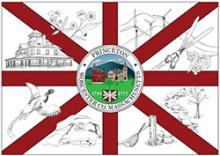
On November 18th, 90% of voters at Princeton's special town meeting approved a measure to fund $1.2 million in make-ready costs bringing the community one step closer to fiber connectivity. The number voters who attended the meeting broke the previous attendance record set 15 years ago by 30%.
On November 5th, we opened up the lines of communication for our first "Ask Us Anything: An Open Talk on Muni Networks" event. That event is now available on our YouTube Channel or viewable below.
Local communities in Maine are mobilizing to jumpstart economic development, expand educational opportunities, and improve Internet access.

Earlier this month, voters in several Colorado communities decided to approve ballot measures to reclaim local telecommunications authority.
This week in community broadband, more communities are adding broadband to the list of essential utilities, and many of them are turning to Chattanooga as a model “gig city.”

If you live in Sebewaing, you can now purchase FTTH connectivity from Sebewaing Light and Water (SLW) via their municipal network. Earlier this week, we discussed the network with Sebewaing Light and Water Superindendent Melanie McCoy.

The recent Colorado elections in Boulder, San Miguel County, Yuma County, Rio Blanco County, Wray, Yuma, Red Cliff, and Cherry Hills Village have inspired Estes Park.

The City Council of the city of Commerce is considering using its existing fiber resources to offer connectivity to local businesses.
Tennessee officials are raising the “Gig City” rally cry. Last week, public and private sector leaders gathered in Chattanooga to make sure the FCC knows where they stand on removing restrictions to community broadband in the state. GovTech’s Brian Heaton covered the rally.

When we last checked in with Vidalia, the Louisiana town of 4,300 had implemented free Wi-Fi in its new municipal complex.

Discussion over the "IP transition" has taken a back seat in the media lately as news outlets focus on the question of local authority over the right to invest in fiber network infrastructure. The IP transition is the gradual change from older analog mostly copper networks to packet-switched IP approaches that may use any medium (copper, fiber, wireless, etc).

This is the third year the Open Technology Institute (OTI) at New America Foundation studied the cost and quality of connectivity in the U.S. Once again, the results indicate we trail behind peer countries.

On November 4th, voters in several Colorado communities decided to reclaim local authority to provide telecommunications services. As Coloradans celebrated their steps toward self-reliance, Comcast felt a little quiver in its cowboy boots.

Over the past few months, Chris has been globe trotting to communities giving presentations and learning more about municipal networks across the country. After spending some time in Seattle, he headed to Mount Vernon, Washington to present at the Connect with the World conference on October 9th.