
NDIA

Content tagged with "NDIA"

Related Topics
Displaying 1 - 10 of 45

A Constitutional Crisis in Broadband and The Fight to Restore Digital Equity Funding

The Trump administration's illegal “termination” of the 2021 Digital Equity Act continues to have devastating real world impacts on everything from affordable broadband access to protecting Americans from skyrocketing online scams.

The $2.75 billion Digital Equity Act was passed by Congress as part of the 2021 infrastructure law. It mandated the creation of three different major grant programs intended to shore up equitable, widespread access to affordable Internet, while providing the tools and digital literacy education needed to help neglected U.S. communities get online.

But last May the Trump administration unceremoniously demolished the Act, froze all program funding, and left countless states, programs and organizations – many on the cusp of major new efforts – high and dry.

At the time, President Trump and GOP leaders like Sen. Ted Cruz disingenuously attacked the Act’s programs as “racist” and "unconstitutional,” – part of a broader effort to dismantle programs deemed as “DEI,” even in instances where the programs had little to nothing to do with race or gender. Many of the “covered populations” covered by the bill included rural residents, veterans, and elderly Americans from all walks of life.

Funding Freeze Puts Most Vulnerable Americans at Risk

The sudden "termination" of the popular law resulted in dozens of states having to abruptly cancel major broadband expansion plans. But the freeze has also been a massive problem for state programs that were taking aim at a U.S. online fraud epidemic proving particularly harmful to the U.S. elderly and marginalized communities.

Cleveland’s DigitalC Gets $500K Google Infusion For Affordable Fixed Wireless

Innovative digital equity nonprofit DigitalC has been working for years to shore up affordable broadband access in underserved cities like Cleveland, Ohio. 

Now the organization is enjoying new momentum for its plans to expand fixed wireless broadband access in the city thanks to a $500,000 cash infusion from tech giant Google. According to a recent announcement, the donation includes next-generation Fixed Wireless Access (ngFWA) equipment from Tarana, which will allow DigitalC to expand its Canopy home broadband service – which provides symmetrical 100 megabit per second (Mbps) at $18 a month – to even more neighborhoods in Ohio.

The nonprofit just celebrated the connection of its 6,000th household in Cleveland, a city once ranked the worst-connected large city in the U.S. by the National Digital Inclusion Alliance (NDIA).

Image
Digital C worker on rooftop

“This meaningful investment from GFiber adds bandwidth to our capacity to scale the Cleveland Model,” DigitalC CEO Joshua Edmonds said of the cash infusion. “This community-based blueprint proves that next-generation technology can be deployed quickly, trusted deeply, and scaled effectively to deliver the superior internet experience more communities deserve.”

B4DE: Moving At The Speed of Trust Reprise

Yesterday, the third Building for Digital Equity livestream of the year brought together policy experts and frontline workers to explore how community-driven connectivity solutions are inextricably tied to building local trust.

If you missed it, the entirety of the hour and 15 minute event can be viewed here.

Hosted by ILSR’s Community Broadband Networks initiative and the National Digital Inclusion Alliance (NDIA), this week’s B4DE served as an unofficial kick-off to Digital Inclusion Week and the variety of events that will mark the occasion in communities across the country.

With each B4DE guest focused on various aspects of the theme, “Moving At The Speed Of Trust,” the event provided attendees a jolt of hope and optimism, even as the world of digital equity has been upended by the demise of the federal Affordable Connectivity Program, the sudden termination of the Digital Equity Act, and numerous other Trump administration policy shifts that will make it harder to bridge the digital divide.

Countdown to Next Building for Digital Equity Event: Moving at the Speed of Trust

From the demise of the Affordable Connectivity Program and the sudden termination of the Digital Equity Act to the drastic revamping of the BEAD Internet infrastructure program and the myriad ways trust in governmental institutions has been eroded, digital inclusion advocates will not want to miss the next Building for Digital Equity (B4DE) livestream.

Slated for October 1 at 3 pm EST, the next B4DE virtual gathering will speak to the moment by focusing on a fundamental formula Internet access warriors cannot afford to overlook as they face down the forces actively working to undermine efforts to bridge the digital divide.

Co-hosted by ILSR’s Community Broadband Networks Initiative and the National Digital Inclusion Alliance (NDIA), the next B4DE will spotlight local strategies for digital equity and explore why it’s necessary for frontline digital inclusion practitioners to be “Moving at the Speed of Trust.

Register for the free event here.

“Wired for Freedom” Livestream Replay

If you missed our Building for Digital Equity “Wired for Freedom” Livestream, you can watch it in its entirety on YouTube.

Earlier this week, the second UTOPIA Fiber-sponsored event of the year, hosted in partnership with the National Digital Inclusion Alliance (NDIA), brought together community-based digital inclusion practitioners and policy experts to talk about the road ahead for expanding broadband access amid a rapidly shifting political landscape.

After a blues-infused beginning with Sky Downing of digitalLIFT, NDIA’s policy director Amy Huffman provided attendees with an update on the long court battle over the constitutionality of the FCC’s Universal Services Fund.

The recent Supreme Court ruling, Huffman explained, ruled that the program – which supports connectivity for rural communities, schools, and libraries – was indeed constitutional. In what Huffman described as “good news,” she also said it would give Congress a chance to reform USF without having to do so as “a ticking time,” giving lawmakers and advocates a chance to “put together a thoughtful framework and path forward to ensure that the fund not only continues but is modernized.”

In the lightning round presentations, Sara Nichols from the Land of Sky Regional Council in western North Carolina spoke of the work her planning agency has been involved with working toward building resilient connectivity in the wake of Hurricane Helene followed by Kaala Souza, executive director of Digital Ready Hawaii, who discussed how digital literacy was rooted in the local culture’s emphasis on literacy dating that dates back before the dawn of the computer age.

Pushback Mounts Over Trump Administration ‘Termination’ of Digital Equity Law

The Trump administration’s dismantling of a popular broadband grant program has been greeted with disgust and anger by those doing the heavy lifting to bridge the country’s digital divide, leaving many states' planned broadband expansions in limbo, and affordable broadband advocates contemplating potential legal action.  

The unprecedented choice to destroy digital skills training and broadband adoption programs created by an act of Congress is seeing escalating pushback by a growing coalition of frustrated lawmakers and state broadband offices.

Last week, President Trump announced via a Truth Social post that he was ending the Digital Equity Act, falsely claiming that the program was “unconstitutional” and “racist.”

“No more woke handouts based on race!” the President said. “The Digital Equity Program is a RACIST and ILLEGAL $2.5 BILLION DOLLAR giveaway. I am ending this IMMEDIATELY, and saving Taxpayers BILLIONS OF DOLLARS!"

Image
A black and white hand holds up a cell phone to photograph President Trump

But the popular program was perfectly legal, barely focused on race, and was proving to be of broad benefit to countless Americans – including many of the President’s own supporters in long-neglected rural counties.

The $2.75 billion Digital Equity Act was passed by Congress as part of the 2021 infrastructure bill. It mandated the creation of three different grant programs intended to shore up equitable, widespread access to affordable Internet, while providing the tools and digital literacy education needed to help neglected U.S. communities get online.

A legal challenge to the Trump administration’s unilateral decision to kill a law passed by Congress seems all but certain.

Kansas City's Digital Equity Journey - Episode 648 of the Community Broadband Bits Podcast

In this episode of the podcast, Chris sits down with Tom Esselman of DEPO-KC to explore how Kansas City is meeting the digital equity challenge with grassroots action, local partnerships, and nonprofit leadership. 

They trace the city’s long digital inclusion journey—from the arrival of Google Fiber and early federal initiatives to today’s uncertain funding landscape. 

Tom shares powerful personal stories of connection, community trust, and workforce development that reveal why local, relationship-driven work remains central to closing the digital divide.

This show is 40 minutes long and can be played on this page or via Apple Podcasts or the tool of your choice using this feed.

Transcript below.

We want your feedback and suggestions for the show-please e-mail us or leave a comment below.

Listen to other episodes or view all episodes in our index. See other podcasts from the Institute for Local Self-Reliance.

Thanks to Arne Huseby for the music. The song is Warm Duck Shuffle and is licensed under a Creative Commons Attribution (3.0) license

President Trump Targets Digital Equity Act —What It Means for Communities and the Future of Connectivity - Episode 646 of the Community Broadband Bits Podcast

In this urgent episode of the podcast, Chris is joined by Angela Siefer and Amy Huffman of the National Digital Inclusion Alliance (NDIA) to unpack a stunning announcement: President Trump has declared the Digital Equity Act “unconstitutional” and vowed to cancel it.

Angela and Amy explain what the Digital Equity Act really does, who it serves, and why this sudden political attack puts millions of Americans—and the country’s digital future—at risk.

They offer insights into what’s still unclear, how local organizations are reacting, and what’s at stake if this critical program is dismantled.

NDIA's response to President Trump's statement can be found here.

This show is 33 minutes long and can be played on this page or via Apple Podcasts or the tool of your choice using this feed.

Transcript below.

We want your feedback and suggestions for the show-please e-mail us or leave a comment below.

Listen to other episodes or view all episodes in our index. See other podcasts from the Institute for Local Self-Reliance.

Thanks to Arne Huseby for the music. The song is Warm Duck Shuffle and is licensed under a Creative Commons Attribution (3.0) license

Google’s Hometown Of Mountain View, CA Eyes Potential Muni Fiber Build

Home to one of the wealthiest and most successful companies in America, you wouldn’t expect residents of Mountain View, California to find themselves on the wrong side of the digital divide.

Yet the city of nearly 82,000 – frustrated with spotty and expensive service by AT&T and Comcast – is considering a municipal broadband network to deal with the deficiencies of the duopoly.

Last year, Mountain View officials hired the consulting firm, Entrust Solutions, to take a closer look at the city’s broadband availability metrics and device potential options for the city.

The finished report and accompanying technical memorandum note that Comcast enjoys a monopoly over vast swaths of the city, resulting in expensive, slow, and spotty access.

“Although most of the City is considered ‘well-served’ by federal and California state standards, most residents have only a single option for Internet service and are essentially subject to a cable monopoly,” the authors wrote. “When it comes to modern gigabit Internet services, only 42% of the serviceable addresses have fiber access.”

The study similarly found that despite ongoing taxpayer subsidization, AT&T has historically failed to upgrade its older DSL customers to fiber across large swaths of the city.

“AT&T provides legacy copper-based service for most of the city, but that technology is not capable of meeting the State of California’s minimum broadband speeds of 100 Mbps download and 25 Mbps upload,” the consulting firm found.

“And while AT&T also provides fiber-to-the-premises (FTTX) services in limited neighborhoods of the City, this means that much of the City is effectively a Xfinity/Comcast monopoly, leading to an uncompetitive market for City residents seeking broadband service.”

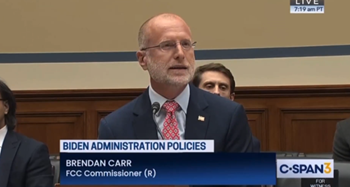
Trump FCC Begins Dismantling Agency Civil Rights Reforms

After decades of redlining and broadband “digital discrimination” by the nation’s biggest telecom monopolies, the FCC finally began taking aim at the problem in 2023. Now the entirety of those efforts are poised to be dismantled, courtesy of the Trump administration’s broad, controversial frontal assault on discrimination reforms and civil rights.

The 2021 infrastructure bill set aside $42.5 billion to expand broadband into all unserved parts of the United States.

But it also tasked the FCC with crafting new rules taking aim at “digital discrimination.” On November 15th of 2023 the agency obliged, passing rules banning ISPs from broadband discrimination based on income, race, or religion.

Civil rights and digital equity activists were split on the potential impact of the rules, but they did agree on one thing: it was historic for federal policymakers to finally admit that telecom monopoly deployments had unfairly excluded many low income and minority neighborhoods from affordable, next-generation broadband access.