
bond

Content tagged with "bond"

Related Topics
Displaying 1 - 10 of 46

Willmar, Minnesota’s Open Access Fiber Network Set To Go Live This Year
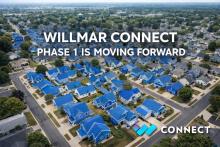
Willmar, Minnesota officials say they’re making steady progress on construction of the city’s planned $24.5 million open access fiber network, with the first residential and business customers slated to come online sometime later this year.

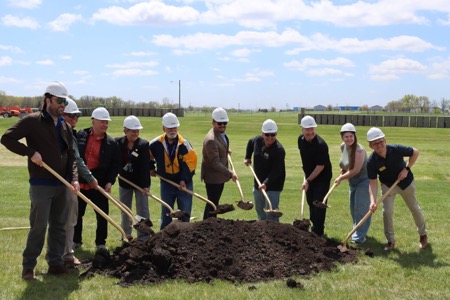
Dubbed Willmar Connect, construction of the city-owned fiber-to-the-home (FTTH) network broke ground in May 2026, marking a pivotal turn from years of feasibility studies and council debates to actual directional boring, conduit placement, and fiber splicing.

When we last checked in on Willmar back in March, the city council had just voted 4-3 to sign off on the $24.5 million open access project. After a summer of steady construction the city says it’s making meaningful progress toward a full commercial launch.
Image
A dozen city officials holding shovels above a mound of dirt at groundbreaking ceremony

“We expect to light up our first users on the network this year,” Willmar City Administrator Kyle Box tells ILSR.

Phased Construction Starting From GO (Bond)

Construction of the network is occurring in three phases.

Phase one of the project, focused on Southwest Willmar, is budgeted for between $7.6 million to $9.2 million. This phase of the project will focus on backbone construction, neighborhood conduit boring, lateral connections, and converting a former municipal wastewater facility into the network operations center (NOC).
East Longmeadow Approves $43.5 Million for Municipal Fiber Network

Three months after town meeting voters in Longmeadow, Massachusetts rejected an $8.6 million proposal to kickstart the construction of a municipal fiber network, Town Councilors in the neighboring town of East Longmeadow moved in a different direction, voting to take control of its digital future and provide its residents and businesses with next-generation Internet access.

The move was formalized earlier this month when East Longmeadow Town Councilors unanimously approved issuing $43.5 million in bonds to finance the construction of a municipally-owned fiber network. 

The vote paves the way for the western Massachusetts town of about 16,000 to finally get the affordable and reliable town-wide Internet connectivity local leaders see as vital for its economic future and improved quality-of-life.

Image
Whip City Fiber logo

With pent up frustration of the high cost and unreliable service under the monopoly of Charter Spectrum, the Council also voted to enter into an agreement with Westfield Gas & Electric to build the network, as the municipally-owned fiber provider has done for nearly two dozen other towns in western Massachusetts — with the utility’s subsidiary, Whip City Fiber, to operate as the Internet service provider.

Construction is expected to start in January of 2027 with the first connections lit up for service later that year in the northwest corner of town where the “initially designated (and most dense) neighborhoods” are located.

Six Years in the Making

Sherwood, Oregon Ferments ‘Future-Proof’ Fiber To Preserve and Expand Municipal Network

In the City of Sherwood, a mostly residential bedroom community 16 miles south of Portland, officials have been quietly cultivating a digital vineyard across Oregon’s “Gateway to Wine Country.”

As part of its on-going work to build out a citywide fiber network, Sherwood Broadband recently secured a $9 million grant from the Oregon Broadband Office Broadband Deployment Program (BDP) to continue expanding Sherwood’s municipally-owned network into neighboring rural communities just outside city limits.

The grant award is part of $132 million in federal Rescue Plan funds the state is doling out to an array of community-owned broadband initiatives for 16 projects across 17 counties.

Award winners include Beacon Broadband, a subsidiary of the Coos-Curry Electric Cooperative ($19.4 million); Jefferson County ($19.2 million); Douglas Fast Net, a wholly-owned subsidiary of the Douglas Electric Cooperative ($8.5 million); the Idaho-based member-owned cooperative Farmers Mutual Telephone Company, which offers broadband service in Malheur County, OR ($18.9 million); and a handful of independent providers like Blue Mountain Networks ($6.5 million) and Ziply Fiber ($10.2 million), recently acquired by Bell Canada.

Kendall County, Illinois Builds Its Own Fiber Network After Being Snubbed By Monopolies

Frustrated by years of substandard broadband service from regional telecom monopolies, Kendall County, Illinois residents have joined the growing chorus of Americans that are tackling the problem head on by building their own better, faster, more affordable fiber networks.

The Kendall County network, part of a public-private partnership (PPP or P3) with Pivot-Tech, is being funded by a tax-free revenue bond.

Kendall County officials tell ILSR that the full cost of the network, which will include private investment from Pivot-Tech, is expected to ultimately be $67 million, serving more than 13,000 locations county wide.

Image
Kendall County IL map

The first phase of the network build will consist of a combination of fixed wireless and fiber last and middle middle connectivity, supported by $15 million in state broadband grants made possible by 2021 American Rescue Plan Act (ARPA) legislation. Construction is slated to begin this fall, and officials say the county will own the finished network.  

“The network is a combination of fiber and fixed wireless, with the goal to serve as many customers by fiber as possible,” Kendall County Administrator Christina Burns told ILSR. “The fixed wireless access count planned in phase one will be approximately 1,900. The remainder will be fiber to the premises.”

County officials are still finalizing the selection of a consumer-facing ISP.

“We have identified an ISP and are working through the details,” Burns said. “We do still plan for the network to be open access, hoping to bring more ISPs on in the future.”

Like so many communities we cover, the county’s foray into community broadband was forged by decades of local frustration with limited local broadband competition, high prices, and patchy service, which was painfully highlighted during COVID lockdowns.

New $8.9 Million State Grant Boosts Dryden, NY Muni Fiber Network Build and Expansion Into Neighboring Caroline NY

The towns of Dryden and Caroline, New York have been awarded a new $8.9 million broadband grant courtesy of the New York State ConnectALL program. The award will help deliver affordable fiber capable of symmetrical speeds up to 10 gigabits per second (Gbps) to residents of both towns, which until now, had been trapped on the wrong side of the digital divide.

Launched two years ago, Dryden officials have told ISLR they’re making steady inroads on municipally-owned fiber deployment to the town of 14,500. Now they’re looking to expand the popular local broadband network further into the town of nearby Caroline.

According to an announcement by Dryden Fiber, this latest grant award will help fund the construction of over 125 miles of new fiber to reach 2,650 new residences in Dryden and Caroline. The first customers in Caroline are expected to be online sometime within the next twelve months.

Image
Dryden fiber groundbreaking

“I find a real partnership between the Town of Dryden, Town of Caroline, and the New York State ConnectALL Office,” Dryden Fiber Executive Director, David Makar says of the award. “Years of hard work and seed planting from elected officials, citizen volunteers, and private partner businesses are now showing up ready to provide top-tier quality broadband service for the residents of Dryden and Caroline.”  

Municipal Broadband Provider Whip City Fiber Serves Up Win “For Everybody”

With Big Telecom’s assault-on-competition campaign as loud (and misleading) as ever, a small municipal broadband utility in Massachusetts is quietly showcasing one of the many reasons why building publicly-owned, locally controlled broadband infrastructure is gaining in popularity, racking up awards, and earning high subscriber satisfaction rates in communities across the nation.

With an eye on keeping local dollars close to home for community investments, last week the Westfield City Council voted to approve an $11.1 million bond for a new athletic track and field at the local high school, thanks to the success of Westfield Gas & Electric’s broadband subsidiary Whip City Fiber. And though the return on investment may not be as eye-popping as the $2.7 billion Chattanooga's municipal network, EPB Fiber, has reaped in Tennessee, Westfield officials hailed the community investment as a “huge moment” for local residents.

‘Scrappy’ Island Munis Lead Charge For Affordable Broadband In Maine

Peppered by winding country roads and remote islands, Maine exemplifies the challenges in even deployment of affordable broadband. But thanks to tenacious island communities and forward-thinking state leadership, a growing roster of community-owned broadband networks are leading the charge toward affordable access in the Pine Tree State.

Peggy Schaffer, former executive director of the state of Maine's broadband mapping and expansion effort, ConnectMaine, has played a starring role in shoring up Maine’s broadband mapping data after years of federal dysfunction.

Schaffer’s well versed in the broad array of challenges faced by remote Maine communities, and says she’s long been impressed by the “scrappy” nature of Maine’s community-owned island deployments, which have faced down and overcome no limit of onerous challenges in an  ongoing quest to finally bridge the state’s long standing digital divide.

Maine is currently ranked 49th in the U.S. in terms of resident access to gigabit-capable broadband service. Like so much of the country, the state is heavily dominated by regional monopolies that failed to uniformly deliver affordable, next-generation broadband, despite decades of federal subsidies, regulatory favors, and tax breaks.

Now local Maine communities are taking matters into their own hands, beginning with long-neglected island residents no stranger to unique logistical challenges.

Image
Islesboro Maine

‘It’s A Story Of Perseverance’

Expert Coalition Says Existing BEAD Rules Harm Small ISPs, Municipalities

A massive coalition of more than 300 broadband policy experts and organizations have written a letter to the U.S. government, warning that smaller broadband providers, nonprofits, and municipalities will be elbowed out of an historic $42.45 billion broadband grant program without some notable changes to program rules.

At the heart of their concerns sits the Broadband Equity Access and Deployment (BEAD) program, made possible by the recently passed infrastructure bill, and administered by the National Telecommunications and Information Administration (NTIA). The grant program is a once-in-a-lifetime opportunity to put a significant dent in America’s longstanding digital divide.

But BEAD program rules currently require grant recipients to obtain a letter of credit (LOC) from a bank, collateralized by cash or cash-equivalent. They also require grant winners to provide "matching funds of not less than 25 percent of project costs," though the latter restriction can be waived in some high deployment cost areas.

While the restrictions were intended to reduce the risk of project failure (a touchy subject for the government in the wake of problems with the FCC’s RDOF program), they require grant recipients to lock away vast and untouchable sums of capital for the duration of any broadband build, most of which last several years.

The referenced media source is missing and needs to be re-embedded.

According to the coalition’s letter to lawmakers, such requirements present unnecessary obstacles for smaller ISPs and cash-strapped municipalities, undermining the infrastructure bill’s goal of equitable, affordable broadband for all.

Rhode Island’s First Municipal Broadband Network Goes Live on Block Island

After decades of frustration, Block Island residents are finally getting access to affordable, next-generation broadband. The Island’s freshly-launched BroadbandBI fiber network is not only utterly transformative for island residents, it’s the first municipal owned and operated broadband network in Rhode Island history.

The first wave of island residents were able to sign up for service in April; the beginning of a staggered deployment rollout island leaders say is very much on schedule. It’s a monumental occasion for the 1,410 island residents spread across nearly ten square miles, who’ll be holding a June 5 event at the island’s Southeast Lighthouse to celebrate the long-awaited launch.

For years, island residents have had to make due with an underwhelming combination of spotty and aging Verizon DSL, or costly and heavily capped satellite broadband—assuming they could get broadband service at all. Private providers generally didn’t see investing in the island community as something worth their time or money.

Running 'A Bit Ahead'

Enter the Town of New Shoreham’s municipal broadband effort: an organic response to market failure, built on the backs of decades of frustration. A network that’s both on budget and on schedule, New Shoreham Land and Finance Director Amy Lewis told ILSR.

Image
Block Island Fiber Service Area map

“We are running a bit ahead on FSA (fiber service area) openings at the moment and expect to have all subscribers installed and operational in the fall of 2023,” Lewis said.

Golden State Connectivity Authority and UTOPIA Fiber to Build Open Access FTTH Network Across Rural California

Last week, the Golden State Connectivity Authority (GSCA) announced it has entered into formal partnership with the municipally owned open access network UTOPIA Fiber, for the Utah-based owner and provider to design, build, and operate a new open access fiber-to-the-home (FTTH) network across the 38 rural counties in the state of California. It's a move that not only offers the chance to bring future-proof connections to millions of rural California households in the near future, but have wide policy and industry implications for open access fiber networks down the road. 

Local Governments Band Together

Image

The Golden State Connectivity Authority is a joint powers authority (JPA) created by the Rural County Representatives of California (RCRC), which represents more than three dozen rural counties across the state. RCRC seeks to tackle the variety of shared problems that the state's rural communities face by advancing concrete policy solutions across transportation, energy, natural resources, governance, healthcare, and a collection of other arenas.